

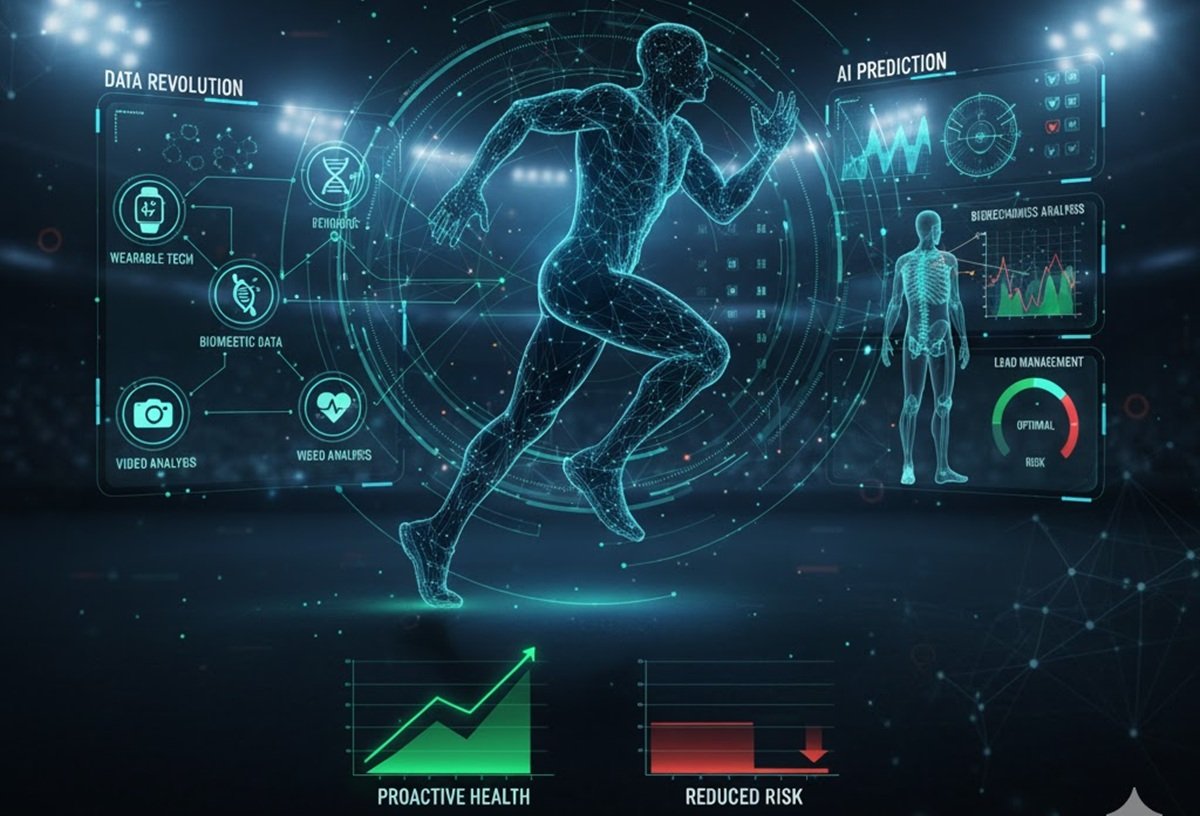
In professional sports, injuries can drastically impact an athlete’s career and team performance. With the advancement of technology, AI sports injury prediction is emerging as a game-changer. By analyzing vast amounts of data—from training loads to biomechanical patterns—AI can forecast injury risks, helping teams make proactive decisions and protect their athletes.
How AI Predicts Injuries
AI systems use machine learning algorithms to study historical data, player movements, and physiological metrics. Wearable devices track performance indicators like heart rate, fatigue, and stress levels. This data, combined with AI models, identifies patterns that signal potential injuries before they happen.
Benefits of AI Sports Injury Prediction
- Early Detection – Predicts injury risk before symptoms appear.
- Optimized Training – Helps coaches design safer training schedules.
- Career Longevity – Reduces long-term damage by minimizing repetitive injuries.
- Data-Driven Decisions – Teams can make informed choices about player rotation and rest.
Challenges and Limitations
While AI is powerful, it relies on accurate and comprehensive data. Privacy concerns, inconsistent sensor accuracy, and unexpected external factors can limit prediction precision. Nonetheless, ongoing advancements continue to improve reliability.
Future of AI in Sports Medicine
AI sports injury prediction is likely to become standard practice in professional sports. Integration with real-time monitoring systems, predictive analytics, and personalized recovery plans will revolutionize athlete health management.
Conclusion
AI is transforming the way professional athletes train and recover. By combining data analysis, wearable technology, and predictive modeling, AI sports injury prediction is helping teams reduce injuries, improve performance, and extend athletic careers.
