

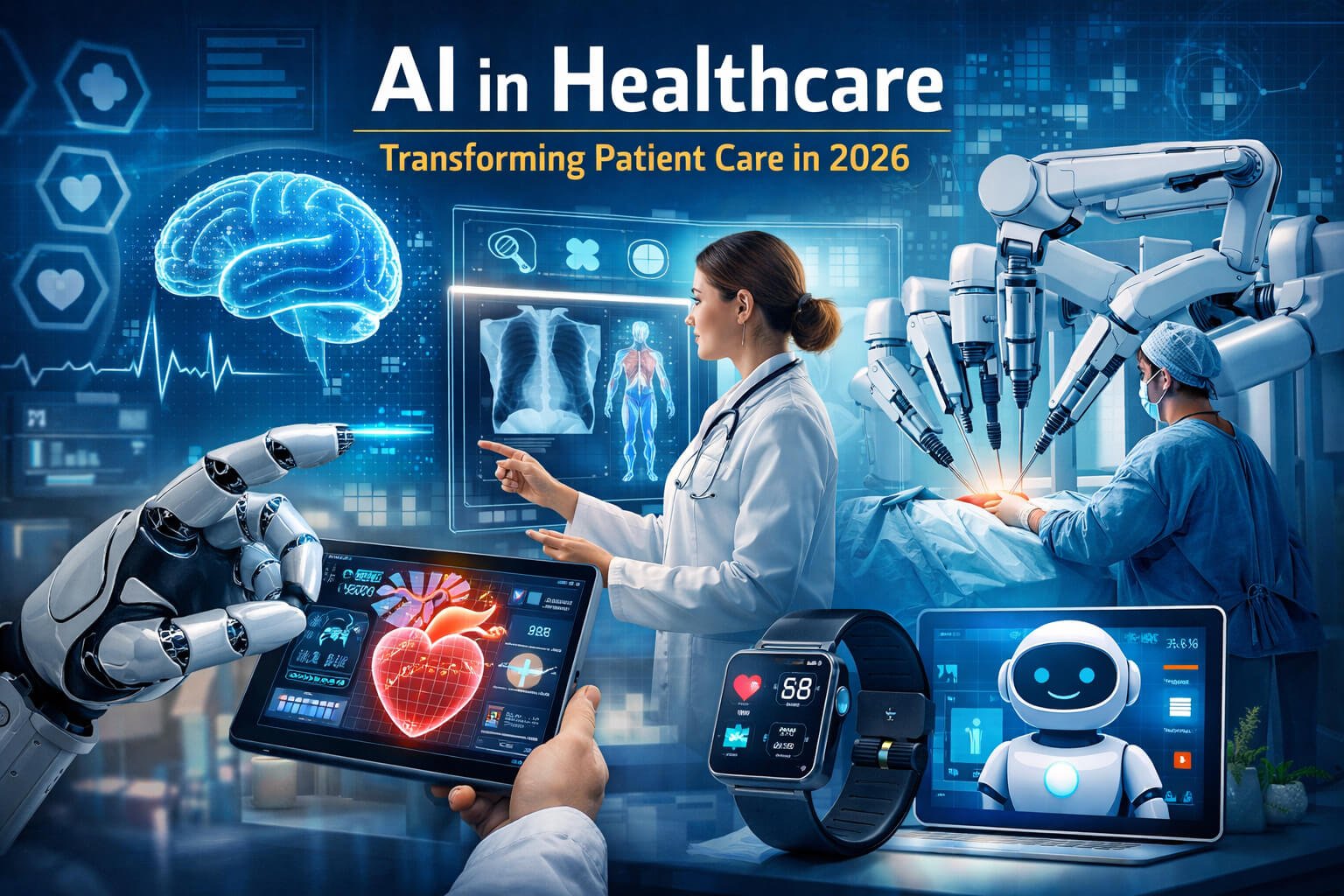
In 2026, healthcare is going through one of the biggest transformations in history—and at the center of it is Artificial Intelligence (AI). What once felt like science fiction is now becoming a daily reality in hospitals, clinics, and even homes. From diagnosing diseases faster to helping doctors make better decisions, AI is changing how patient care works.
But what does this really mean for patients and doctors? Is AI replacing human doctors, or is it making healthcare better?
Let’s explore how smart technology is reshaping patient care in simple and practical terms.
What is AI in Healthcare?
Artificial Intelligence in healthcare refers to the use of smart machines and software that can analyze data, learn patterns, and make decisions—just like humans, but faster and often more accurately.
These systems can process huge amounts of medical data, including:
- Patient records
- Lab reports
- Medical images (like X-rays and MRIs)
- Real-time health data from wearable devices
In 2026, AI is no longer just experimental—it is now part of real healthcare systems worldwide.
1. Faster and More Accurate Diagnosis
One of the biggest advantages of AI is its ability to detect diseases early.
AI systems can analyze medical images and identify problems that even experienced doctors might miss. For example, AI tools are already being used to detect:
- Cancer
- Heart disease
- Eye conditions
In fact, recent advancements show that AI can predict serious conditions like heart failure years before symptoms appear, giving doctors time to act early.
This means:
- Earlier treatment
- Better survival rates
- Lower medical costs
AI doesn’t replace doctors—it supports them by acting as a powerful second opinion.
2. Personalized Treatment for Every Patient
In the past, treatments were mostly “one-size-fits-all.” But every person is different.
AI is changing this by enabling personalized medicine.
Using patient data such as:
- Medical history
- Lifestyle
- Genetics
AI can suggest treatments that are tailored to each individual.
For example:
- Diabetic patients can get customized diet and medication plans
- Cancer treatments can be adjusted based on how a patient responds
This leads to better results and fewer side effects.
3. Smart Wearables and Remote Monitoring
In 2026, healthcare is no longer limited to hospitals.
Devices like smartwatches and fitness trackers are now powered by AI. These devices can:
- Track heart rate
- Monitor oxygen levels
- Detect irregular patterns
AI analyzes this data in real time and alerts patients or doctors if something is wrong.
This is especially useful for:
- Elderly patients
- People with chronic diseases
- Remote or rural areas
Instead of waiting for a problem to become serious, AI helps detect it early.
4. AI-Assisted Surgeries
Surgery has also become smarter with AI and robotics.
In many hospitals, robotic systems help doctors perform complex surgeries with:
- Higher precision
- Smaller cuts
- Faster recovery times
In India itself, hospitals are already using AI-assisted robotic surgeries for better outcomes.
AI can also:
- Plan surgeries
- Guide surgeons during procedures
- Reduce human error
This doesn’t mean robots are replacing surgeons—rather, surgeons are becoming more powerful with AI tools.
5. Reducing Workload for Doctors
Doctors today face a huge workload, from treating patients to handling paperwork.
AI helps reduce this burden by:
- Automating documentation
- Managing patient records
- Suggesting treatment options
AI “co-pilots” can assist doctors by summarizing patient data and providing insights quickly.
This allows doctors to:
- Spend more time with patients
- Make faster decisions
- Reduce burnout
6. Improving Hospital Management
AI is not only helping patients—it’s also improving how hospitals operate.
Hospitals use AI to:
- Predict patient admissions
- Manage bed availability
- Optimize staff scheduling
This ensures better resource use and reduces waiting time for patients.
In simple terms, hospitals become more efficient and organized.
7. Preventive Healthcare: From Reactive to ProactiveTraditional healthcare focuses on treating illness after it happens.
But AI is changing this approach.
In 2026, healthcare is becoming proactive, meaning:
- Predicting diseases before they occur
- Preventing complications early
AI uses predictive analytics to identify risks and suggest preventive actions.
This shift is one of the most important changes in modern medicine.
8. AI in Drug Discovery and Research
Developing new medicines used to take years.
AI is speeding up this process by:
- Analyzing chemical data
- Predicting drug effectiveness
- Identifying potential treatments quickly
This leads to:
- Faster drug development
- Lower costs
- Better treatment options
AI is especially useful in responding to new diseases and pandemics.
Challenges and Concerns of AI in Healthcare
While AI has many benefits, it also comes with challenges.
1. Data Privacy Issues
AI systems require large amounts of patient data, raising concerns about:
- Data security
- Privacy breaches
2. Lack of Human Touch
AI can analyze data, but it cannot show empathy like a human doctor.
Patients still need:
- Emotional support
- Personal interaction
3. Risk of Errors
AI systems are not perfect. If trained on biased or incomplete data, they can make incorrect decisions.
4. High Costs
Implementing AI systems can be expensive, especially for smaller hospitals.
AI + Human Doctors: The Perfect Combination
A common question people ask is:
Will AI replace doctors?
The answer is no.
AI is designed to assist—not replace—human doctors.
Studies show that while AI is excellent at analyzing data and diagnosing common conditions, it still lacks human judgment and empathy.
The future of healthcare is a collaboration where:
- AI handles data and analysis
- Doctors focus on care and decision-making
This combination leads to the best outcomes for patients.
The Future of AI in Healthcare
Looking ahead, AI will become even more advanced.
We can expect:
- Fully integrated digital health systems
- More accurate disease prediction
- AI-powered virtual doctors
- Better access to healthcare in rural areas
AI is already moving from being a “tool” to becoming a core part of healthcare systems.
Conclusion
AI in healthcare is not just a trend—it is a transformation.
In 2026, smart technology is helping doctors work better, hospitals run smoother, and patients receive faster, more personalized care. From early diagnosis to preventive treatment, AI is improving healthcare at every level.
However, the goal is not to replace human doctors but to empower them.
The future of healthcare lies in the perfect balance between technology and human care—where machines bring intelligence, and humans bring compassion.
FAQs
1. What is AI in healthcare?
AI in healthcare refers to the use of smart technology and software that can analyze medical data, detect diseases, and help doctors make better decisions.
2. How is AI improving patient care in 2026?
AI is improving patient care by providing faster diagnosis, personalized treatments, remote monitoring, and better hospital management.
3. Can AI replace doctors in the future?
No, AI cannot replace doctors. It helps doctors by analyzing data and giving suggestions, but human judgment and care are still very important.
4. What are some examples of AI in healthcare?
Examples include AI-powered diagnostic tools, wearable health devices, robotic surgeries, virtual health assistants, and predictive health systems.
5. Is AI in healthcare safe?
AI is generally safe, but there are concerns about data privacy and accuracy. That’s why it is always used along with human supervision.
6. What are the main benefits of AI in healthcare?
The main benefits include early disease detection, better treatment plans, reduced costs, improved efficiency, and easier access to healthcare.
