


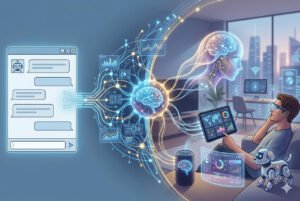




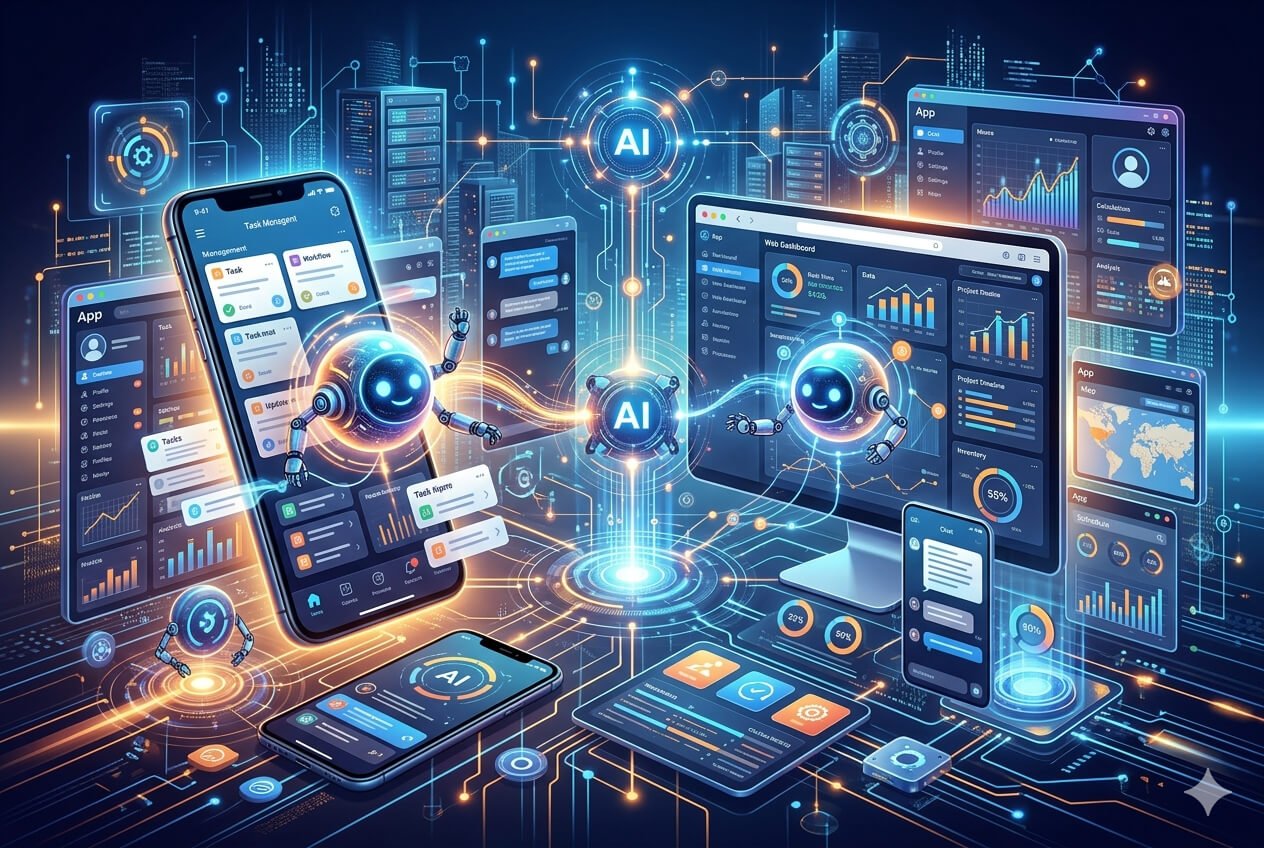
In the past decade, software applications have evolved from simple tools into intelligent assistants. But in 2026, we are witnessing a far more transformative shift—the rise of AI agents. These are not just programs that respond to commands; they are systems capable of making decisions, taking actions, and completing tasks independently. From booking travel to managing workflows, AI agents are redefining how users interact with technology.
This transition marks a fundamental change in the role of software—from passive utilities to active digital collaborators.
What Are AI Agents?
AI agents are advanced software systems powered by artificial intelligence that can perceive, decide, and act on behalf of users. Unlike traditional apps that require step-by-step instructions, AI agents can:
- Understand user intent
- Plan multi-step actions
- Execute tasks autonomously
- Learn and improve over time
For example, instead of manually searching for flights, comparing prices, and booking tickets, an AI agent can handle the entire process based on your preferences.
Popular platforms like ChatGPT and Google Gemini are already incorporating agent-like capabilities, allowing users to delegate complex tasks with minimal input.
From Tools to Autonomous Systems
Traditional software operates in a reactive mode—you click, type, or tap, and it responds. AI agents, however, function proactively. They can anticipate needs, automate workflows, and even make decisions within defined parameters.
This shift can be understood in three stages:
1. Reactive Apps
- Follow commands
- Require constant user input
- Example: basic calculators or note-taking apps
2. Smart Assistants
- Provide suggestions
- Use data to personalize experiences
- Example: recommendation systems in streaming apps
3. Autonomous AI Agents
- Act independently
- Complete entire tasks
- Continuously learn and optimize
We are now entering the third stage, where apps are no longer just interfaces—they are decision-making systems.
Key Features of AI Agents in Apps
1. Task Automation
AI agents can handle repetitive and complex workflows such as:
- Scheduling meetings
- Managing emails
- Generating reports
For instance, instead of drafting emails manually, an AI agent can analyze context and respond automatically.
2. Context Awareness
Modern AI agents understand user behavior, preferences, and history. This enables them to make smarter decisions without constant guidance.
Example: A finance app might automatically categorize expenses and suggest budget adjustments.
3. Multi-Step Reasoning
AI agents don’t just perform single actions—they can plan and execute a series of steps to achieve a goal.
For example:
- Research a topic
- Summarize findings
- Create a presentation
All of this can be done within a single workflow.
4. Integration Across Platforms
AI agents can connect multiple apps and services, creating a unified experience.
A single command could:
- Book a cab
- Reserve a restaurant
- Add the event to your calendar
This interconnected functionality is pushing software toward ecosystem-level intelligence.
Real-World Applications of AI Agents
Productivity Apps
Tools like Microsoft 365 are integrating AI agents to automate document creation, data analysis, and communication.
Customer Support
Businesses are using AI agents to handle customer queries, resolve issues, and provide 24/7 support—reducing the need for human intervention.
E-commerce
AI agents can:
- Recommend products
- Compare prices
- Complete purchases automatically
This creates a seamless shopping experience.
Healthcare
AI-powered apps assist in:
- Symptom analysis
- Appointment scheduling
- Patient monitoring
While still evolving, these systems are improving efficiency in healthcare services.
Finance
AI agents help users
- Track spending
- Detect fraud
- Optimize investments
They act as personal financial advisors within apps.
Benefits of Autonomous Software
Increased Efficiency
Tasks that once took hours can now be completed in minutes or seconds.
Enhanced User Experience
Users interact less with interfaces and more with outcomes.
Personalization at Scale
AI agents tailor experiences based on individual behavior and preferences.
Reduced Human Error
Automation minimizes mistakes in repetitive processes.
Challenges and Concerns
Despite their potential, AI agents also raise important challenges:
Privacy Issues
Autonomous systems require access to large amounts of personal data. Ensuring data security is critical.
Loss of Control
Users may feel uncomfortable allowing software to make decisions on their behalf.
Reliability Risks
AI agents are not perfect. Errors in decision-making could have significant consequences.
Ethical Considerations
Questions arise about accountability when AI systems act independently.
The Role of On-Device AI
One major trend supporting AI agents is on-device AI, where processing happens directly on smartphones or computers instead of the cloud.
Benefits include:
- Faster performance
- Improved privacy
- Offline functionality
Companies like Apple and Google are heavily investing in this approach, making AI agents more secure and efficient.
The Future of AI Agents in Apps
The future of software lies in agent-driven experiences. Experts predict that a significant portion of apps will soon incorporate autonomous capabilities.
Here’s what we can expect:
Fully Autonomous Workflows
Apps will handle entire processes without user intervention—from planning trips to managing businesses.
AI as a Personal Manager
Users may rely on AI agents to organize their daily lives, including schedules, finances, and communications.
Decline of Traditional Interfaces
Buttons, menus, and forms may become less important as natural language and voice commands take over.
Rise of “Super Apps”
Multiple services will merge into unified platforms powered by AI agents.
Conclusion
AI agents represent a turning point in the evolution of software. They are transforming apps from passive tools into active participants in our daily lives. By automating tasks, understanding context, and making decisions, these systems are redefining efficiency and convenience.
However, with great power comes responsibility. Developers, businesses, and users must address concerns around privacy, ethics, and control to ensure that AI agents are used safely and effectively.
As technology continues to advance, one thing is clear: the future of software is not just intelligent—it is autonomous.
FAQs
1. What is an AI agent in apps?
An AI agent is a software system that can perform tasks independently by understanding user intent and making decisions.
2. How are AI agents different from chatbots?
Chatbots respond to queries, while AI agents can take actions and complete multi-step tasks autonomously.
3. Are AI agents safe to use?
They are generally safe but require proper data privacy and security measures.
4. Can AI agents replace human work?
They can automate repetitive tasks but are more likely to assist rather than fully replace humans.
5. What industries use AI agents?
Industries like healthcare, finance, e-commerce, and customer service widely use AI agents.
6. What is the future of AI agents?
AI agents will become more advanced, handling complex workflows and acting as personal digital assistants.


