






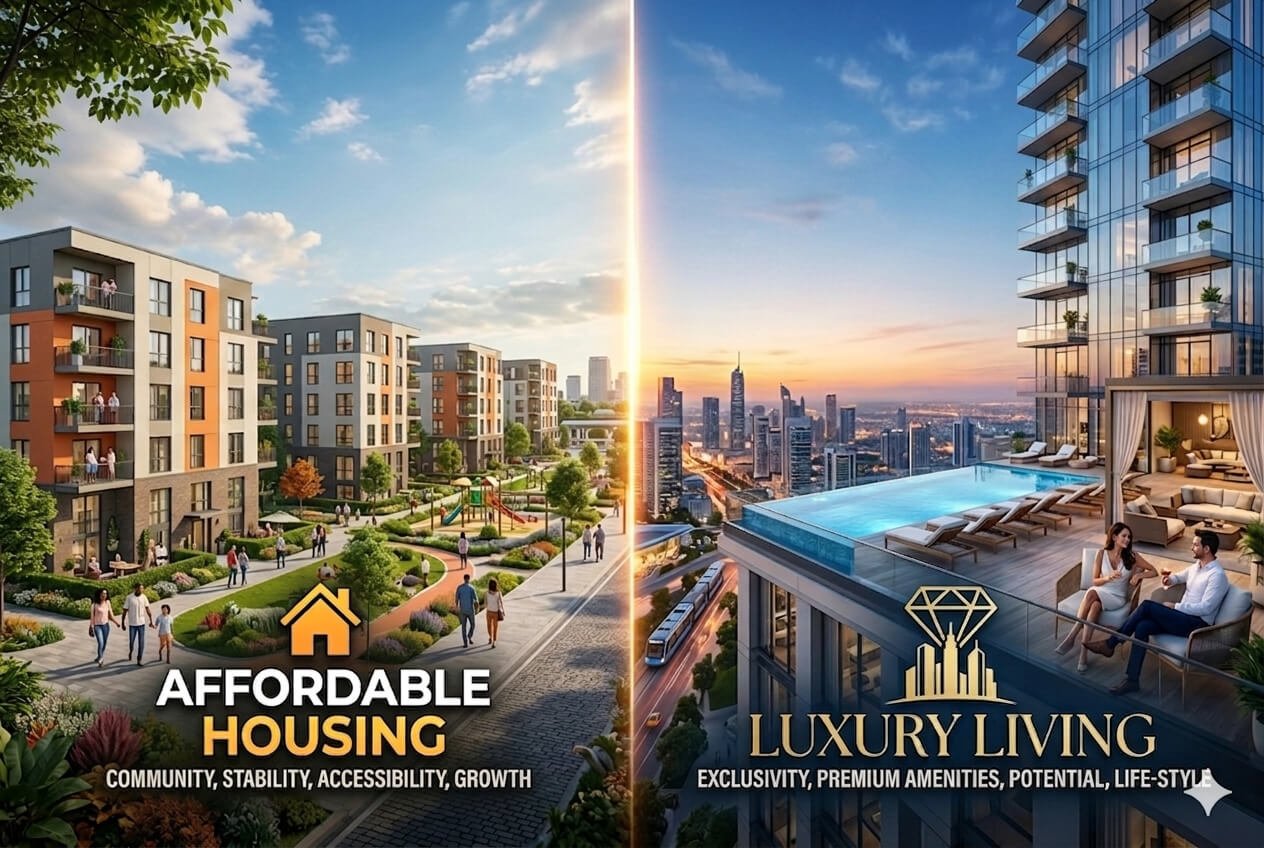
The real estate market in 2026 is evolving rapidly, shaped by economic shifts, changing lifestyle preferences, and technological advancements. For investors and homebuyers alike, one key question stands out: Should you invest in affordable housing or luxury living? Both segments offer distinct opportunities, risks, and returns. Understanding their dynamics is essential before making a decision in today’s competitive property landscape.
The Changing Real Estate Landscape in 2026
In recent years, real estate has witnessed significant transformation. Urban expansion, hybrid work models, rising construction costs, and government policies have all influenced property trends. Demand is no longer concentrated only in metro cities; smaller cities and suburban areas are gaining traction.
Two segments, in particular, have emerged as strong contenders for investment:
- Affordable Housing – targeting middle- and lower-income groups
- Luxury Living – catering to high-net-worth individuals and premium buyers
Both sectors are growing, but they serve very different audiences and investment goals.
What is Affordable Housing?
Affordable housing refers to residential properties priced within reach of middle-income buyers. These homes are typically located in suburban areas or emerging cities and are often supported by government initiatives, subsidies, or tax benefits.
Key Features:
- Lower property prices
- High demand among salaried individuals
- Basic but functional amenities
- Located in developing or peripheral areas
Why Affordable Housing is Trending
Affordable housing continues to gain momentum due to rising urban migration and increasing housing needs. Government incentives, lower loan interest rates, and easier financing options have made it accessible to a wider audience.
What is Luxury Living?
Luxury real estate includes premium properties offering high-end amenities, prime locations, and superior lifestyle experiences. These homes are designed for affluent buyers seeking comfort, exclusivity, and status.
Key Features:
- Premium pricing
- Prime locations (city centers, waterfronts, elite neighborhoods)
- Advanced amenities like smart home systems, private pools, concierge services
- High-end construction and design
Why Luxury Living is Growing
Post-pandemic lifestyle changes have increased demand for spacious, well-equipped homes. Buyers are prioritizing comfort, wellness, and privacy—factors that luxury properties provide in abundance.
Investment Comparison: Affordable vs Luxury Housing
1. Initial Investment
- Affordable Housing: Requires lower capital, making it accessible to first-time investors.
- Luxury Living: Demands significant upfront investment and higher maintenance costs.
Verdict: Affordable housing is better for budget-conscious investors.
2. Rental Yield
- Affordable Housing: Offers stable rental income due to consistent demand.
- Luxury Living: Rental demand exists but is more limited and fluctuates.
Verdict: Affordable housing generally provides more reliable rental returns.
3. Capital Appreciation
- Affordable Housing: Moderate appreciation, especially in developing areas.
- Luxury Living: Higher appreciation potential in prime locations over time.
Verdict: Luxury properties may deliver better long-term capital gains.
4. Market Demand
Affordable Housing: High and steady demand driven by population growth.
- Luxury Living: Niche demand influenced by economic conditions.
Verdict: Affordable housing is less risky due to consistent demand.
5. Risk Factor
- Affordable Housing: Lower risk due to mass-market appeal.
- Luxury Living: Higher risk, especially during economic slowdowns.
Verdict: Affordable housing is safer for conservative investors.
Key Trends Influencing Investment Decisions in 2026
1. Rise of Tier-2 and Tier-3 Cities
Smaller cities are becoming real estate hotspots due to affordability, infrastructure development, and job opportunities. Affordable housing thrives in these regions.
2. Shift Toward Lifestyle Living
Luxury homes are evolving beyond just space—they now include wellness zones, smart technology, and eco-friendly designs.
3. Remote Work Culture
Hybrid work models have increased demand for larger homes, benefiting both segments differently:
- Affordable housing in suburbs
- Luxury homes with office spaces
4. Sustainability and Green Housing
Eco-friendly construction is influencing both affordable and luxury projects, though luxury properties are leading in adopting advanced green technologies.
Who Should Invest in Affordable Housing?
Affordable housing is ideal for:
- First-time investors
- Salaried individuals seeking rental income
- Buyers with limited budgets
- Investors looking for low-risk options
Advantages:
- Easier to buy and finance
- Quick resale due to demand
- Stable rental income
Challenges:
- Limited premium amenities
- Slower capital appreciation in some areas
Who Should Invest in Luxury Living?
Luxury real estate is suited for:
- High-net-worth individuals
- Investors seeking long-term appreciation
- Buyers focused on lifestyle and exclusivity
- Portfolio diversifiers
Advantages:
- High appreciation potential
- Premium lifestyle appeal
- Strong branding and resale value in prime locations
Challenges:
- High investment and maintenance costs
- Limited buyer pool
- Market sensitivity
Which is Better in 2026?
The answer depends on your financial goals, risk appetite, and investment strategy.
Choose Affordable Housing if:
- You want steady rental income
- You prefer low-risk investments
- You are entering the real estate market
Choose Luxury Living if:
- You aim for long-term capital growth
- You can handle higher risks
- You want to invest in premium assets
Expert Insight: A Balanced Approach
Many seasoned investors are now adopting a hybrid strategy—investing in both segments to balance risk and returns. Affordable housing provides consistent income, while luxury properties offer long-term wealth creation.
Diversification can help investors navigate market fluctuations and maximize overall returns.
Final Thoughts
The real estate market in 2026 offers promising opportunities across both affordable and luxury segments. While affordable housing stands out for its stability and accessibility, luxury living appeals to those seeking high-end returns and lifestyle benefits.
There is no one-size-fits-all answer. The right choice depends on your financial position, investment horizon, and personal goals. By carefully evaluating market trends and aligning them with your strategy, you can make a smart and profitable real estate investment decision.
FAQs
1. What is the main difference between affordable housing and luxury living?
Affordable housing focuses on budget-friendly homes for middle-income buyers, while luxury living offers premium properties with high-end amenities and prime locations.
2. Which type of real estate is safer to invest in 2026?
Affordable housing is generally safer due to consistent demand and lower risk, whereas luxury properties are more market-dependent.
3. Does affordable housing provide good returns?
Yes, it offers stable rental income and steady appreciation, especially in developing areas and growing cities.
4. Is luxury real estate a good long-term investment?
Luxury properties can deliver high capital appreciation over time, particularly in prime locations, but require patience and higher investment.
5. Which option is better for rental income?
Affordable housing is better for regular rental income because of higher demand among tenants.
6. Can I invest in both affordable and luxury properties?
Yes, a mixed investment strategy helps balance risk and maximize returns by combining steady income with long-term growth.


