

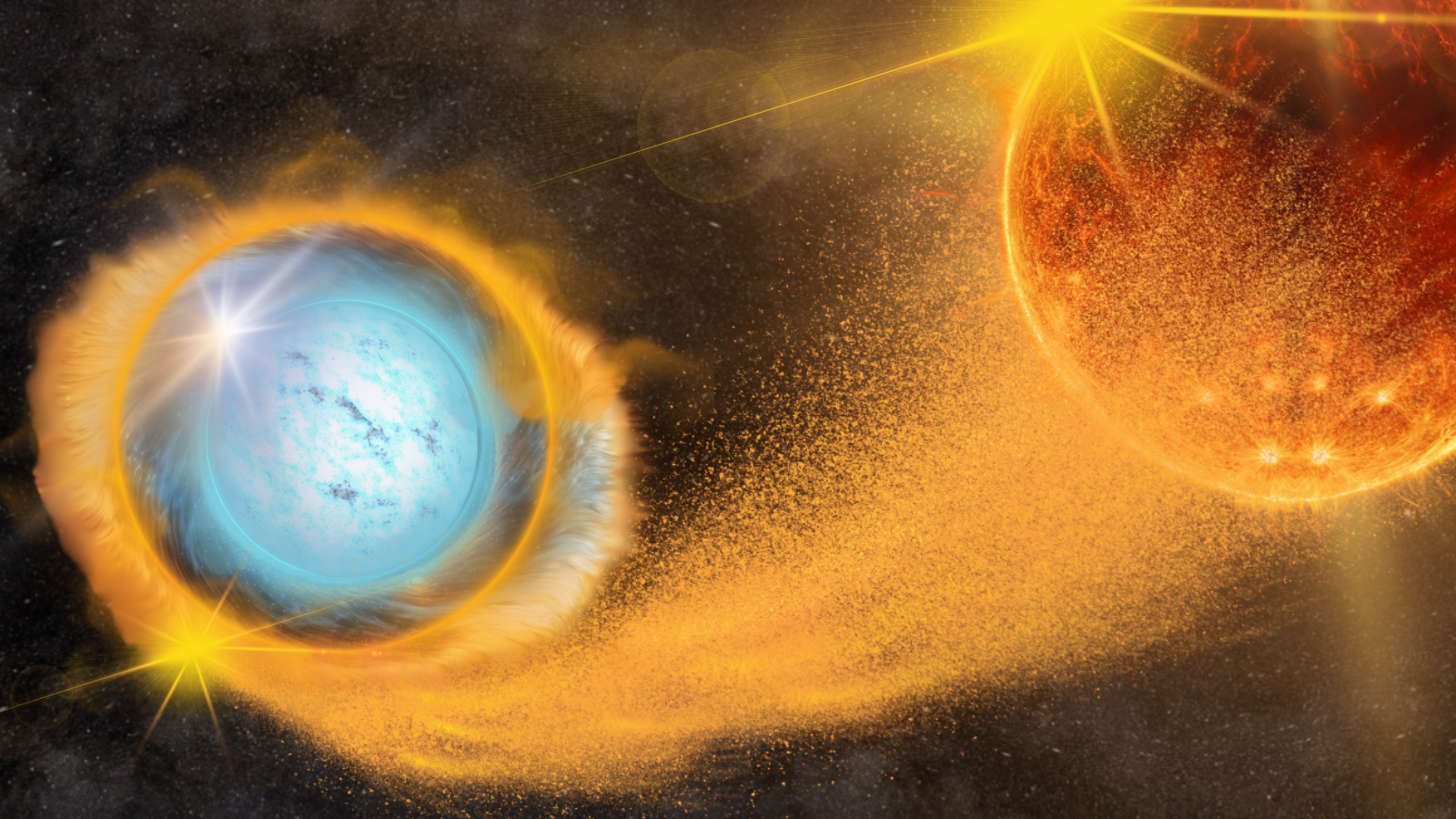
Using artificial intelligence and data from the groundbreaking Vera C. Rubin Observatory, scientists are reconsidering our knowledge of “standard candles” in the cosmos. These are objects that result from explosions provoked by dead stars that act like cannibals — and they help us measure distances across the universe.
These standard candles are also called Type 1a supernovas, and their distance-measuring role is integral to measuring the rate at which the universe is expanding. This means they’re also integral in our understanding of how this expansion is accelerating due to the effect of dark energy, the mysterious force helping to push our cosmos apart in every direction.
The research team’s approach to looking at these Type 1a supernovas involves what’s known as a combined inference and galaxy-related standardization, or CIGaRS, framework. It differs from a more standard approach because, instead of using spectroscopic observations — which revolves around analyzing light signatures — it looks at actual images and a mathematical analysis. This approach, the team explains, allows astronomers to determine more about the age and concentration of heavy elements — collectively known as “metals” in astronomy — in the stars that explode in Type 1a supernovas. That’s important because it can reveal the stars’ distances more precisely.
“A powerful way of modeling the universe is to simulate it in the computer,” research team member Raúl Jiménez of the University of Barcelona said in a statement. “This provides a way to vary all possible parameters at the same time to predict what universe we live in.
“Furthermore, by having this capacity, one can look into possible ‘unknown unknown’ systematics to understand their effect. The impact of these systematics in our inference is arguably the most important missing ingredient in current approaches to model the universe.”
Recapping the dark energy problem and cannibal stars
Our discovery of dark energy began with the death of stars of similar sizes to the sun and their transformations into smoldering stellar embers called white dwarfs. The sun will end its life as a white dwarf in around 6 billion years, fading alone in a cosmic graveyard that was once our solar system. However, when stars have a binary partner, white dwarfs can spring back to life like cosmic vampires by stripping material off these companion stars.
This stellar cannibalism ends with a runaway nuclear blast that usually wipes out the white dwarf entirely: The Type 1a supernova.
Here’s the beauty of the destruction, though. These Type 1a supernova explosions have been considered so uniform in nature (more on this in a moment) that analyzing their light output tells researchers how far away they are and how fast they are moving due to the expansion of the cosmos.
In 1998, two teams of astronomers independently used Type 1a supernovas to discover that not only is the universe expanding, but it is doing so at an accelerating rate. The placeholder name for the force driving this acceleration is dark energy.
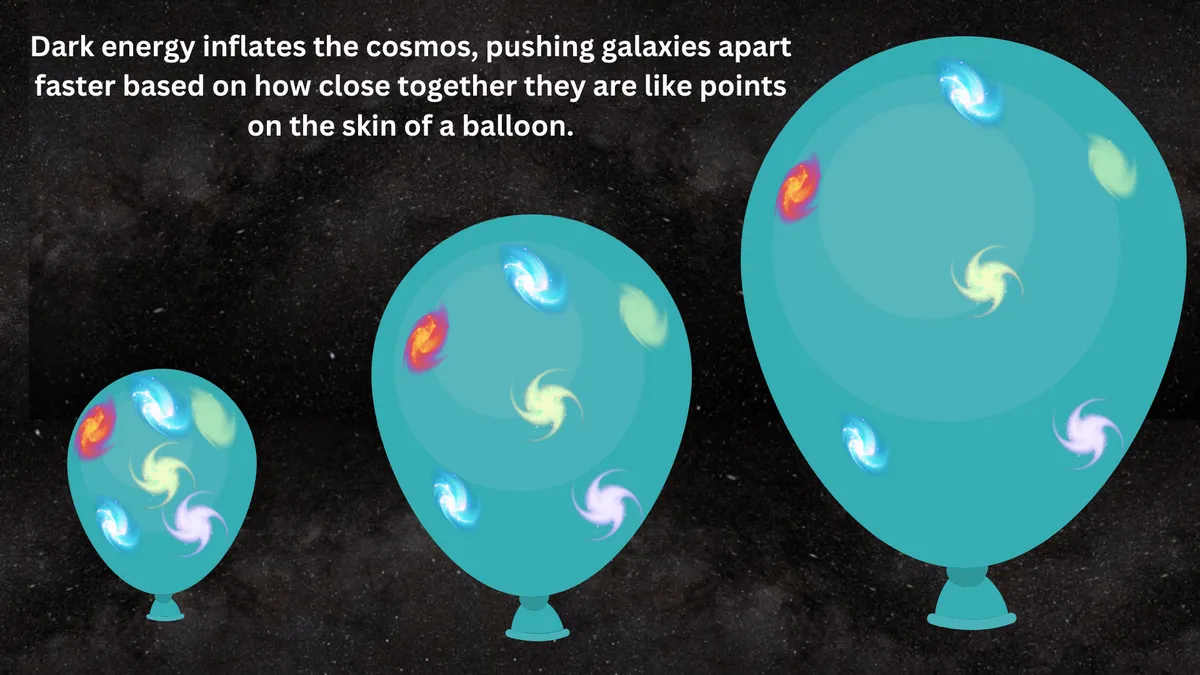
Since the late 1990s, the situation has just gotten messier and messier. For example, we now know that dark energy, whatever it is, dominates the cosmos, accounting for around 68% of the universe’s matter and energy budget. Plus, we know dark energy only started to dominate around 4 billion years ago when the universe was around 9 billion years old and when the Big Bang-driven expansion had been halted by matter and its gravitational effect.
To get a picture of why this is troubling, consider this: Imagine pushing a child on a swing, watching her slow down and come to an almost complete stop, like the Big Bang-driven expansion. Then, the swing speeds up and keeps moving faster and faster, seeming to move without any push. That is what dark energy is doing to the universe.
It is therefore little wonder scientists like Jiménez and colleagues want to get to the bottom of dark energy. This puzzle is widely considered to be the biggest mystery in modern cosmology.
But here’s the thing: Remember the point about Type 1a supernovas seeming identical? Researchers have recently discovered that this doesn’t always ring quite true.
Not-so-standard candles?
Over the last 20 or so years, astronomers have found that the brightness of Type 1a supernovas has a small dependence on the galactic environment in which they explode. When these explosions erupt in large or old galaxies, they look slightly different from those in smaller or younger galaxies.
While this effect has been tackled by making approximating adjustments, it still hinders the precision of the distance measurements provided by these cataclysmic standard candles. This team approached that issue by modelling all factors associated with supernovas, including the nature of their host galaxies, any dust that may dim their light output, the frequency of these explosions over time, and, indeed, the expansion of the universe, all at once. The result was a single, self-consistent model uniting elements physically and statistically. The team was also able to model tens of thousands of Type 1a supernovas at one time.
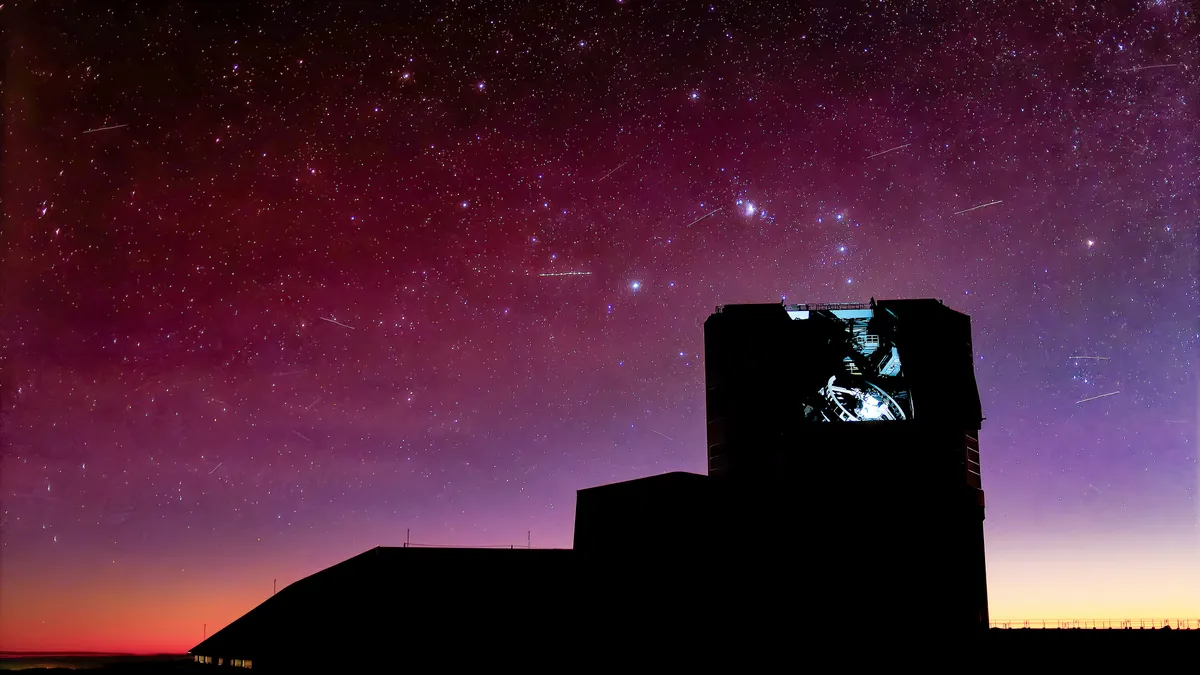
The result is a method that can estimate galaxy distances very accurately using only images. This is going to become crucial when the Legacy Survey of Space and Time (LSST), conducted by the Rubin Observatory from its mountaintop perch in Chile, starts delivering observations of unprecedented numbers of supernovas. Something the CIGaRS framework is uniquely equipped to deal with.
“Unlike other frameworks, which require analytic simplifications, our no-compromise end-to-end simulation-based inference approach is uniquely capable of extracting the full cosmological and astrophysical information from the Rubin Observatory’s hard-earned data, while avoiding the pitfalls of selection and modelling biases,” team leader Konstantin Karchev of the University of Barcelona said in the statement.
These results were published on Wednesday (May 6) in the journal Nature Astronomy.