

Close Menu

    Subscribe to Updates

    Get the latest news information from worldwide businesses.

    What's Hot

    Mint Explainer: How the SAP-Nayara tussle tests India’s strategic autonomy

    May 12, 2026

    European ministers to discuss sending rejected asylum seekers to third-country hubs | Council of Europe

    May 12, 2026

    High Court Restrains TVK MLA from Voting Amidst Controversial Postal Vote Mix-Up in Tamil Nadu | India News

    May 12, 2026
    Facebook Instagram YouTube LinkedIn X (Twitter)
    Trending
    • Mint Explainer: How the SAP-Nayara tussle tests India’s strategic autonomy
    • European ministers to discuss sending rejected asylum seekers to third-country hubs | Council of Europe
    • High Court Restrains TVK MLA from Voting Amidst Controversial Postal Vote Mix-Up in Tamil Nadu | India News
    • Nancy Guthrie missing 100 days as sheriff says ‘nothing new’ in Tucson case
    • SpaceX fuels up Starship V3 megarocket for 1st time ahead of crucial test flight (photos)
    • PGA Championship tiers: Ranking favorites, contend…
    • Porsche announces it is abandoning its major e-bike ambitions
    • This simple strength test could predict how long you live
    Newspublicly
    • About Us
    • Advertise & Partner with us
    • Pitch Your Story
    • Contact Us
    Facebook Instagram LinkedIn X (Twitter)
    Subscribe
    • Home
    • World News
      • Asia
      • India
      • USA
      • UK & Europe
      • Middle East
    • Economy & Business
      • Global Economy
      • Corporate & Industry
      • Finance & Markets
      • Policy & Trade
    • Technology
      • Gadgets & Devices
      • Software & Apps
      • AI & Machine Learning
      • Robotics & Automation
    • Health & Medicine
      • Fitness & Nutrition
      • Research & Innovation
      • Disease & Treatment
      • Doctors, Clinics & Patient Care
    • Travel & Tourism
    • Automobile
      • Electric & Hybrid Vehicles
      • Auto Industry Insights
    • Sports
    • More
      • Education
      • Real Estate
      • Environment & Climate
      • Space & Astronomy
      • War & Conflicts
    Newspublicly
    Home»Technology»Robotics & Automation»A simple hand photo may be the key to detecting a serious disease
    Robotics & Automation

    A simple hand photo may be the key to detecting a serious disease

    Divya SharmaBy Divya SharmaMay 12, 2026No Comments4 Mins Read0 Views
    Share
    Facebook Twitter LinkedIn Copy Link WhatsApp


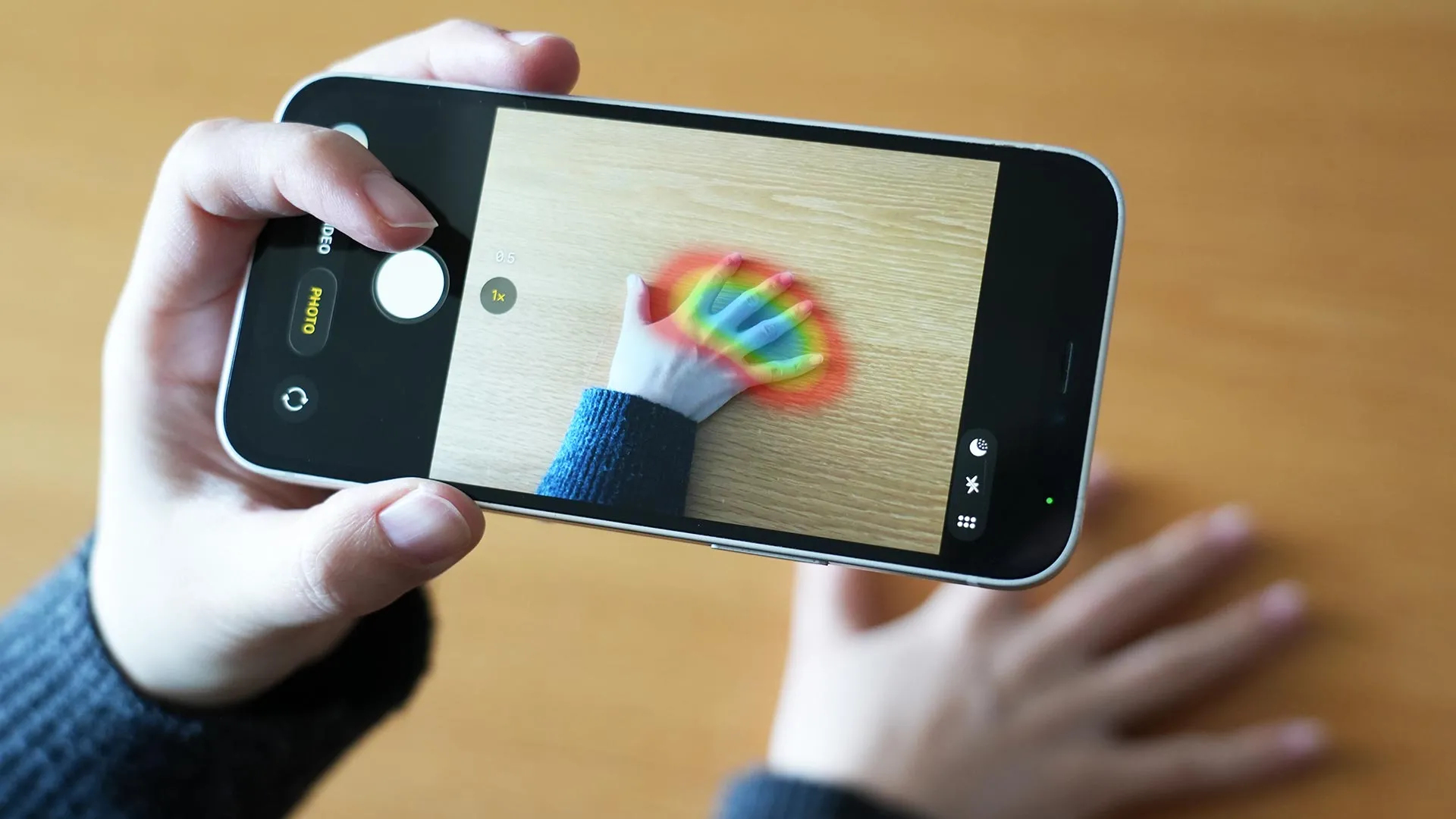
    Researchers at Kobe University have created an artificial intelligence system that can identify a rare endocrine disease simply by examining photos of the back of the hand and a clenched fist. The approach avoids facial images, helping protect patient privacy while still achieving high diagnostic accuracy. Scientists say the technology could eventually help doctors refer patients to specialists more quickly and improve access to care in underserved areas.

    The disease the AI targets is acromegaly, an uncommon condition that usually appears in middle age. It is caused by excessive production of growth hormone, which leads to enlarged hands and feet, changes in facial appearance, and abnormal growth of bones and internal organs. Because the disorder develops gradually over many years, it can be difficult to recognize early.

    If untreated, acromegaly can lead to serious health problems and shorten life expectancy by about 10 years. “Because the condition progresses so slowly, and because it is a rare disease, it is not uncommon to take up to a decade for it to be diagnosed,” says Kobe University endocrinologist Hidenori Fukuoka. He adds, “With the progress of AI tools, there have been attempts to use photographs for early detection, but they have not been adopted in clinical practice.”

    A Privacy Focused AI Approach Using Hand Images

    When the research team reviewed existing AI studies, they found that many systems depend on facial photos to identify disease. However, facial recognition can raise privacy concerns for patients. To address this issue, the scientists chose a different strategy.

    Yuka Ohmachi, a graduate student at Kobe University, explains, “Trying to address this concern, we decided to focus on the hands, a body part we routinely examine alongside the face in clinical practice for diagnostic purposes, particularly because acromegaly often manifests changes in the hands.”

    To strengthen privacy protections, the researchers limited their images to the back of the hand and a clenched fist. They intentionally avoided palm images because palm line patterns are highly individual and could reveal identity. This careful approach helped recruit a large number of participants. In total, 725 patients from 15 medical institutions across Japan contributed more than 11,000 images used to train and test the AI model.

    AI Outperforms Experienced Specialists

    The team reported their results in the Journal of Clinical Endocrinology & Metabolism. Their AI model demonstrated very high sensitivity and specificity when identifying acromegaly from the hand images. In direct comparisons, the system even performed better than experienced endocrinologists who evaluated the same photographs.

    “Frankly, I was surprised that the diagnostic accuracy reached such a high level using only photographs of the back of the hand and the clenched fist. What struck me as particularly significant was achieving this level of performance without facial features, which makes this approach a great deal more practical for disease screening,” says Ohmachi.

    Expanding Medical AI to Other Conditions

    The researchers now hope to adapt their system to detect additional medical conditions that produce visible changes in the hands. Possible targets include rheumatoid arthritis, anemia and finger clubbing. Ohmachi says, “This result could be the entry point for expanding the potential of medical AI.”

    Supporting Doctors and Improving Access to Care

    In real clinical settings, doctors rely on far more than hand images when diagnosing patients. Medical history, lab tests and physical exams all play important roles. The Kobe University researchers see their AI tool as something that could assist physicians rather than replace them. In their study, they describe the technology as a way to “complement clinical expertise, reduce diagnostic oversight and enable earlier intervention.”

    Study lead Fukuoka says: “We believe that, by further developing this technology, it could lead to creating a medical infrastructure during comprehensive health check-ups to connect suspected cases of hand-related disorders to specialists. Furthermore, it could support non-specialist physicians in regional healthcare settings, thus contributing to a reduction of healthcare disparities there.”

    The research received funding from the Hyogo Foundation for Science Technology. The project also involved collaborators from Fukuoka University, Hyogo Medical University, Nagoya University, Hiroshima University, Toranomon Hospital, Nippon Medical School, Kagoshima University, Tottori University, Yamagata University, Okayama University, Hyogo Prefectural Kakogawa Medical Center, Hokkaido University, International University of Health and Welfare, Moriyama Memorial Hospital and Konan Women’s University.


    Source link

    Divya Sharma
    • Website

    Divya Sharma is a content writer at NewsPublicly.com, creating SEO-focused articles on travel, lifestyle, and digital trends.

    Related Posts

    Scientists build a “periodic table” for AI

    May 12, 2026

    Scientists built the hardest AI test ever and the results are surprising

    May 12, 2026

    Scientists discover AI can make humans more creative

    May 12, 2026
    Leave A Reply Cancel Reply

    Demo
    Top Posts

    “Inside Gemini Robotics 1.5: How Robots Learn to Reason & Act

    November 22, 202524 Views

    How US Tariffs Are Reshaping the Global Growth Landscape?

    November 21, 202518 Views

    Pakistani Journalist Laughing at Tejas Fighter Jet Crash at Dubai Airshow Sparks Massive Outrage Worldwide

    November 23, 202517 Views

    Vibe-Coding Boom: How Non-Coders Build Apps With AI Agents

    November 22, 202515 Views
    Don't Miss

    Mint Explainer: How the SAP-Nayara tussle tests India’s strategic autonomy

    May 12, 20261 Min Read0 Views

    When global sanctions collide with domestic law, who wins? A high-stakes legal battle between a…

    European ministers to discuss sending rejected asylum seekers to third-country hubs | Council of Europe

    May 12, 2026

    High Court Restrains TVK MLA from Voting Amidst Controversial Postal Vote Mix-Up in Tamil Nadu | India News

    May 12, 2026

    Nancy Guthrie missing 100 days as sheriff says ‘nothing new’ in Tucson case

    May 12, 2026
    Stay In Touch
    • Facebook
    • Twitter
    • Instagram
    • YouTube
    • LinkedIn
    • WhatsApp

    Subscribe to Updates

    Get the latest creative news from SmartMag about art & design.

    Demo
    NEWSPUBLICLY
    Facebook X (Twitter) Instagram LinkedIn

    Home

    • About Us
    • Leadership & Certification
    • Advertise & Partner With Us
    • Pitch Your Story
    • Media Kit & Pricing
    • Career
    • FAQs

    Guidelines

    • Editorial & Submission
    • Partnership
    • Advertising & Sponsor
    • Intellectual Property Policy
    • Community & Comment
    • Security & Data Protection
    • Send Your Opinion

    Quick Links

    • Cookie Policy
    • Payment & Billing Terms
    • Refund & Cancellation
    • Copyright Policy
    • Complaint & Support
    • Sitemap
    • Contact Us

    Subscribe Us

    Get the latest news and updates!

    Copyright © 2026 Newspublicly (DIGITALIX COMMUNICATION). All Rights Reserved.
    • Privacy Policy
    • Terms of Use
    • Disclaimer