

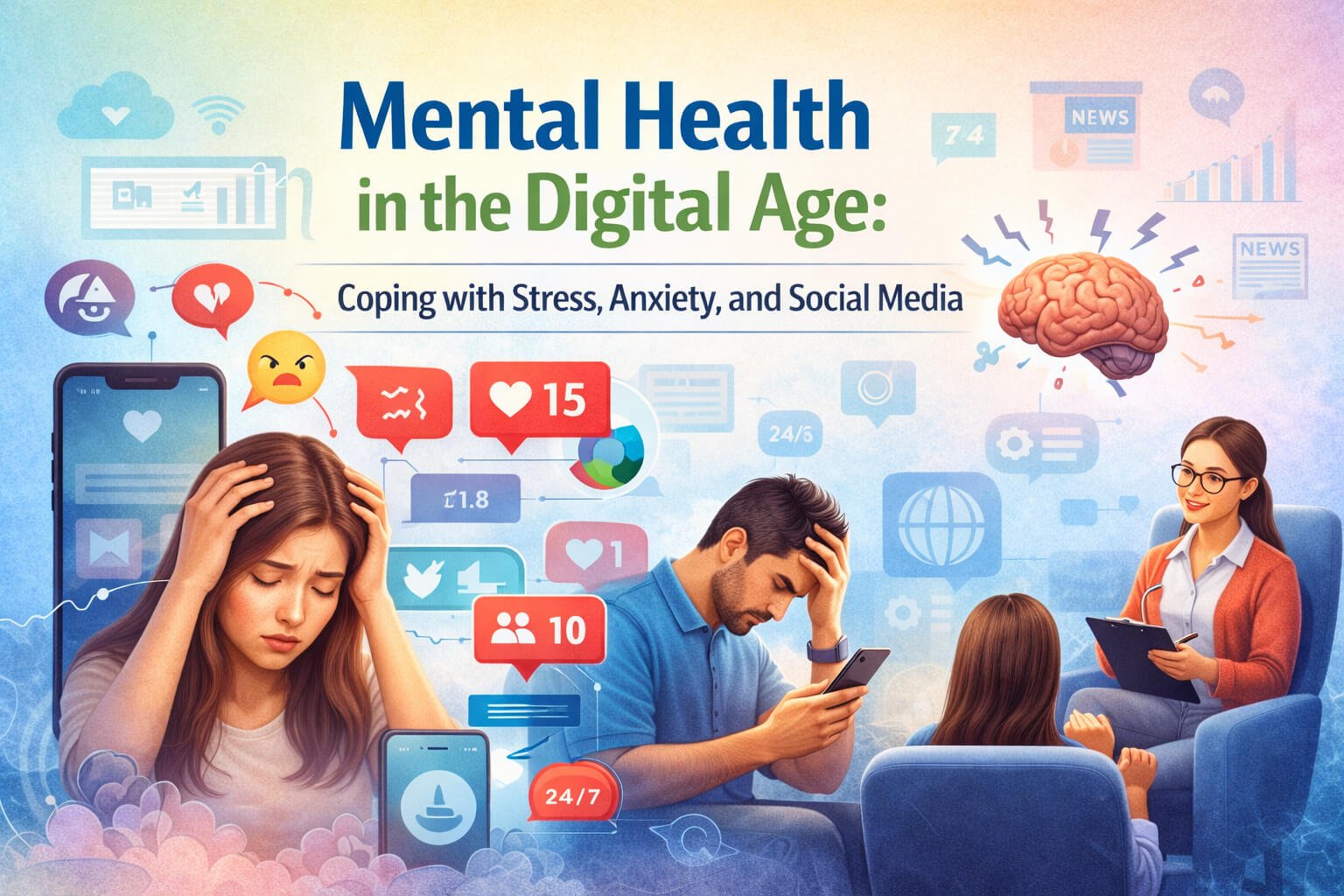
In today’s hyper-connected world, technology has become an essential part of our daily lives. From checking emails to scrolling through social media, we are constantly surrounded by screens. While digital platforms have made communication easier and faster, they have also introduced new challenges—especially when it comes to mental health.
Stress, anxiety, and emotional burnout are becoming increasingly common, particularly among young people and working professionals. The digital age has brought convenience, but it has also blurred the line between personal and professional life. Understanding how technology affects our mental health—and learning how to manage it—is more important than ever.
The Rise of Digital Stress
Digital stress refers to the pressure and overwhelm caused by constant connectivity. Notifications, emails, messages, and social media updates create a sense of urgency that makes it difficult to relax.
Many people feel the need to respond instantly, stay updated, and remain “online” at all times. This continuous engagement can lead to:
- Mental fatigue
- Difficulty focusing
- Poor sleep quality
- Increased stress levels
Over time, this can negatively impact both mental and physical health.
Social Media and Its Impact on Mental Health
Social media platforms have changed the way we interact, but they also come with hidden emotional costs.
1. Comparison Culture
Scrolling through perfectly curated posts can make people compare their lives with others. This often leads to feelings of inadequacy and low self-esteem.
2. Fear of Missing Out (FOMO)
Seeing others enjoy events, travel, or success can create anxiety about missing out, even when you’re content with your own life.
3. Validation Dependency
Likes, comments, and shares can become a source of validation. When posts don’t perform well, it may lead to disappointment or self-doubt.
4. Cyberbullying and Online Negativity
Negative comments, trolling, or online harassment can seriously affect emotional well-being.
Anxiety in a Constantly Connected World
The digital age has made it harder to “switch off.” Work emails after office hours, late-night scrolling, and endless information overload contribute to anxiety.
Some common signs of digital anxiety include:
- Feeling restless without your phone
- Constantly checking notifications
- Difficulty concentrating
- Overthinking social media interactions
This type of anxiety can slowly become a habit, making it difficult to disconnect.
The Role of Information Overload
We consume more information in a single day than people did in weeks a few decades ago. News updates, reels, blogs, and videos flood our minds continuously.
While staying informed is important, too much information can:
- Increase stress
- Cause confusion
- Reduce decision-making ability
- Lead to mental exhaustion
This is often referred to as “information fatigue.”
Positive Side of Technology for Mental Health
While technology has its downsides, it also offers valuable tools for mental well-being.
Mental Health Apps
Apps for meditation, sleep, and stress management help people build healthy habits.
Online Therapy
Virtual counseling has made mental health support more accessible and affordable.
Support Communities
Online groups provide emotional support and allow people to share their experiences.
Awareness and Education
Digital platforms help spread awareness about mental health, reducing stigma and encouraging open conversations.
Practical Ways to Cope with Digital Stress
Managing mental health in the digital age doesn’t mean avoiding technology—it means using it wisely.
1. Set Screen Time Limits
Track how much time you spend on your devices and set daily limits for non-essential apps.
2. Practice Digital Detox
Take regular breaks from screens. Even a few hours without your phone can refresh your mind.
3. Turn Off Unnecessary Notifications
Reducing alerts can help you focus better and feel less overwhelmed.
4. Create Tech-Free Zones
Avoid using devices during meals or before bedtime to improve mindfulness and sleep quality.
5. Follow Positive Content
Unfollow accounts that trigger negativity and follow pages that inspire and educate.
6. Prioritize Real-Life Connections
Spending time with family and friends in person helps build stronger emotional bonds.
Managing Anxiety and Stress Effectively
Beyond digital habits, managing stress and anxiety requires a holistic approach.
Practice Mindfulness
Meditation and deep breathing can help calm your mind and improve focus.
Stay Physically Active
Exercise reduces stress hormones and boosts mood.
Maintain a Healthy Routine
Consistent sleep, balanced diet, and regular breaks are essential for mental health.
Limit News Consumption
Stay informed, but avoid excessive exposure to negative news.
Seek Professional Help
If stress or anxiety becomes overwhelming, talking to a therapist can make a big difference.
The Importance of Digital Boundaries
Setting boundaries in the digital world is crucial. Without limits, work and personal life can overlap, leading to burnout.
Examples of healthy digital boundaries:
- Not checking emails after work hours
- Avoiding social media first thing in the morning
- Scheduling offline time daily
These small changes can significantly improve mental well-being.
Mental Health and the Younger Generation
Young people are especially affected by digital pressures. Growing up with social media exposes them to unrealistic standards and constant comparison.
It’s important to:
- Educate them about responsible digital use
- Encourage offline hobbies
- Promote open conversations about mental health
Parents and educators play a key role in guiding healthy digital habits.
The Future of Mental Health in a Digital World
As technology continues to evolve, mental health awareness is also growing. Companies are introducing features like screen time tracking and reminders to take breaks.
In the future, we can expect:
- More advanced mental health apps
- AI-driven emotional support tools
- Greater focus on digital well-being
The goal is not to eliminate technology but to create a healthier relationship with it.
Conclusion
The digital age has transformed our lives in many ways, but it has also brought new mental health challenges. Stress, anxiety, and social media pressures are real issues that need attention.
The key is balance. By setting boundaries, practicing mindfulness, and using technology wisely, we can protect our mental well-being while still enjoying the benefits of the digital world.
Remember, it’s okay to disconnect, take a break, and prioritize your mental health. After all, your well-being matters more than any notification.
FAQs
1. How does social media affect mental health?
Social media can increase stress, anxiety, and low self-esteem due to comparison, negativity, and constant engagement.
2. What is digital stress?
Digital stress is the feeling of overwhelm caused by constant notifications, screen time, and being always connected.
3. What are signs of digital anxiety?
Common signs include checking your phone frequently, feeling restless offline, and difficulty concentrating.
4. How can I reduce screen time?
You can set app limits, turn off notifications, and schedule regular breaks from your devices.
5. Is a digital detox helpful?
Yes, taking breaks from screens helps reduce stress, improve focus, and boost mental well-being.
6. When should I seek professional help?
If stress or anxiety starts affecting your daily life, sleep, or relationships, it’s best to consult a mental health professional.