

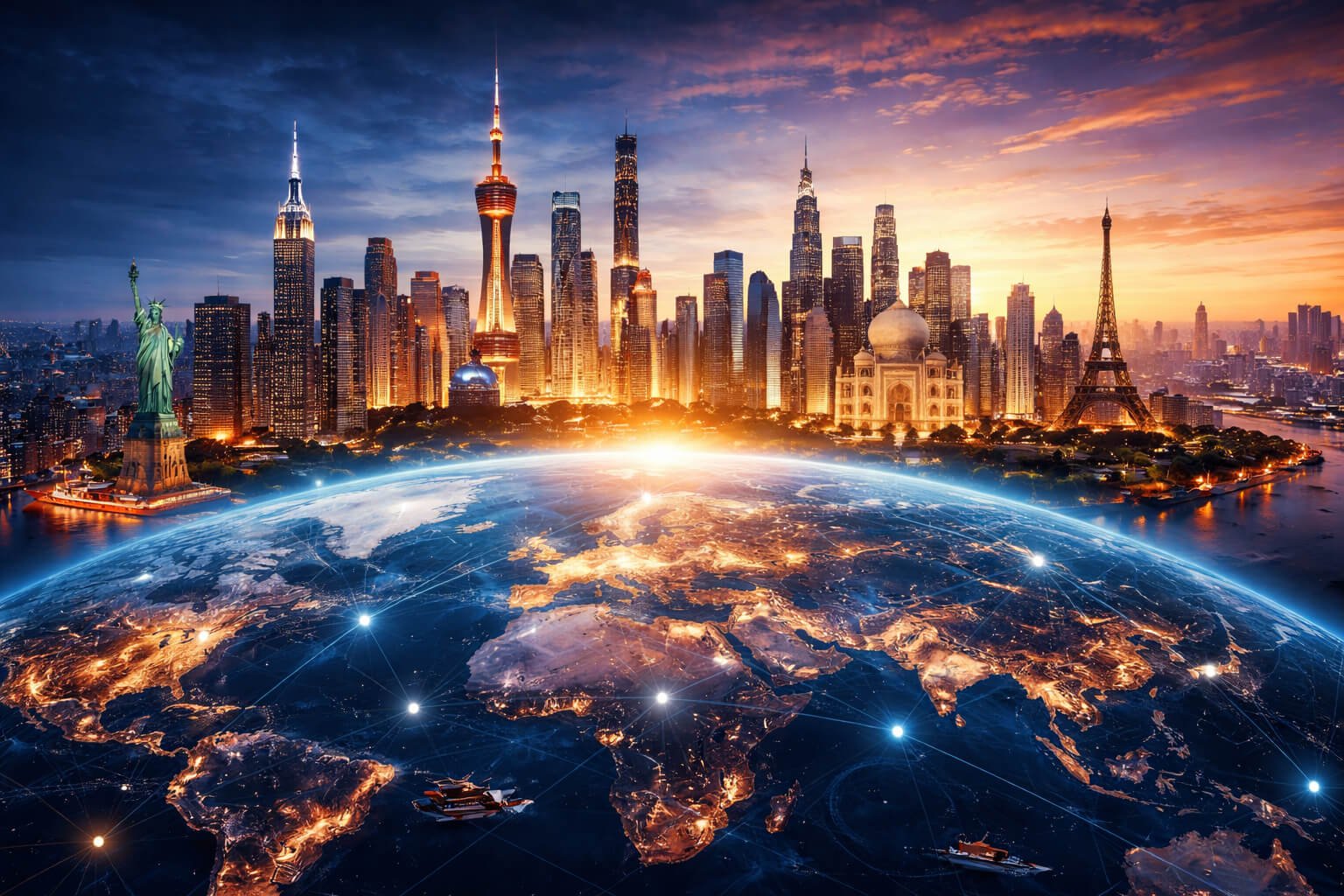
The global economy is going through one of the biggest transformations in modern history. Over the past few years, we’ve seen major shifts—new technologies, changing political alliances, supply chain disruptions, and evolving consumer behavior. As we step into 2026, one big question stands out:
Who will lead the global economy in this new world order?
The answer isn’t simple. Unlike the past, where one or two countries dominated, today’s economic leadership is becoming more distributed, competitive, and dynamic.
Let’s break it down in a way that’s easy to understand.
What Do We Mean by “New World Order”?
The “new world order” refers to how global power—economic, political, and technological—is shifting between countries.
For decades, the United States has been the dominant economic force. It led in innovation, finance, and global trade. Alongside it, Europe and Japan played strong supporting roles.
But now, things are changing.
Emerging economies are rising, digital transformation is reshaping industries, and geopolitical tensions are redrawing global alliances.
The Key Players in 2026
1. United States: Still a Leader, But Facing Competition
The United States remains one of the strongest economies in the world. Its strengths include:
- Advanced technology companies
- Strong financial markets
- Innovation in AI and startups
Companies like Apple, Microsoft, and Google continue to shape the digital economy.
However, challenges such as rising debt, political divisions, and global competition are slowing its dominance.
Verdict: Still powerful, but no longer unchallenged.
2. China: The Strong Challenger
The China has become a major force in manufacturing, exports, and digital innovation.
Its strengths include:
- Massive production capabilities
- Growing domestic market
- Investments in infrastructure through initiatives like the Belt and Road
China is also pushing hard in areas like AI, electric vehicles, and renewable energy.
However, it faces challenges like:
- Aging population
- Trade tensions with Western countries
- Regulatory uncertainties
Verdict: A strong contender, but facing internal and external pressures.
3. India: The Fastest Rising Star
The India is one of the most exciting economies in 2026.
Why?
- A young and growing population
- Rapid digital adoption
- Strong growth in startups and services
Programs like “Digital India” and increased focus on manufacturing are helping the country grow faster than many others.
India is also becoming a global hub for:
- IT services
- Fintech
- Startup innovation
Verdict: Not the leader yet, but one of the strongest future contenders.
4. European Union: Stable but Slow Growth
The European Union remains a major economic power.
Its strengths include:
- Strong industrial base
- Leadership in sustainability and green energy
- High-quality infrastructure
However, growth is slower compared to emerging economies due to:
- Aging population
- Complex regulations
- Dependence on external energy sources
Verdict: Stable and influential, but not the fastest mover.
5. Other Emerging Economies: The Dark Horses
Countries like:
- Brazil
- Indonesia
- Vietnam
are becoming important players in global trade.
These countries are attracting investment due to:
- Lower manufacturing costs
- Growing middle-class populations
- Strategic geographic locations
Verdict: Not leaders individually, but collectively very important.
The Role of Technology in Economic Leadership
In 2026, economic power is no longer just about GDP—it’s about technology leadership.
Countries leading in:
- Artificial Intelligence
- Semiconductor manufacturing
- Clean energy
- Digital infrastructure
are gaining a major advantage.
For example:
- The U.S. leads in software and AI innovation
- China leads in manufacturing scale and digital payments
- India is leading in digital public infrastructure
Conclusion: The future belongs to tech-driven economies.
Supply Chains Are Being Rewritten
The pandemic and geopolitical tensions have changed how global trade works.
Companies are no longer relying on a single country for production. Instead, they are adopting strategies like:
- “China +1” (adding another country alongside China)
- Nearshoring (moving production closer to home)
This shift benefits countries like India, Vietnam, and Mexico.
Impact: Economic power is becoming more distributed.
The Rise of Economic Alliances
Another key trend in 2026 is the rise of regional partnerships.
Examples include:
- Trade agreements
- Strategic technology partnerships
- Energy collaborations
Organizations like the World Trade Organization and International Monetary Fund still play a role, but countries are increasingly forming their own alliances.
Impact: No single country controls everything anymore.
So, Who Will Lead the Global Economy?
Here’s the honest answer:
There will not be just one leader.
Instead, we are moving toward a multi-polar global economy, where:
- The United States leads in innovation
- China leads in manufacturing and scale
- India leads in growth and digital expansion
- Europe leads in sustainability
- Emerging markets drive future demand
What This Means for Businesses and Individuals
This shift is not just important for governments—it affects everyone.
For Businesses:
- More opportunities in multiple markets
- Need to adapt to different regulations and cultures
- Focus on digital transformation
For Individuals:
- More global job opportunities
- Need for new skills (especially tech-related)
- Increased competition in the workforce
Final Thoughts
The global economy in 2026 is no longer dominated by a single superpower. Instead, it’s a complex, interconnected system where multiple countries play key roles.
The “new world order” is not about who wins—it’s about who adapts the fastest.
Countries that invest in technology, education, and innovation will lead the future.
And for the rest of us, the message is clear:
Stay informed, stay adaptable, and be ready for a world where change is the only constant.