

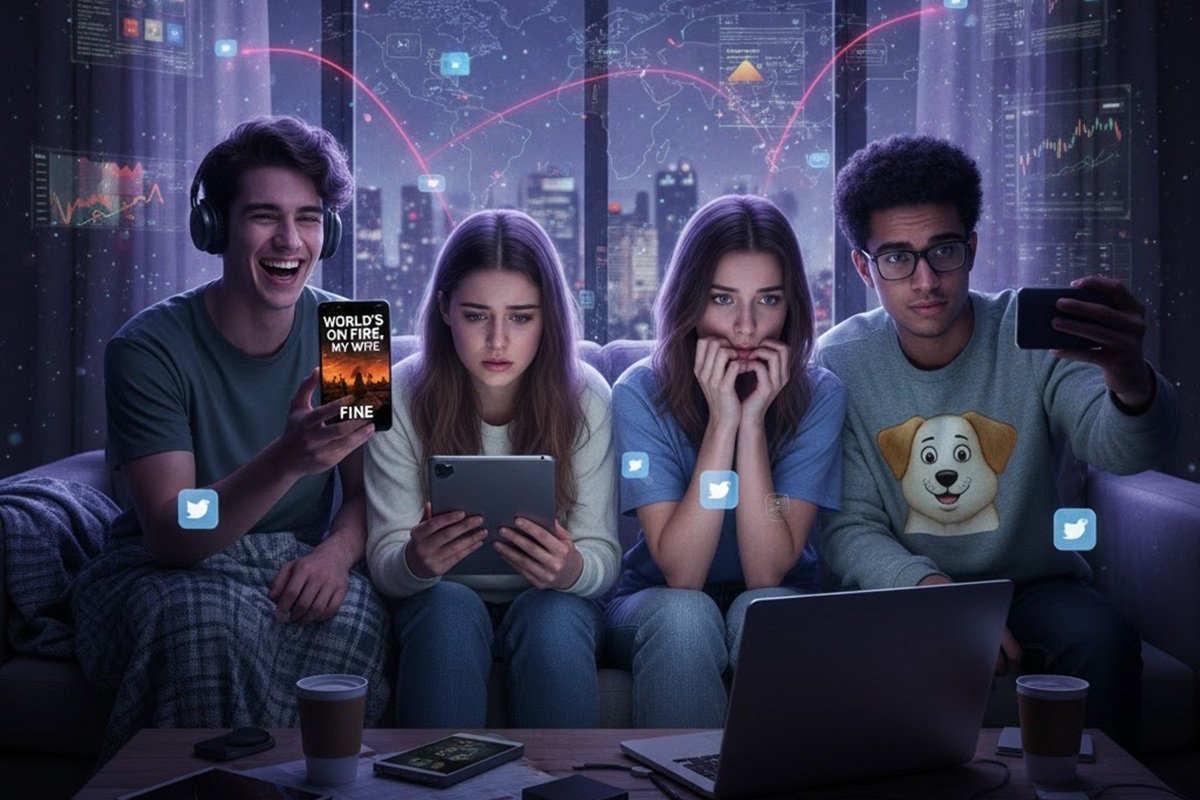
s global tensions continue to rise—from geopolitical conflicts to fears of war—Gen Z in the USA is responding in a way that reflects their unique digital-first worldview. Their reactions are shaped by memes, social media trends, dark humor, and at the same time, growing anxiety about the future.
This generation, born between 1997 and 2012, has grown up surrounded by rapid political changes, economic instability, and constant online information. As a result, their coping mechanisms blend humor, activism, and emotional fatigue.
Why Gen Z Reacts Differently to Global Conflicts?
Unlike previous generations, Gen Z consumes global news instantly through TikTok, Instagram, and X (Twitter). This constant exposure makes them more aware—yet also more overwhelmed.
1. Information Overload
Gen Z faces:
- Continuous updates on global conflicts
- Memes and misinformation mixed with real news
- Pressure to “stay informed”
This real-time news flow influences the Gen Z USA war reaction, often triggering emotional swings between humor, fear, and frustration.
2. Living Through Multiple Crises
From the pandemic to economic uncertainty, Gen Z has experienced one challenge after another. This background shapes how seriously or humorously they respond to global tensions today.
Memes and Humor: A Coping Mechanism
One of the strongest trends in the Gen Z USA war reaction is using humor to deal with fear.
Why Humor?
- It reduces anxiety
- It helps them feel less alone
- It creates a sense of community
Platforms like TikTok and Instagram get flooded with jokes, POV videos, and sarcastic captions whenever global conflict news breaks.
Examples of Humor Themes
- “If World War 3 starts tomorrow, I’m not going.”
- “Gen Z trying to survive global tensions while drinking iced coffee.”
- “We didn’t even finish one crisis before the next one came.”
This humor may seem dismissive, but mental health experts say it’s a psychological tool for processing overwhelming situations.
Rising Anxiety Behind the Laughter
While humor dominates on the surface, anxiety levels are increasing among Gen Z.
Major Sources of Stress
- Fear of being drafted or involvement in war
- Concerns over job stability if global conflict escalates
- Uncertainty about the future
- Constant exposure to disturbing videos online
According to recent surveys, Gen Z reports the highest levels of stress related to global instability compared to older generations.
Gen Z’s Strong Political Awareness
Despite humor, Gen Z is deeply connected to political and global issues. They follow news, challenge narratives, and participate in online discussions more actively than previous generations.
Ways Gen Z Shows Awareness
- Sharing educational posts
- Supporting humanitarian causes
- Signing petitions
- Joining peaceful protests
- Calling out misinformation
Their political engagement is heavily influenced by social media-driven activism.
Social Media: The Center of Gen Z’s Worldview
Social platforms shape how Gen Z interprets global events.
How Social Media Influences Reactions
- Algorithms amplify emotions (fear, anger, humor)
- Short videos simplify complex conflicts
- Creators become news sources
- Misinformation spreads quickly
While this brings awareness, it also fuels confusion and emotional overload.
Balancing Humor, Activism & Emotional Survival
The mix of memes, anxiety, and activism reflects Gen Z’s attempt to stay informed without losing their mental well-being.
Coping Strategies Many Gen Z Use
- Taking social media breaks
- Following mental health creators
- Sharing relatable content
- Turning news into humor
- Educating themselves about global politics
Their reactions show a generation trying to stay strong despite constant uncertainty.
Conclusion
The Gen Z USA war reaction is a blend of:
- Humor as a coping tool
- Anxiety driven by uncertainty
- Activism fueled by awareness
- Digital conversations shaping perspectives
As global tensions continue, Gen Z’s unique way of processing serious issues highlights both their resilience and their vulnerabilities. Understanding their reactions helps explain how future generations will cope with crisis-driven digital environments.