

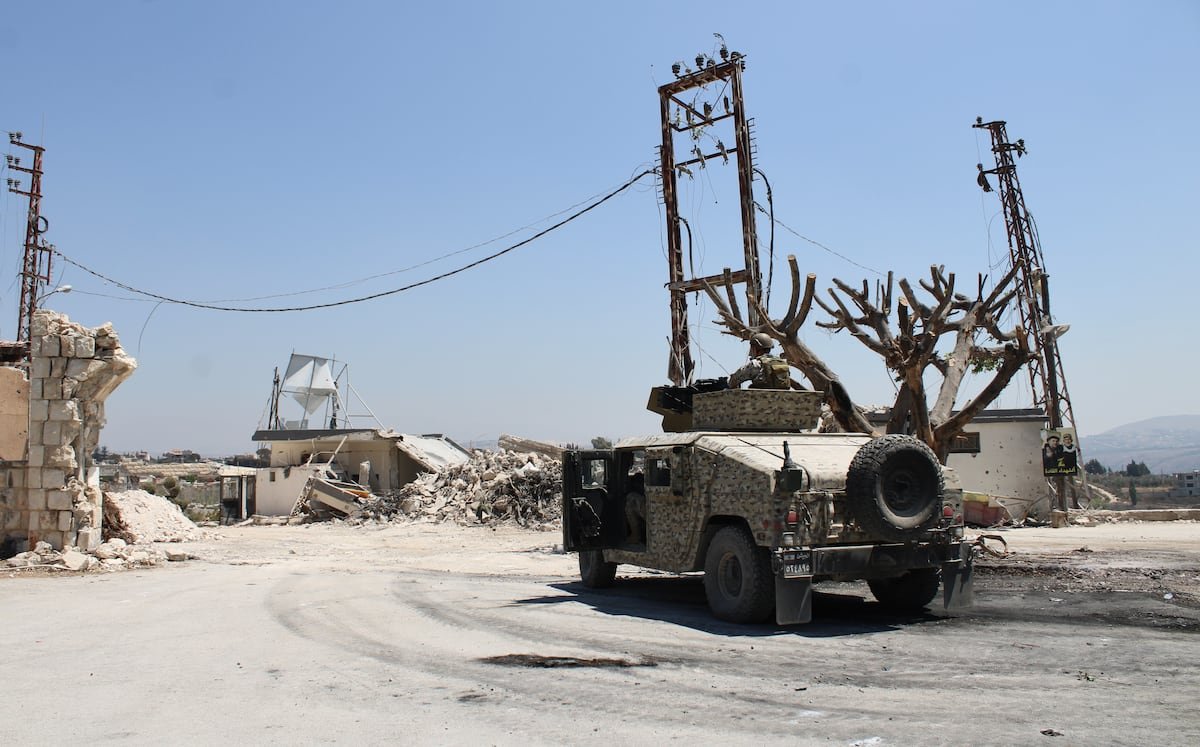
NABATIEH DISTRICT, Lebanon — At the entrance to Zawtar Gharbieh in southern Lebanon, Lebanese Armed Forces (LAF) troops are stationed under a tree, stopping anyone attempting to pass through.
The country’s military recently regained control of the area after Israeli troops occupying parts of southern Lebanon agreed to withdraw, part of a “pilot zone” model proposed under U.S.-mediated talks between Lebanon and Israel.
Under the framework agreement, Israel would withdraw from two initial pilot zones in occupied areas once they have been verifiably cleared of Hezbollah weapons and fighters. A verification mechanism has yet to be determined, and so far Israel has withdrawn from only one of the two agreed pilot zones.
“Israeli troops did not actually occupy the town,” Zawtar Gharbieh’s mayor, Abed Ezzeddine, stressed, noting that Israeli troops conducted operations in the town but never set up a permanent presence there.
RELATED
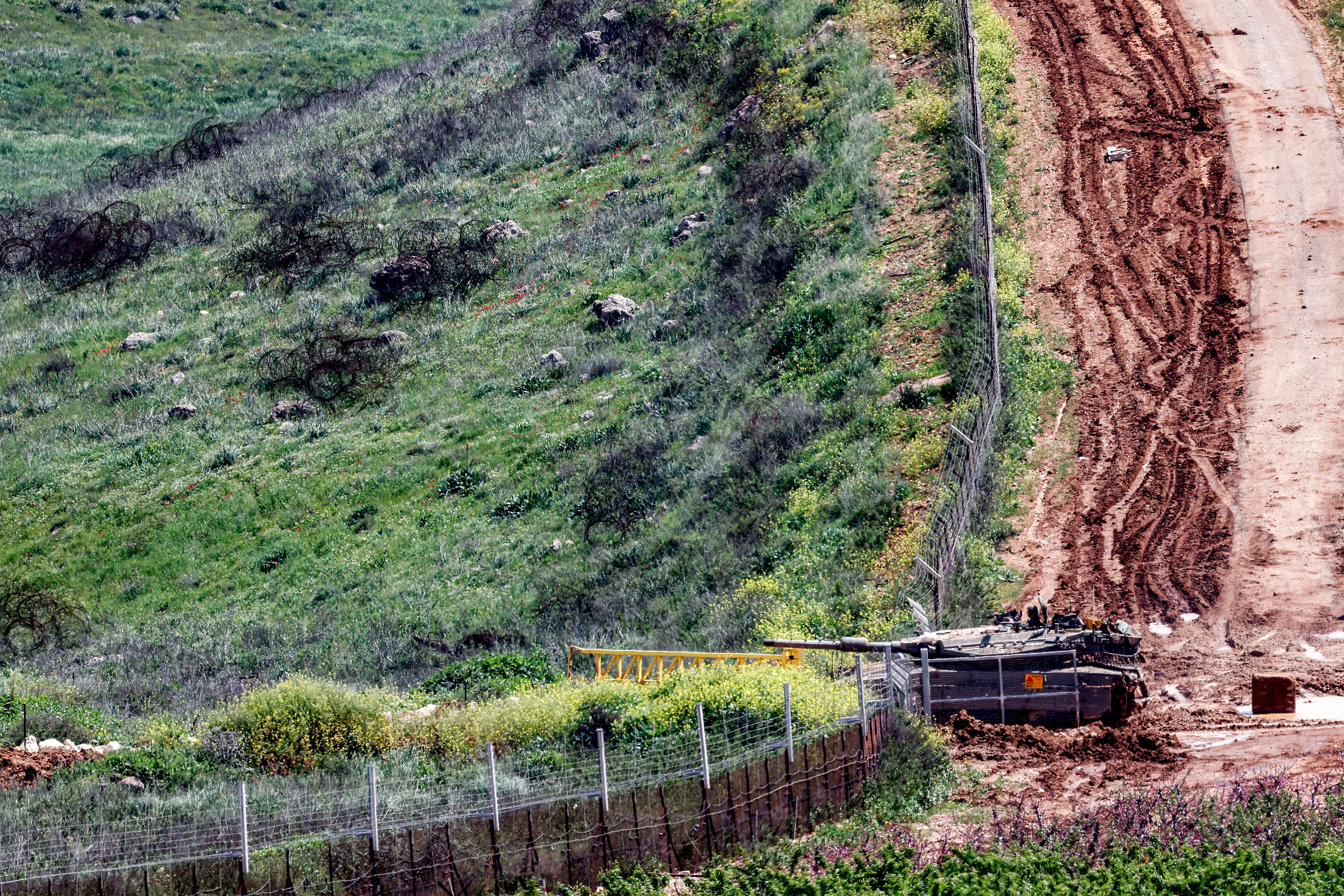
The municipality of Zawtar Gharbieh (Western Zawtar) is the twin village of Zawtar Sharqieh (Eastern Zawtar). The two villages, each home to several hundred families, face each other. From the main square, Israeli bulldozers can be seen operating in the opposite village. Lebanese Armed Forces and Israeli troops watch each other.
The Lebanese Armed Forces are clearing rubble, providing basic services and working to restore infrastructure for the dozens of families who have decided to return to the area. They operate under the surveillance of Israeli reconnaissance drones, which fly overhead, sometimes low among the residents.
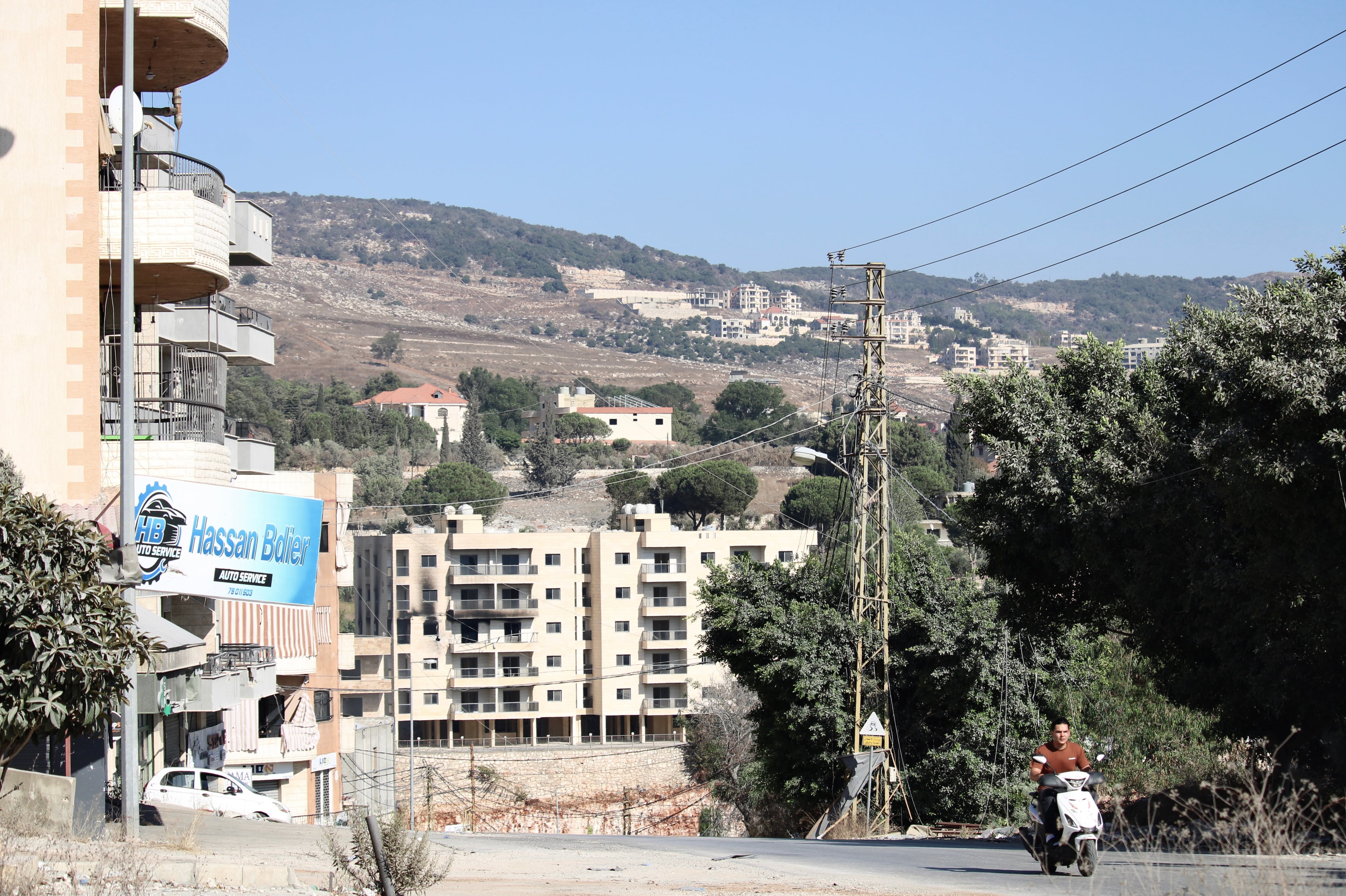
“Sometimes they come very close,” Ezzeddine said. That’s why the Lebanese Armed Forces have asked, through a channel established with the ceasefire of November 2024 and comprising Lebanon, Israel, the United States, France and UNIFIL, that Israeli drones maintain a certain distance so as not to frighten people seeking to return to a semblance of normal life.
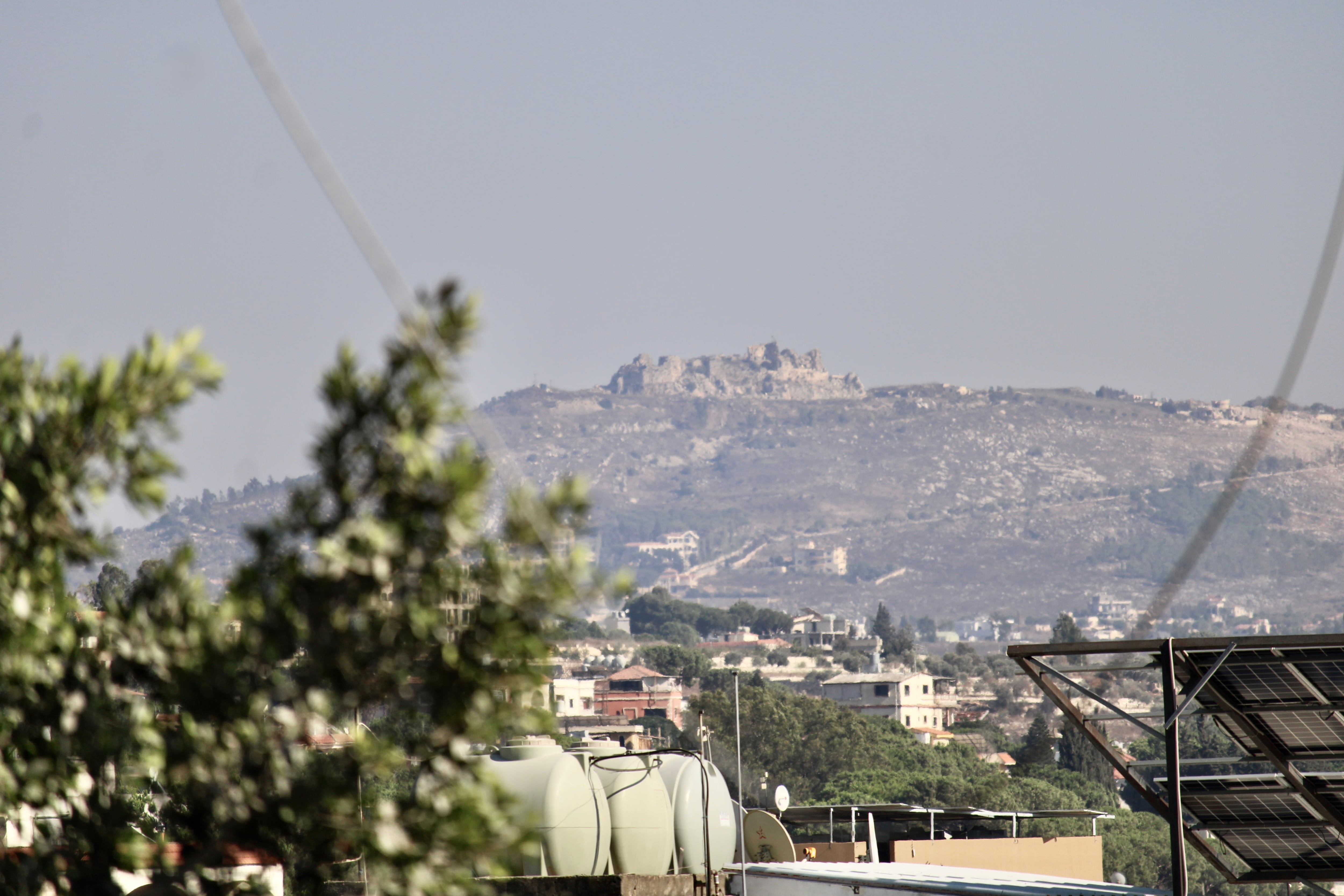
From Zawtar Gharbieh, the strategic Ali al-Taher hills can be seen in the distance. The area is surrounded by Israeli forces and is believed to host a strategic Hezbollah command center.
Rising approximately 600 meters (2,000 feet) above the surrounding terrain, the hills are subjected to almost daily Israeli shelling despite the ceasefire. The high ground is considered a strategic asset, not only because of its elevation and geographic location, but also because of claims that tunnels and Hezbollah fighters remain inside.
“If reports of underground infrastructure in the area are accurate, the significance of Ali al-Taher extends beyond the surface of the hill itself,” said Mounir Shehadeh, a former brigadier general in Lebanon’s armed forces and former Lebanese government coordinator to UNIFIL. However, such details are difficult to verify independently.
The Ali al-Taher ridge overlooks Nabatieh, one of southern Lebanon’s largest cities, and forms part of the high ground surrounding the city. The area, located approximately 12 kilometers, or 7 miles, from the border and north of the Litani River, has become a focus of Israeli military operations in southern Lebanon in recent weeks.
Israeli attacks have intensified in recent days, with UNIFIL reporting an increase in Israeli military activity and an average of 137 projectiles fired per day between Aug. 5 and Aug. 16.
“The existence of underground military infrastructure is plausible and there are indications supporting it. However, claims concerning its size, the number of people inside it and the use of gas remain unverified”, Shehadeh added, referring to reports circulating about the use of gas by Israeli forces in the Ali al-Taher hills.
According to Shehadeh, these accounts may serve a purpose in psychological and media warfare: “Portraying the area as a massive military hub, with trapped fighters, tunnels and hazardous materials, could help justify the continuation of Israeli operations and prepare public opinion for a longer incursion or occupation.”
The mayor of Nabatieh, Abbas Fakhreddine, shares this view, arguing that the strategic importance of the heights may have been exaggerated through a media campaign to lay the groundwork for a military operation that could serve Israel’s interests ahead of upcoming elections.
The Ali al-Taher hills overlook Nabatieh, as well as the Iqlim al-Tuffah and Jabal al-Rayhan areas and the surrounding Litani Valley. They are also geographically connected to the chain of high ground that includes Beaufort Castle, the Crusader-era fortification previously occupied by Israel and still under Israeli control.
From a military perspective, Shehadeh said, controlling the high ground means possessing an observation point and the ability to exercise fire control over a wide area. However, in modern warfare controlling a hill does not necessarily mean controlling the entire surrounding area, but it provides an advantage in surveillance, tracking troops movements, directing fire and protecting the routes.
“Whoever controls Ali al-Taher is able to place Nabatieh and its surroundings under more direct surveillance and fire pressure,” he added.
These heights represent a forward defensive line and have also acquired a symbolic and psychological dimension, given that “the Israeli army has failed six times to capture this hill,” Shehadeh said.
The Lebanese Armed Forces are under pressure from Israeli forces to take control of the area. But, understaffed and under-equipped, they cannot enter into an open confrontation Hezbollah or stand up to Israel’s military.
Still, Shehadeh argued, the LAF should seek to prevent a lasting Israeli presence in Lebanon from becoming a foregone conclusion by documenting changes on the ground, coordinating with international actors and supporting Lebanon’s negotiating position.
For Hezbollah losing the hilly land here would represent more than the loss of a geographical position. “It would send the message that Israel is capable of retaining strategic high ground inside Lebanese territory even after agreements and ceasefires,” he added.
The former LAF brigadier general identifies three potential objectives behind the Israeli attempt to take control of Ali al-Taher. The military objective, he said, is to remove Hezbollah from high ground that allows it to observe Israeli routes and forces and monitor the surrounding area. The geographical objective is to establish a chain of elevated positions inside Lebanon.
The third, and “most concerning,” according to Shehadeh, is the political objective: “Israel may not need to formally declare a permanent occupation in order to establish a reality resembling one,” he said.
Developments on the ground reinforce that dynamic, as Israeli forces have not limited themselves to defending the positions held inside Lebanese territory, but continue conducting daily operations following ceasefire arrangements.
“Therefore, Lebanese concerns that Israel may seek to consolidate a long-term presence on certain strategic heights are entirely reasonable”, Shehadeh said. “This is what makes the battle for Ali al-Taher directly connected to the future of the Lebanese border, and not merely to the future of Hezbollah,” he concluded.
Agnese Stracquadanio is a Middle East correspondent for Defense News. She has a background in writing and photojournalism, holds a master’s degree in international relations, and previously worked for Reuters.