

5 min readNew DelhiUpdated: Aug 27, 2026 05:42 AM IST
India and China have decided to advance discussions on “an early and substantial harvest” of boundary delimitation and border management, and agreed on two new border military hotlines in the eastern and middle sectors, two new meeting points for military commander-level meetings, and on holding the trans-border river meeting next month.
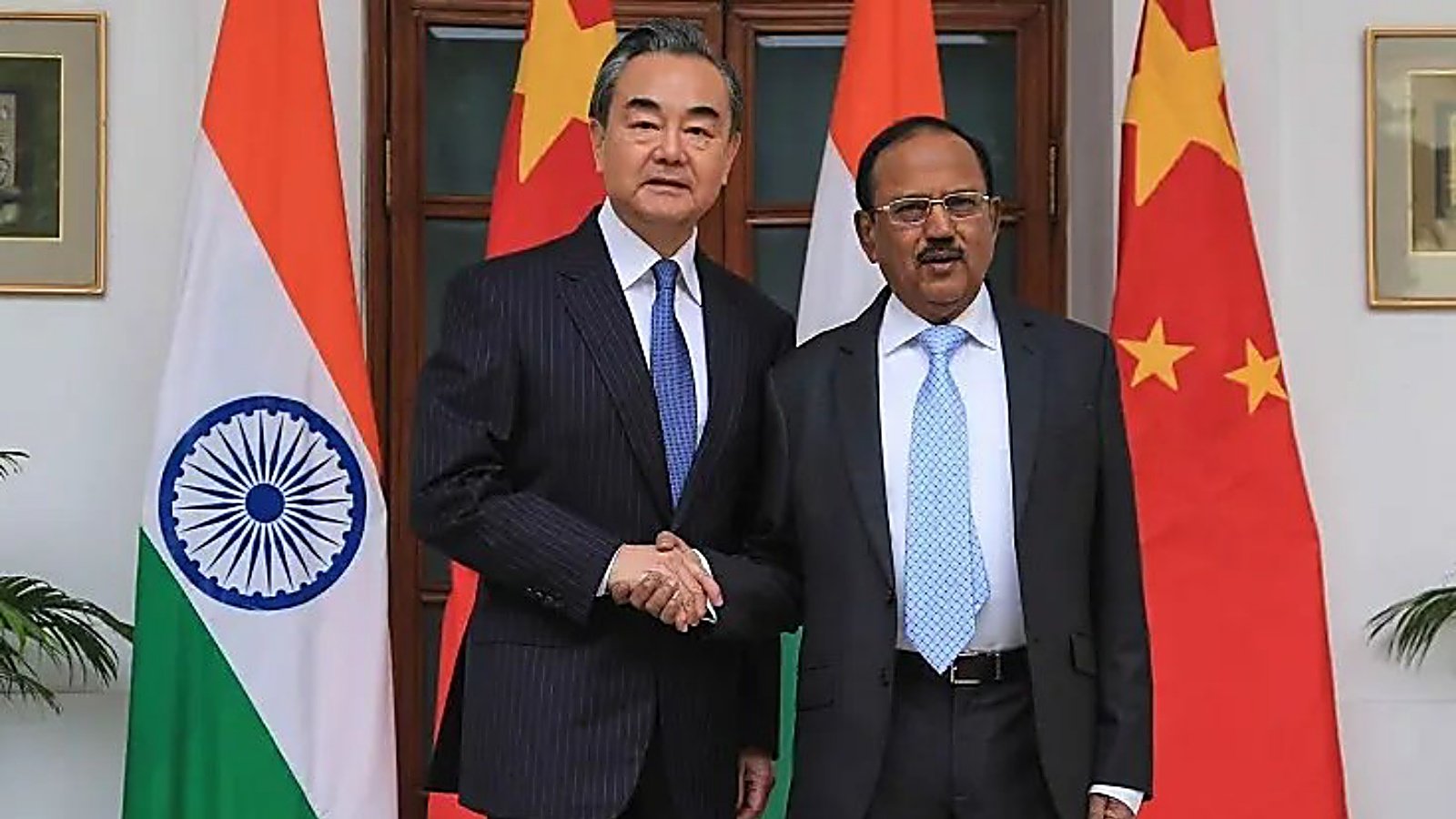
These form part of eight outcomes and consensus after the Special Representative-level talks between National Security Advisor Ajit Doval and Chinese Foreign Minister Wang Yi in Beijing Tuesday.

A statement released Wednesday by both the Ministry of External Affairs and the Chinese Foreign Ministry spoke of eight outcomes and consensus reached after the 25th round of talks between the Special Representatives where there was a candid and in-depth exchange of views on the boundary question.
According to the statement, the two sides reaffirmed their commitment to “uphold the guidance received from the leaders of the two countries, maintain peace and tranquility in the border areas” and “create an atmosphere for healthy and steady development of bilateral relations”.
The two sides underlined their commitment to “advancing negotiations on a framework for the settlement of the boundary question in accordance with the Agreement on Political Parameters and Guiding Principles for Settlement of the China-India Boundary Question signed in 2005 and the consensus reached in subsequent SR talks, in pursuit of a fair, reasonable and mutually acceptable solution,” it stated.
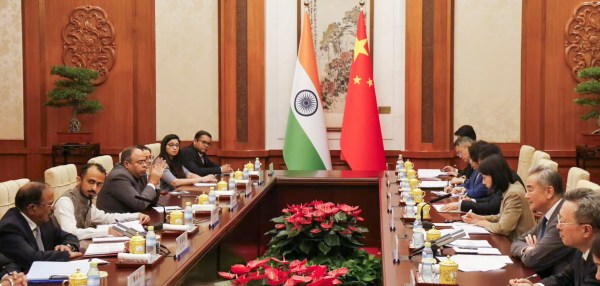 National Security Advisor (NSA) Ajit Doval holds the 25th round of Special Representatives (SR) talks with China Foreign Affairs Minister Wang Yi, in Beijing, China. (Handout via PTI Photo)
“The Expert Group on Boundary Delimitation and Working Group on Border Management under the WMCC would respectively advance discussions on an Early and Substantial Harvest of boundary delimitation and Border Management. The first task for both these groups would be to agree on their respective Terms of Reference,” the statement said on the third outcome. The WMCC is the Working Mechanism for Consultation and Coordination on India-China Border Affairs.
Incidentally, when Doval and Wang held talks in New Delhi on August 19, 2025, days before Prime Minister Narendra Modi’s visit to Tianjin for the Shanghai Cooperation Organisation summit, they had decided to form an expert group under the WMCC to explore early harvest of the boundary delimitation, and a working group under the WMCC to advance effective border management.
Story continues below this ad
On the fourth outcome of the Beijing meeting, the statement said: “The two sides agreed that any situation on the ground would be addressed promptly through existing diplomatic and military channels, including the WMCC, local commander-level meetings and other agreed mechanisms, to resolve outstanding issues and avoid misunderstanding and miscalculation along the LAC. The two sides discussed ways to improve understanding of the LAC in appropriate areas for better border management.”
The fifth outcome stated: “With the objective to improve the border management measures, an additional two meeting points were agreed for holding the General Level Mechanism/Senior Highest Military Commander meeting (SHMC). Similarly, two additional channels of border military hotline in the Eastern and Middle Sectors were agreed.”
Last year, the two sides had agreed on general level mechanisms in the eastern sector (Arunachal Pradesh) and middle sector (Himachal Pradesh and Uttarakhand), in addition to the existing mechanism in the western sector (Ladakh).
The sixth outcome of the meeting stated: “Both sides noted the progress on trans-border cooperation. The Indian side appreciated the efforts made by the Chinese side to increase the number of batches of Indian official pilgrimage Kailash-Mansarovar Yatra (KMY) in the Tibet Autonomous Region of China. Both sides appreciated the reopening of the three designated border trading points. The two sides agreed to strengthen exchanges and cooperation in border trade, pilgrimage and other areas, with the view to work together to create an atmosphere featuring dialogue, peace, consultation and cooperation in the border areas.”
Story continues below this ad
The Chinese Foreign Ministry statement described the Tibet Autonomous Region as “Mount Gang Renpoche and Lake Mapam Yun Tso in Xizang Autonomous Region of China”.
The seventh outcome was that “the two sides agreed to hold the next meeting of the China-India Expert-Level Mechanism on Trans-border Rivers in September and maintain communication on issues including hydrological data sharing, and renewal of relevant MoUs.” This is especially important for the Brahmaputra, and timely sharing of data for river management.
Listing the eighth outcome, the statement said the two sides agreed to hold the 26th round of SR-level talks in India in 2027.