

Close Menu

    Subscribe to Updates

    Get the latest news information from worldwide businesses.

    What's Hot

    Why do we care so much that Pluto isn’t a planet?

    August 26, 2026

    “He scolded him” – Pundit calls out Cristiano Ronaldo as he highlights ‘difference’ between him and 1 other Al-Nassr star

    August 26, 2026

    Self-Driving Trucks Are Already Hitting The Road In California

    August 26, 2026
    Facebook Instagram YouTube LinkedIn X (Twitter)
    Trending
    • Why do we care so much that Pluto isn’t a planet?
    • “He scolded him” – Pundit calls out Cristiano Ronaldo as he highlights ‘difference’ between him and 1 other Al-Nassr star
    • Self-Driving Trucks Are Already Hitting The Road In California
    • Over 1.1M GM vehicles, including EVs, under NHTSA investigation
    • Where to Stay Near Banff National Park for Incredible Views and Proximity to Lake Louise
    • ‘Spent This Money on Fixing My Face’
    • Scientists just imaged the hidden quantum shape of a molecule
    • India wanted red flags on chip packets and soda. Big Food fought back.
    Newspublicly
    • About Us
    • Advertise & Partner with us
    • Pitch Your Story
    • Contact Us
    Facebook Instagram LinkedIn X (Twitter)
    Subscribe
    • Home
    • World News
      • Asia
      • India
      • USA
      • UK & Europe
      • Middle East
    • Economy & Business
      • Global Economy
      • Corporate & Industry
      • Finance & Markets
      • Policy & Trade
    • Technology
      • Gadgets & Devices
      • Software & Apps
      • AI & Machine Learning
      • Robotics & Automation
    • Health & Medicine
      • Fitness & Nutrition
      • Research & Innovation
      • Disease & Treatment
      • Doctors, Clinics & Patient Care
    • Travel & Tourism
    • Automobile
      • Electric & Hybrid Vehicles
      • Auto Industry Insights
    • Sports
    • More
      • Education
      • Real Estate
      • Environment & Climate
      • Space & Astronomy
      • War & Conflicts
    Newspublicly
    Home»Health & Medicine»Research & Innovation»Screen time at ages 1 and 6 may matter more than parents realize
    Research & Innovation

    Screen time at ages 1 and 6 may matter more than parents realize

    AdminBy AdminAugust 26, 2026No Comments4 Mins Read0 Views
    Share
    Facebook Twitter LinkedIn Copy Link WhatsApp


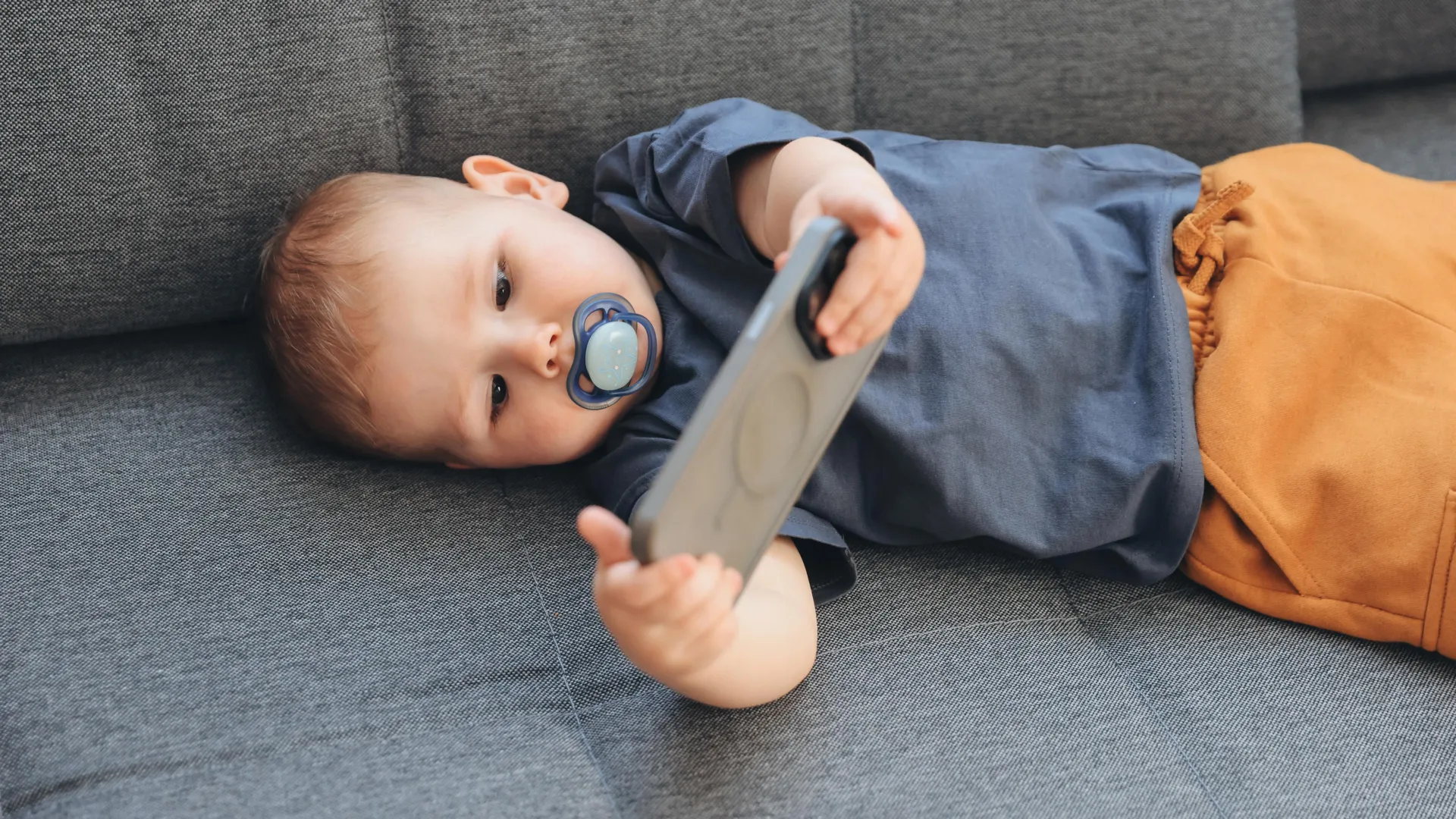
    Screens are now a routine part of life for many young children, raising growing questions about how early exposure could influence development over time. New longitudinal research that tracked children from age 1 through age 8 found that greater screen viewing, especially during infancy and around the time children begin school, was associated with lower academic performance at age 9 and weaker working memory at age 10.5. The results suggest that when children are exposed to screens could matter just as much as how much time they spend using them.

    The World Health Organization (WHO) and the American Academy of Pediatrics recommend avoiding screen use before 18-24 months and limiting it to less than one hour per day for children ages 2 to 5. Many children, however, spend more time with screens than those guidelines advise. Research into the effects of screen viewing on cognitive development has also produced mixed results. Much of the previous work has relied on snapshots taken at a single point in time, focused mainly on school-age children, or lacked repeated measurements throughout early childhood. Studies that follow children across several developmental stages can help identify periods when screen exposure may be especially important while also accounting more effectively for family and environmental factors.

    Tracking Screen Time From Infancy Through Childhood

    Researchers from Inserm and the National University of Singapore conducted the study, which was published in the World Journal of Pediatrics. Using information from the Growing Up in Singapore Towards healthy Outcomes (GUSTO) birth cohort, the team examined parent-reported screen viewing at six different ages. They then compared those measurements with children’s academic performance and working memory several years later.

    The analysis included 502 children who were followed from infancy into middle childhood. Higher screen viewing during certain stages of development was associated with poorer academic results later on and weaker working memory. The clearest patterns appeared for screen exposure during infancy and near the beginning of formal schooling, indicating that these periods may be particularly sensitive for cognitive development.

    Children who accumulated more screen exposure across childhood also tended to perform less well academically. Together, the findings suggest that total viewing time is only part of the picture. The age at which heavier screen use occurs may also be important, with early childhood potentially representing a period when screen habits have longer-term implications for learning and memory.

    Age 1 Showed the Strongest Association

    “The effect sizes we saw at age 1 were the largest among all time points we examined,” the authors said. “That suggests early infancy may be a window of heightened sensitivity, when the developing brain is particularly vulnerable to the displacement of learning interactions by screen time. We were also surprised to see that while screen use at age 2 and 3 did not show significant links, the associations re-emerged at age 6 — when children enter formal schooling. So it is not just about early years; screen use later in childhood still matters.”

    The pattern was not identical at every age. Screen viewing at ages 2 and 3 was not significantly associated with the later outcomes measured in the study, but the relationship appeared again at age 6. That timing coincides with the transition into formal education, when children face increasing demands on attention, memory, and learning.

    Why the Timing of Screen Use May Matter

    According to the researchers, the results support the general principle that “less is better” for children’s screen exposure. An additional hour of viewing each day may not produce an obvious effect in every individual child, but relatively small changes across an entire population could still shift a meaningful number of children toward poorer academic outcomes.

    Efforts to reduce screen viewing may therefore be most useful when they begin during infancy and are reinforced as children approach school entry age. The researchers also caution that screen duration alone does not capture the full picture. Future studies should investigate whether developmental outcomes differ depending on the quality of the content children watch, the type of device being used, and whether parents watch alongside their children.

    The GUSTO study was supported by the Singapore National Research Foundation and the Singapore Ministry of Health’s National Medical Research Council (NMRC/TCR/004-NUS/2008 and NMRC/TCR/012-NUHS/2014). Additional funding came from the Agence Nationale de la Recherche (ANR) in France (iSCAN project, ANR-20-CE36-0001).


    Source link

    Author

    • Admin

      NewsPublicly.com is News & Articles Platform that creating SEO-focused articles on travel, lifestyle, and digital trends.

    Admin
    • Website

    NewsPublicly.com is News & Articles Platform that creating SEO-focused articles on travel, lifestyle, and digital trends.

    Related Posts

    Scientists just imaged the hidden quantum shape of a molecule

    August 26, 2026

    Too much or too little sleep may make your body age faster

    August 26, 2026

    Forces deep inside Earth helped Antarctica freeze before the Arctic

    August 26, 2026
    Leave A Reply Cancel Reply

    Demo
    Top Posts

    The Blue Moon rises on May 30— Where and when to see the second full moon of the month

    May 30, 202640 Views

    New SOCOM rifle allows barrel swapping and cartridge changes

    June 1, 202633 Views

    “Inside Gemini Robotics 1.5: How Robots Learn to Reason & Act

    November 22, 202527 Views

    Indian economy shows recovery despite global uncertainties, private investment gains momentum: Report

    July 29, 202626 Views
    Don't Miss

    Why do we care so much that Pluto isn’t a planet?

    August 26, 20265 Mins Read0 Views

    Twenty years after Pluto lost its planetary status, people are still arguing about it.This spring,…

    “He scolded him” – Pundit calls out Cristiano Ronaldo as he highlights ‘difference’ between him and 1 other Al-Nassr star

    August 26, 2026

    Self-Driving Trucks Are Already Hitting The Road In California

    August 26, 2026

    Over 1.1M GM vehicles, including EVs, under NHTSA investigation

    August 26, 2026
    Stay In Touch
    • Facebook
    • Twitter
    • Instagram
    • YouTube
    • LinkedIn
    • WhatsApp

    Subscribe to Updates

    Get the latest creative news from SmartMag about art & design.

    Demo
    NEWSPUBLICLY
    Facebook X (Twitter) Instagram LinkedIn

    Home

    • About Us
    • Leadership
    • Advertise & Partner With Us
    • Pitch Your Story
    • Media Kit & Pricing
    • Career
    • FAQs

    Guidelines

    • Editorial & Submission
    • Partnership
    • Advertising & Sponsor
    • Intellectual Property Policy
    • Community & Comment
    • Security & Data Protection
    • Send Your Opinion

    Quick Links

    • Cookie Policy
    • Payment & Billing Terms
    • Refund & Cancellation
    • Copyright Policy
    • Complaint & Support
    • Sitemap
    • Contact Us

    Subscribe Us

    Get the latest news and updates!

    Copyright © 2026 Newspublicly (DIGITALIX COMMUNICATION). All Rights Reserved.
    • Privacy Policy
    • Terms of Use
    • Disclaimer