

The WNBA has ‘no integrity’: Dan Dakich
‘Outkick’ host Dan Dakich joins host Jon Scott to discuss the growing fan support for Indiana Fever star Sophie Cunningham. Dakich praises Cunningham for her courage to speak out on protecting women’s sports. The discussion comes as crowds gather outside WNBA arenas holding signs of support, bringing the ongoing national debate surrounding transgender athletes in female divisions directly to the hardwood.
A women-focused sports media company with one million newsletter subscribers has an explicit position on transgender athletes: athletes should be allowed to compete based on their gender identity rather than their biological sex.
The company is The GIST, co-founded by Ellen Hyslop, and it doesn’t hide where it stands.
“At The GIST, we believe trans women are women and that trans athletes have the right to compete on teams consistent with their gender identity,” the outlet wrote Tuesday.
WNBPA ISSUES STATEMENT EMBRACING DIVERSITY AND INCLUSION AMID TRANS ATHLETE DEBATE IN WOMEN’S SPORTS
Also on Tuesday, Hyslop and co-host Steph Rotz devoted an episode of their podcast to the WNBA’s ongoing debate over transgender athletes. The hosts made clear they think the political and cultural controversies surrounding the league are worthy of media attention, even as some fans would prefer everyone just talk about basketball.
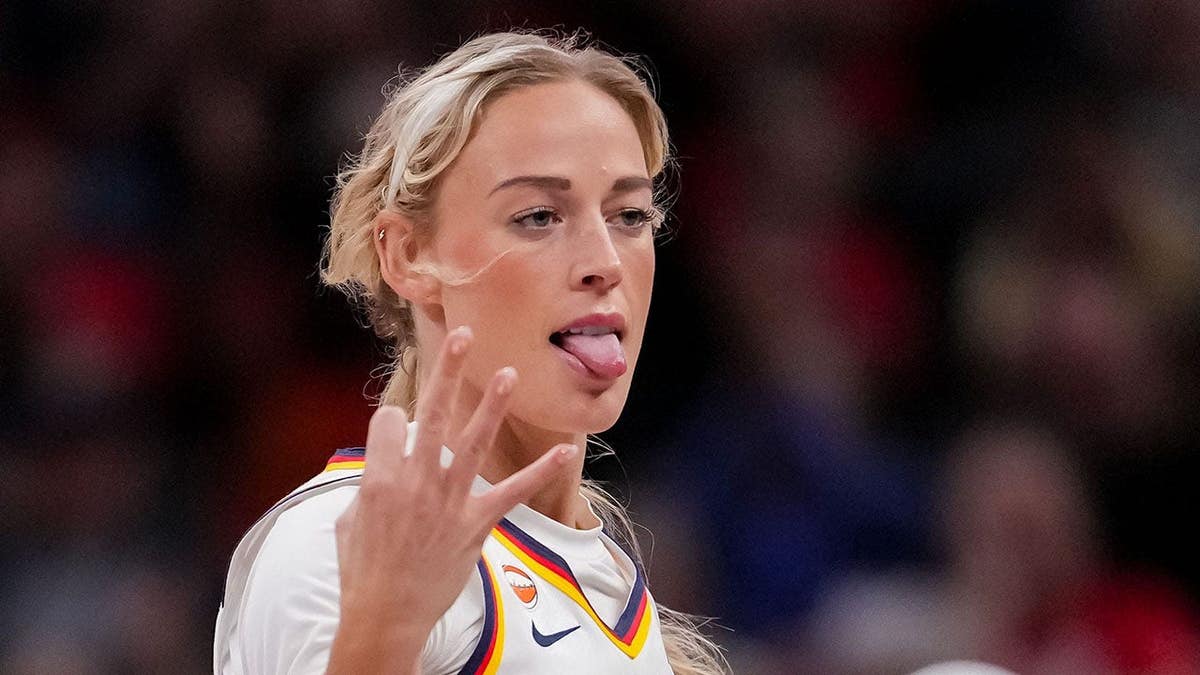
Women-focused sports media site attacked Sophie Cunningham for daring to speak up for women in sports. (USA TODAY Network via Reuters Connect)
Rotz argued that women’s sports provide an opportunity to have “critical conversations,” and Hyslop repeatedly agreed that what’s happening off the court deserves attention, too.
So, when a public relations representative reached out to me Tuesday afternoon and offered an interview with Hyslop, I was interested. If we’re going to have these “important” conversations, let’s have one.
Apparently, there’s a catch.
This isn’t a tiny women’s sports blog
If you’ve never heard of The GIST, that’s fair. But don’t mistake that for irrelevance.
According to its website, The GIST has one million newsletter subscribers, 582,000 social media followers and more than 40 million monthly social reach. Its twice-weekly podcast gets 300,000 annual downloads, and the company says it employs about 40 people.
It has also attracted plenty of attention from the media industry. Forbes profiled The GIST when it reached one million email subscribers and has written glowing articles about Hyslop and the company’s growth several times.
The Associated Press included The GIST in a February feature about the expanding women’s sports media ecosystem, noting that its newsletter audience had grown nearly 50% in 2 years. Axios also cited The GIST as one of the women’s-sports-specific media companies benefiting from increased interest in female athletics.
In other words, this isn’t a random Substack with a few hundred readers. The GIST has built a substantial audience, particularly among young female sports fans, and it wants to help shape the conversation around women’s sports.
ZERO BS. JUST DAKICH. TAKE THE DON’T @ ME PODCAST ON THE ROAD. DOWNLOAD NOW!
Its own website says the company goes “beyond the highlights” and views sports through a wider lens that accounts for their cultural impact.
Keep that in mind.
The interview pitch sounded pretty open-ended
A PR agent contacted me after reading my recent coverage of Chicago Sky wing DiJonai Carrington’s flagrant foul on Indiana Fever guard Sophie Cunningham.
The agent said she wanted to offer “a similar angle from a diff POV.” Her pitch acknowledged that much of the WNBA conversation had centered on “race, gender and politics,” but argued that there was a larger story underneath it all: the WNBA is becoming a cultural force and is now dealing with the increased scrutiny that comes with that growth.
That’s an argument that I’ve made recently, so I thought it might make sense to explore that.
The rep offered GIST co-founder Ellen Hyslop for an interview about what the WNBA’s current moment says about the “growing pains” of women’s sports leagues. I responded that I could potentially be interested.
The rep quickly wrote back:
“Awesome! If you’re not totally sold, I’m happy to set up a call with Ellen to discuss her POV, and explore any other topics that might be top of mind for your coverage needs!”
So, it seemed like we were off and running. But I wanted to check something before I responded.
Before interviewing someone, I do my homework. For this, I went and listened to the latest episode of Hyslop’s podcast.
That’s when things got way more interesting.
The episode was titled, “Why the WNBA is stuck in a right-wing culture war.” The GIST’s own description says Hyslop and Rotz discussed the controversy surrounding “trans women and trans athletes” and what the outlet characterized as the “anti-trans comments” that ignited the debate.
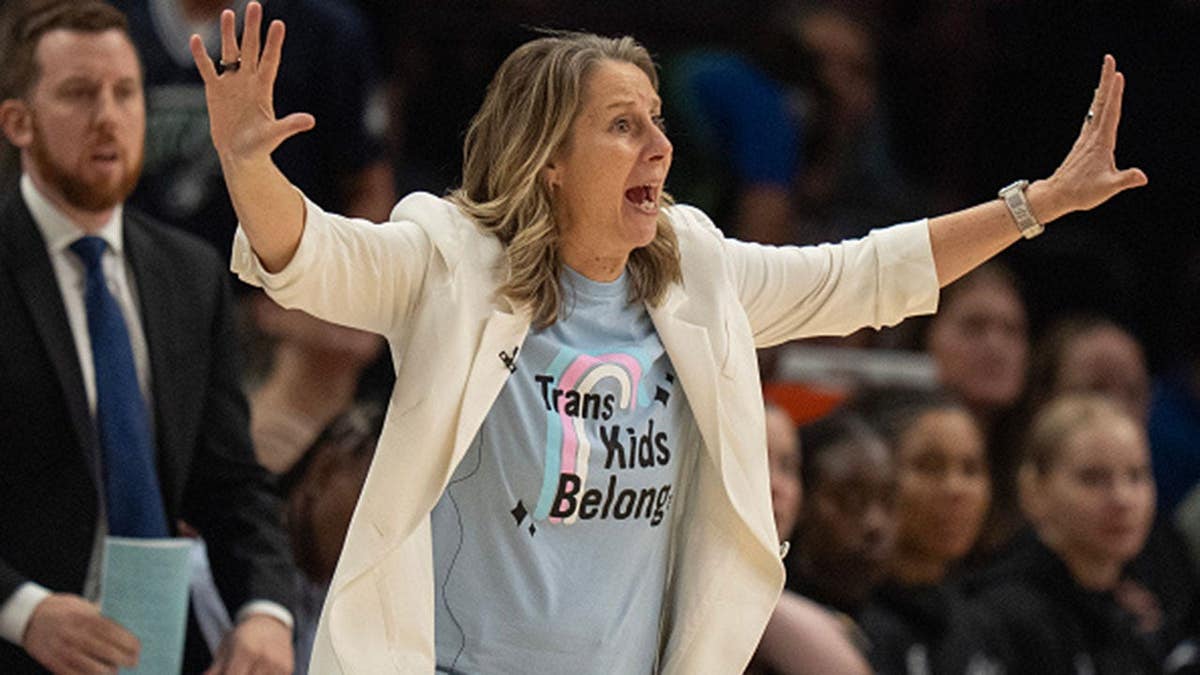
The hosts of a woman-focused podcast praised WNBA coach Cheryl Reeve for wearing a shirt that said “Trans Kids Belong.” (Star Tribune via Getty Images)
The hosts went hard at Cunningham after she told ESPN that she wanted to protect young girls who “shouldn’t have to go against biological men.” They criticized Cunningham’s association with Riley Gaines and praised Minnesota Lynx coach Cheryl Reeve for wearing a “trans kids belong” shirt before a game against Indiana.
Later, the hosts went even further.
“Trans rights are human rights,” Rotz said, before arguing that “inclusion should be the default and we’ll work it out from there.” The hosts also said people rallying around Cunningham’s position don’t actually care about women’s sports.
Then there was Caitlin Clark.
Hyslop and Rotz weren’t satisfied with Clark largely deferring transgender eligibility questions to leagues and governing bodies. They argued that Clark, because of her platform and financial security, has a greater obligation to speak publicly.
Race entered the equation, too.
“White women have more responsibility,” Rotz said. “We’re never going to be calling on Black women in the same way.”
Those aren’t throwaway sports takes. They’re strong positions about sex, race, politics and the responsibilities of athletes.
They’re also fair game for questions.
Suddenly, the ‘culture-war side’ wasn’t part of the interview
After listening to the podcast, I sent the PR rep a simple question Wednesday morning.
“Is Ellen aware of this pitch? I’m happy to speak with her, but I want to make sure she knows about me before I start prepping for an interview.”
There was a reason for asking.
OutKick has extensively covered the debate surrounding males competing in women’s sports. Based on Hyslop’s public comments, I figured we were going to strongly disagree with one another’s positions.
That didn’t make me less interested in speaking with her. Quite the opposite.
The rep eventually responded that Hyslop was aware of “the pitch and angle we’re pursuing here.”
Then came the qualifier.
“I think the distinction is really that we’re approaching this from a broader, more positive lens focused on the growth of women’s sports and the visibility & scrutiny that comes with that,” she wrote, “rather than the political/culture-war side of the conversation.”
Then she essentially took the interview off the table.
“Given your call out, this may not actually be a perfect fit for your beat, so I’d rather not force it!”
WNBA MEDIA TURNS STEPHANIE WHITE’S REHEARSED RANT INTO AN ‘IMPORTANT’ ATTACK ON LEAGUE CRITICS
Except I hadn’t told her it wasn’t a fit for my beat. If anything, this was a great fit for my “beat.” I’ve spent a lot of time covering the WNBA and the trans athlete controversy, and I’m happy to speak with anyone on the topic. That includes people who think males should be allowed to compete in girls’ and women’s sports.
The only thing I had done differently was demonstrate that I’d listened to what Hyslop actually said and might ask her to defend it.
The GIST’s representative wanted a broader conversation about women’s sports growth, but The GIST’s own podcast had just framed the WNBA debate through politics, social issues and transgender-athlete eligibility.
Again, Hyslop’s podcast episode is literally titled, “Why the WNBA is stuck in a right-wing culture war.”
The GIST also describes that podcast as a show where Hyslop and Rotz discuss how sports intersect with “pop culture and social issues.”
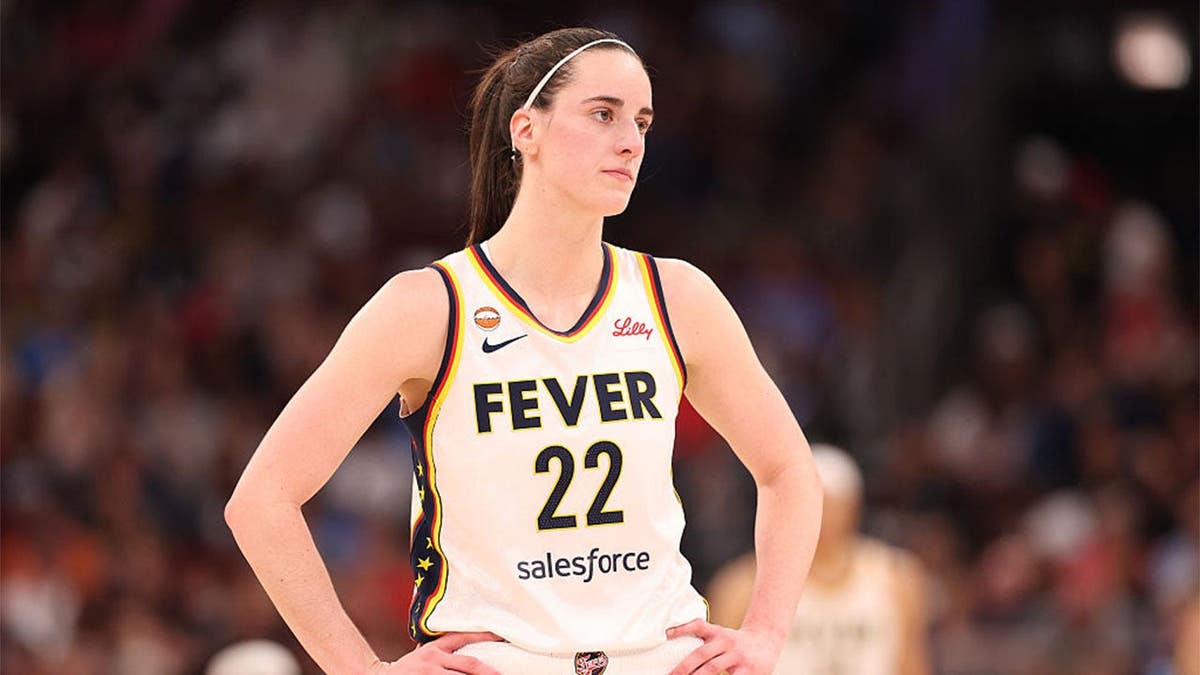
The podcasts hosts said Caitlin Clark has more responsibility to speak on behalf of trans athletes because she’s white. (Michael Reaves/Getty Images)
Then, one day after publishing its piece about transgender athletes and promoting the “right-wing culture war” podcast, The GIST published a separate WNBA update focused strictly on basketball.
“Hoops only, please,” the outlet wrote.
So The GIST clearly understands the distinction between basketball coverage and culture-war coverage. It does both.
The issue only seemed to arise when the person asking the questions might challenge its position.
This is The GIST’s position, not just a podcast tangent
It’s important to understand that Hyslop isn’t simply an employee of The GIST expressing a personal opinion on a podcast. She’s a co-founder of the company, and her comments align with an explicit editorial position The GIST has taken on transgender athletes.
In its Tuesday story about the WNBA, the outlet argued that the debate over transgender athletes had reached “dangerous levels,” called WNBA Commissioner Cathy Engelbert’s response “underwhelming” and described a stunt by former NBA players challenging the league’s eligibility language as “harmful.”
Then it made its position unmistakable: “At The GIST, we believe trans women are women and that trans athletes have the right to compete on teams consistent with their gender identity.”
That’s a significant position for a media company focused heavily on women’s sports to take. And they’re allowed to take it.
But they should also be willing to defend it.
The majority of Americans believe biological sex matters in athletic competition and that female sports categories exist specifically to exclude males. The GIST believes gender identity should take precedence.
Great. Let’s discuss it.
Instead, a PR representative pitched Hyslop to me after specifically citing my WNBA coverage, offered to discuss other topics relevant to my beat and then decided the interview might not work once it became clear there could be disagreement.
We gave Hyslop another chance to answer
I told the PR agent that I remained interested in interviewing Hyslop. I also made clear that if Hyslop didn’t want to do an interview, that was perfectly fine.
I also sent written questions if she preferred not to speak to me directly.
Among them: Does Hyslop believe there should be any biological restrictions on transgender participation in women’s sports? What, specifically, did Sophie Cunningham say that Hyslop believes was wrong? Why should Caitlin Clark’s responsibility to speak publicly differ based on her race? And why would discussing The GIST’s explicit position on transgender athletes fall outside the “broader” conversation that its representative originally pitched?
We also asked whether Hyslop knew that her representatives had specifically pitched an interview with me, a reporter for OutKick and Fox News Digital, before I expressed interest.
OutKick gave Hyslop and her representative an opportunity to respond and made clear that I remained willing to speak with her directly. Neither responded before publication.
That’s disappointing, because disagreement is supposed to be the point of a “critical conversation.”
The GIST doesn’t have to agree with OutKick. Hyslop doesn’t have to agree with me. In fact, the disagreement is what could have made the discussion worthwhile.
CLICK HERE TO DOWNLOAD THE FOX NEWS APP
But growth brings scrutiny. That’s literally the premise her representative pitched to me.
Well, this is scrutiny.
If The GIST wants to influence the future of women’s sports, advocate for transgender inclusion, criticize athletes who don’t speak loudly enough and frame the debate as a “right-wing culture war,” it should expect people who disagree to ask questions.
Otherwise, The GIST isn’t having the difficult conversation it says women’s sports needs.
It’s deciding who gets to participate in it.