

A new study led by a Charles Sturt University researcher and international colleagues is challenging a long-accepted idea about how scientists identify ancient disease.
Evidence from the skeletal remains of children who lived in prehistoric Vietnam suggests that treponemal diseases could have been passed from mother to child thousands of years ago. Congenital transmission has historically been viewed as a strong indicator of venereal syphilis, but the new findings suggest that other forms of treponemal disease may also have spread this way.
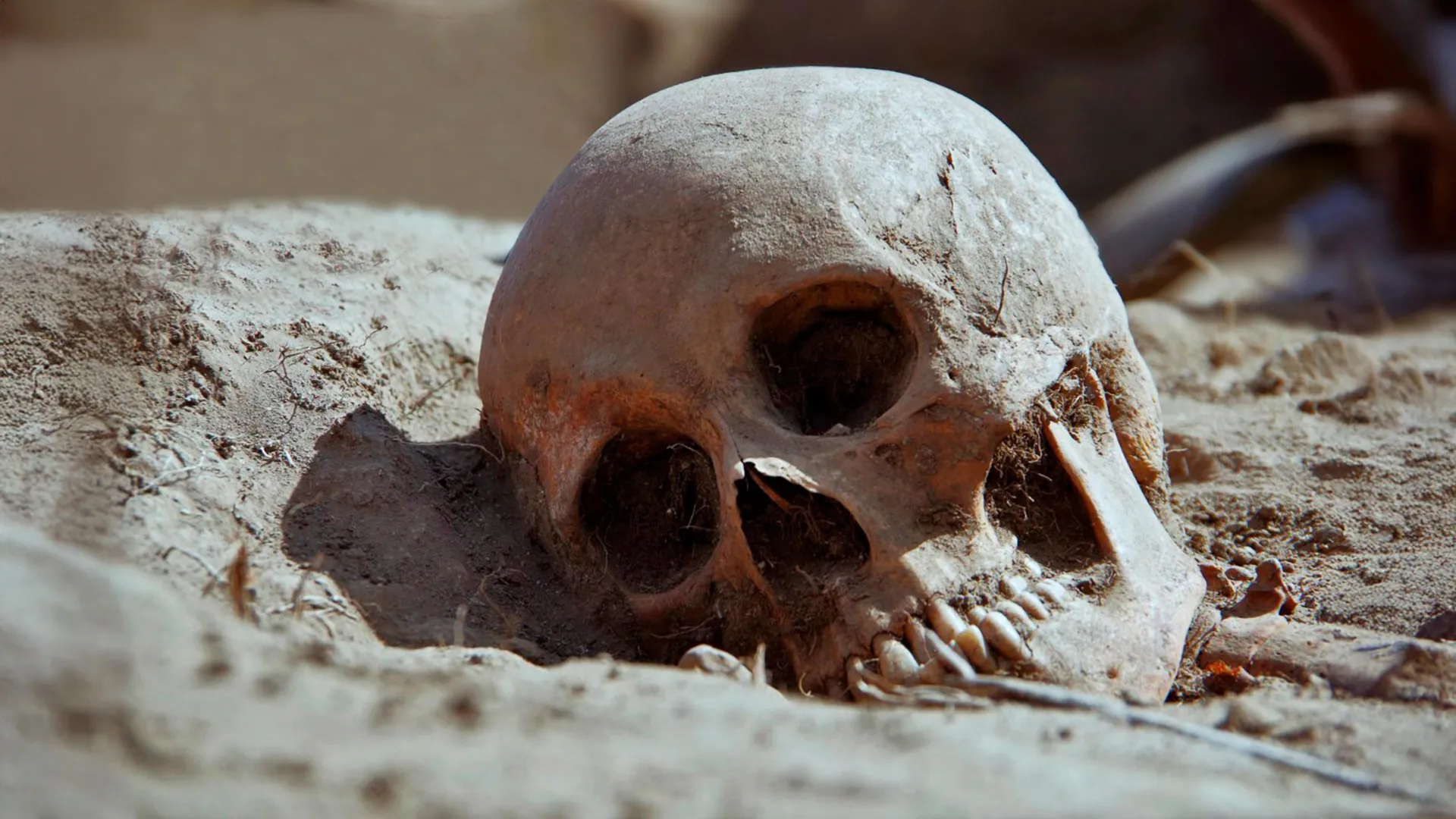
The international team from Australia and Vietnam was led by Dr. Melandri Vlok (pictured top, at left), Lecturer in Anatomy and Physiology in the Charles Sturt School of Dentistry and Medical Science. The researchers analyzed skeletal remains from archaeological sites in northern and southern Vietnam dating to approximately 4,000 to 3,200 years ago.
Ancient Remains Reveal Congenital Treponemal Disease
The study, published in the International Journal of Osteoarchaeology, identified three children whose teeth and bones showed clear evidence of congenital treponematosis. Treponematosis refers to a group of diseases that includes syphilis, yaws and endemic syphilis.
However, the overall pattern of infection found in the population points away from venereal syphilis. Instead, the evidence suggests the children were likely affected by a nonvenereal treponemal disease such as yaws. Yaws is a tropical disease that affects more than 150,000 people around the tropical world and can cause permanent disability.
That distinction calls into question a long-standing assumption used by researchers who study diseases in ancient populations.
“For decades, congenital infection in archaeological remains has often been taken as strong evidence of venereal syphilis,” the study’s lead author Dr. Melandri Vlok said.
“Our research shows that this assumption may not always hold true. Other treponemal diseases may also have been transmitted from mother to child.”
Disease Signs Found in Ancient Children
The researchers examined 309 individuals from 16 archaeological sites across Vietnam, covering a period from 10,000 to 1,000 years before the present time.
Only three young children showed diagnostic signs of congenital treponematosis. Their remains contained distinctive dental abnormalities and skeletal lesions associated with treponemal infection dating back at least 3,500 years.
Two of the children were recovered from Man Bac, an archaeological site in northern Vietnam where previous studies had already found unusually high rates of treponemal disease.
The age distribution of infections at Man Bac is especially important. Most cases occurred among children and adolescents, a pattern more consistent with nonvenereal treponemal diseases that spread through skin contact rather than sexual activity.
“The epidemiology of the site strongly points toward a non-venereal form of treponemal disease,” Dr. Vlok said. “Yet we still see evidence of congenital transmission. That’s the surprising part.”
What the Discovery Means for Syphilis History
The findings could have important consequences for one of the longest-running questions in medical history: the origin of syphilis.
Scientists studying ancient human remains have frequently used evidence of congenital infection when debating whether syphilis was present outside the Americas before the voyages of Christopher Columbus.
But the new research indicates that congenital infection by itself may not be enough to distinguish venereal syphilis from other diseases caused by related treponemal bacteria.
“If congenital transmission can occur in non-venereal treponematoses, then we need to rethink how we interpret skeletal evidence in the past,” Dr. Vlok explained.
“Some cases previously labeled as congenital syphilis may represent entirely different diseases.”
So far, no confirmed biological or genetic evidence of pre-Columbian venereal syphilis has been identified inside or outside the Americas.
Instead, genetic studies of archaeological remains from Europe and the Americas have uncovered evidence of multiple treponemal diseases in ancient populations, emphasizing how complex the evolutionary history of these pathogens may be.
Ancient DNA Presents Major Challenges
The research also highlights some of the difficulties scientists face when investigating ancient infectious diseases.
In tropical regions such as Southeast Asia, ancient DNA is often extremely poorly preserved. That makes it especially difficult to use genetic evidence to determine exactly which disease affected ancient populations.
Researchers must also navigate rapidly changing ethical standards surrounding destructive sampling of human remains.
“In tropical environments, recovering ancient DNA is incredibly difficult, and destructive sampling raises important ethical questions,” said co-lead author Ms Minh Tran (pictured top, at right), a PhD student from the University of the Philippines, Diliman.
“Future research must move in new directions working in genuine partnership with communities connected to these remains, considering preservation before any biomolecular work begins.”
Rethinking the Evolution of Treponemal Diseases
According to the researchers, the discovery also demonstrates the remarkable adaptability of Treponema pallidum, the bacterium responsible for treponemal diseases.
Rather than concentrating only on determining where syphilis originated, the team says future studies should examine how different treponemal diseases evolved alongside human populations, societies and changing environments.
“Treponemal diseases have a far more complex history than we once thought,” Dr. Vlok said. “Understanding that complexity is essential if we want to reconstruct how infectious diseases shaped human history. Especially as treponemal disease like yaws is re-emerging due to the climate crisis.”