

5 min readUpdated: Aug 9, 2026 02:13 PM IST
Indian Railways Passenger Reservation System: Indian Railways is set to introduce a new Passenger Reservation System (PRS) to modernise train ticket booking and make reservations faster and more convenient for passengers.
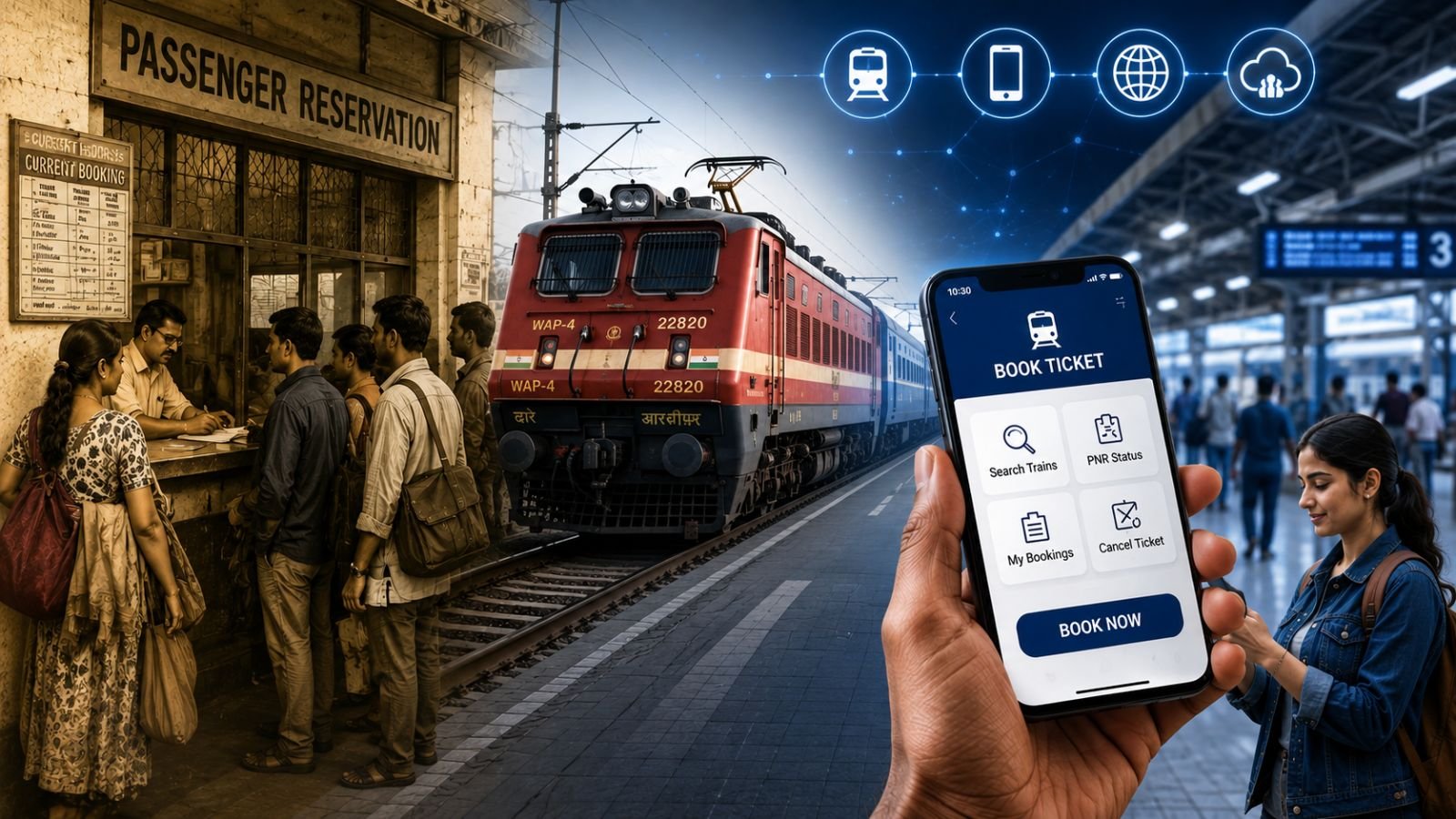
Developed by Centre for Railway Information Systems (CRIS), the PRS has been the backbone of railway reservations for nearly four decades. Introduced in 1986, it replaced the earlier manual reservation system and has since evolved to support online and mobile ticket booking.

In May, the national transporter announced that the 40-year-old PRS system would be upgraded in a phased manner, beginning in August.
Speaking to Indianexpress.com, Dharmendra Tewari, Additional Director General, Public Relations, Railway Board, said the phased migration to the new system has already begun. He added that the newly launched IRCTC beta website is part of this transition.
The official said the migration will be carried out gradually, with the new system being tested in stages under different levels of user load before the old PRS is fully replaced.
“Layer by layer matching of the new user friendly look & feel will involve a slow and steady load based testing as we migrate from the old to the new PRS,” the official told Indianexpress.com.
What is Passenger Reservation System in Indian Railways?
The PRS is the computerised system used by Indian Railways to manage reserved train tickets. It allows passengers to book, change and cancel tickets, while also handling seat allocation, waitlists, RAC status, reservation charts and passenger enquiries.
Story continues below this ad
The system connects railway reservation centres with online booking platforms, making the ticket reservation process easier and more efficient.
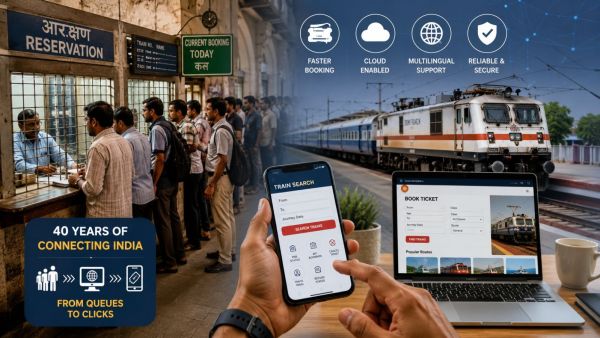 Indian Railways Passenger Reservation System is set for changes aimed at making train ticket booking faster. (Image generated using AI)
How PRS changed railway ticket booking
The PRS replaced manual reservation registers and counter-based booking with an electronic system. As the railway network expanded, it grew into a nationwide reservation platform, allowing passengers to book train tickets from different locations across the country through the Country-wide Network for Computerised Enhanced Reservation and Ticketing (CONCERT).
Today, passengers can make reservations through railway reservation counters, websites and mobile apps. Online bookings are available through the Indian Railway Catering and Tourism Corporation (IRCTC) website and mobile app, as well as the RailOne app, allowing passengers to book tickets from anywhere.
Evolution of India’s Passenger Reservation System (PRS)
Timeline of Key Milestones
1986
PRS introduced, marking the beginning of computerised railway reservations in India.
1990s
PRS network expanded across railway zones, enabling reservations through an interconnected nationwide network.
2002
Internet-based ticket booking introduced, extending reservation services beyond physical counters.
2014
Next Generation e-Ticketing (NGeT) system launched to improve online booking capacity and passenger experience.
2025
RailOne app launched. Government announces development of a next-generation PRS with significantly enhanced booking and enquiry capacity.
Aug 2026
Phased migration of trains to the upgraded PRS begins, marking a new phase in the digital transformation of railway reservations.
Source: Ministry of Railways
Why Indian Railways is upgrading its 40-year-old Passenger Reservation System
With the growing number of passengers using the IRCTC website, Indian Railways needs a reservation system that can handle more bookings and enquiries while providing faster, more reliable and secure services.
Story continues below this ad
According to the latest data by Railways, passengers booked 65.08 crore reserved tickets through the PRS between June 2025 and June 2026. Of these, 57.90 crore tickets (or 89 per cent), were booked online.
IRCTC said ticket booking speeds improved after the launch of its beta website on July 15. Comparing the first and second fortnights of the month, Tatkal bookings completed within the first three minutes increased by more than 5 per cent. Bookings completed within five minutes rose by 3 per cent, while those completed within 30 minutes increased by more than 2 per cent, it said.
IRCTC’s Optimized Platform: Faster Tatkal Bookings
89.84%
Online booking share, as on July 2026 (up from previous months)
Rise in Bookings Completed Within Tatkal Time Windows
Comparing 1st vs 2nd fortnight of the month
Source: IRCTC
According to the Ministry of Railways, the upgraded PRS will be able to handle more than 1.5 lakh ticket bookings per minute, compared with around 32,000 under the existing system. It will also process over 40 lakh enquiries per minute, up from around 4 lakh currently.
The new system will feature a multilingual and user-friendly interface for ticket booking and enquiries. It is also designed to offer greater scalability, flexibility and reliability to meet the growing demand for railway reservations.
Story continues below this ad
Passenger Reservation System: Current State & Transformation
PRS at a Glance (Current System)
6,900+
Manual Reservation Counters
20.5 Lakh+
Daily Passengers Booked
5.72 Crore+
Online User Accounts
5 Lakh+
Concurrent Users/Session
73%
Cashless Transactions
3 Channels
Counters, Website & Apps, Authorised Agents
Next-Generation PRS: Target Capabilities
🎟️
1.5 Lakh+ Bookings per Minute
💬
40 Lakh+ Enquiries per Minute
🌐
Multilingual, User-Friendly Interface
☁️
Cloud-Enabled, Agile & Scalable System
Passenger-Centric Reforms
📅
Advance Reservation Period (ARP) reduced from 120 days to 60 days to better align with passenger booking patterns.
🆔
Aadhaar-authenticated Tatkal booking introduced in July 2025 to improve fairness and transparency.
🔐
OTP-based verification added later to curb misuse by automated bots and unauthorised agents.
The existing PRS, deployed in 2010 on Itanium servers and the OpenVMS platform, was designed for a different scale of digital demand — it is now being upgraded to a cloud-enabled, next-generation reservation system.
Source: Centre for Railway Information Systems (CRIS) / Ministry of Railways
Next-generation PRS to build on new technology: Railways
The CRIS is using new technologies to modernise railway operations. These include Artificial Intelligence (AI), Machine Learning (ML), Big Data Analytics, Cloud Computing, Blockchain, Internet of Things (IoT) and Augmented and Virtual Reality (AR/VR).
These technologies are being used to predict train delays and waitlist confirmations, improve train routes and timetables, forecast energy use, enable predictive maintenance and support better operational planning.
In a statement, the Railways said that the next-generation PRS will build on these technologies. It will use cloud-based infrastructure and advanced digital solutions to provide a faster, more reliable and scalable reservation system.
Apart from the PRS, CRIS has developed several digital platforms to meet passenger’s needs. These include the Unreserved Ticketing System (UTS), National Train Enquiry System (NTES), IRCTC Rail Connect, RailOne, RailMadad, CoachMitra, Rail Sugam and Rail Rajbhasha.
Story continues below this ad
These platforms provide passengers with services such as ticket booking, train information, grievance redressal and other railway-related services.