

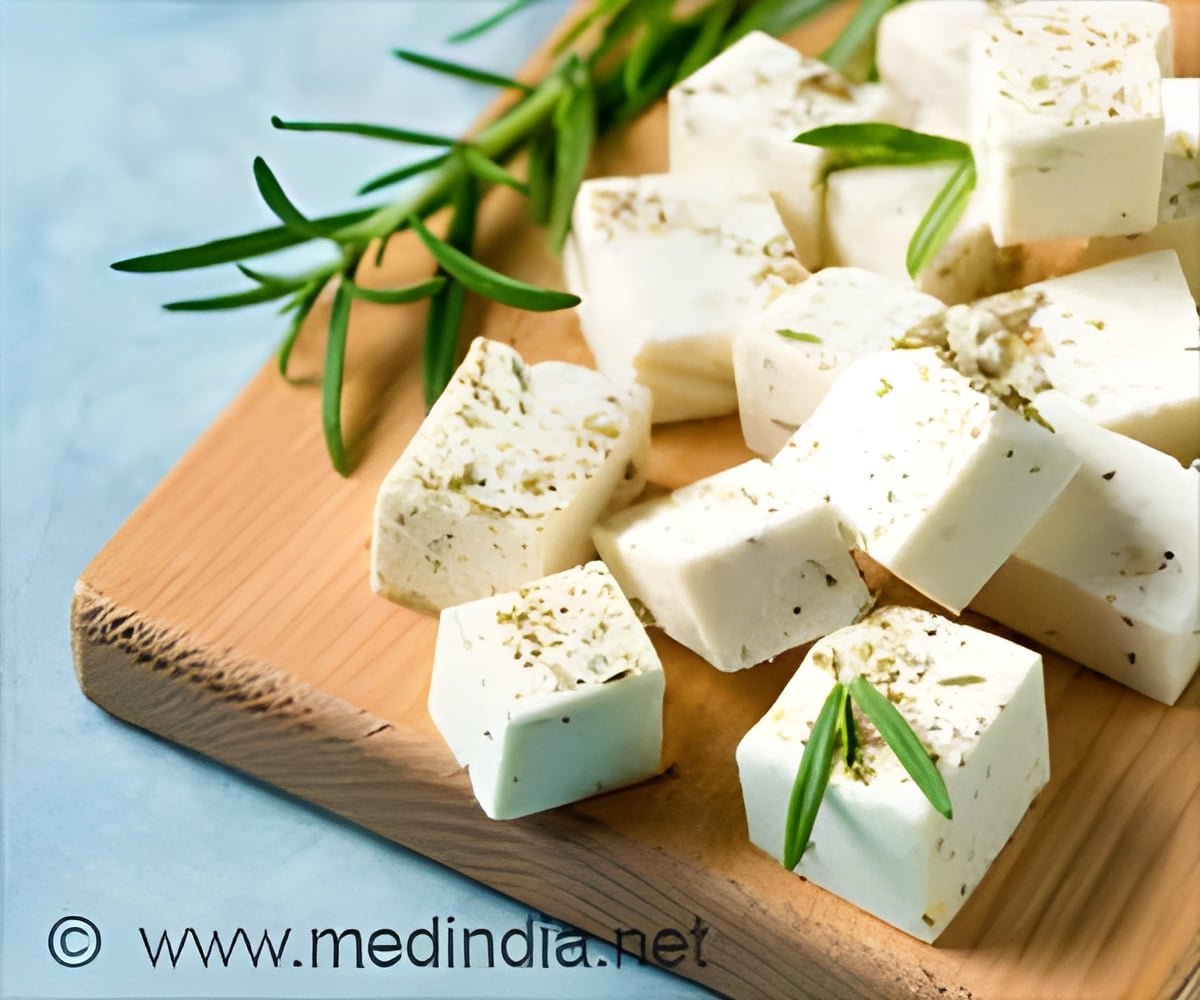
Fake paneer and cheese are facing a crackdown in Gujarat and Maharashtra, raising concerns about dairy products that may not be made from real milk and how they are labeled and sold.

Paneer and cheese are staples in Indian kitchens, but not every product that looks like the real thing is made from traditional dairy.
The recent crackdown in Gujarat and Maharashtra has put analogue dairy products under the spotlight, raising concerns about ingredients, labeling and consumer safety.
In an April 2026 enforcement notice, FSSAI said it had received reports of cheese analogue being used as paneer in restaurants, hotels, caterers and fast-food establishments. (1✔ ✔Trusted Source
PUBLIC NOTICE ( ENFORCEMENT ) 3 /2026
Advertisement
Why Are Gujarat and Maharashtra Cracking Down on Analogue Dairy Products?
Gujarat and Maharashtra have stepped up action against analogue paneer and other non-dairy substitutes amid concerns over how these products are made, labeled and sold.
The Gujarat ban and Maharashtra ban reflect a broader push to strengthen food safety and ensure consumers know what they are buying.
Unlike traditional paneer, which is made from milk, some fake paneer products or dairy analogues may contain vegetable fats, plant-based proteins or other non-dairy ingredients.
While dairy alternatives are not generally unsafe, concerns arise when they are sold or labeled as conventional dairy products, potentially misleading consumers.
The crackdown also highlights the importance of consumer health and transparency. Authorities want food businesses to clearly identify analogue products so consumers can distinguish them from genuine milk-based paneer and cheese.
Advertisement
What Is Analogue Paneer and How Is It Different?
Analogue paneer is a paneer-like product in which some or all of the milk components are replaced with non-dairy ingredients such as vegetable fats or plant-based proteins.
Research from the National Dairy Research Institute has highlighted the use of vegetable oil or fat emulsions as a potential form of paneer adulteration, particularly because milk fat is a costly component of paneer. (2✔ ✔Trusted Source
Efficiency of Physico- chemical constants vis׳- a vis׳ Reversed- phase thin layer chromatography (RP-TLC) in evaluating the quality of fat in market samples of paneer
Unlike traditional paneer, which is made primarily from milk, these substitutes are formulated to provide a similar taste, texture or appearance. The key difference is the source of ingredients.
Such products are not necessarily unsafe, but they must be properly labeled so consumers are not misled into believing they are buying genuine dairy paneer.
This distinction has become important amid the recent analogue paneer crackdown, with food-safety authorities focusing on proper labelling, composition and the sale of dairy substitutes as conventional dairy products.
Advertisement
How to Identify Fake Paneer: What Consumers Should Know
Consumers may find it difficult to identify analogue paneer simply by looking at it, as it can closely resemble traditional paneer in colour and texture. However, a few checks can help
- Check the label: Look for terms such as “analogue,” “analogue paneer,” or details showing the use of vegetable fat or plant-based ingredients.
- Check the ingredients: Traditional paneer is primarily milk-based. A product listing vegetable oils, plant proteins or other non-dairy ingredients may be an analogue.
- Look for the FSSAI licence: Buy packaged products from reliable brands and check their food-safety and labeling information.
- Be cautious of unusually low prices: A significantly cheaper product may warrant checking the ingredients and label carefully.
- Avoid relying only on appearance:Texture, colour or smell alone cannot reliably confirm whether paneer is genuine.
- When eating outside:Ask restaurants or food outlets whether the paneer or cheese used is a dairy product or an analogue.
A dairy analogue is not automatically “fake” or unsafe. The key concern is clear labeling and preventing consumers from being misled about what they are buying.
When it comes to food, “Better safe than sorry.” The crackdown on analogue paneer and cheese in Gujarat and Maharashtra highlights the importance of clear labelling, food safety and informed choices.
Consumers should check ingredients and labels carefully rather than relying only on appearance or price. After all, knowing what is on your plate is the first step towards making safer food choices.
References:
- Directions to Centrally licensed cheese analogue manufacturers, and their usage and display in Centrally licensed food service establishments-reg. – (https://westregion.fssai.gov.in/pdf/public-notice/Public-Notice-3-2026.pdf)
- Efficiency of Physico- chemical constants vis׳- a vis׳ Reversed- phase thin layer chromatography (RP-TLC) in evaluating the quality of fat in market samples of paneer – (https://epubs.icar.org.in/index.php/IJDS/article/view/67945)
Source-Medindia