

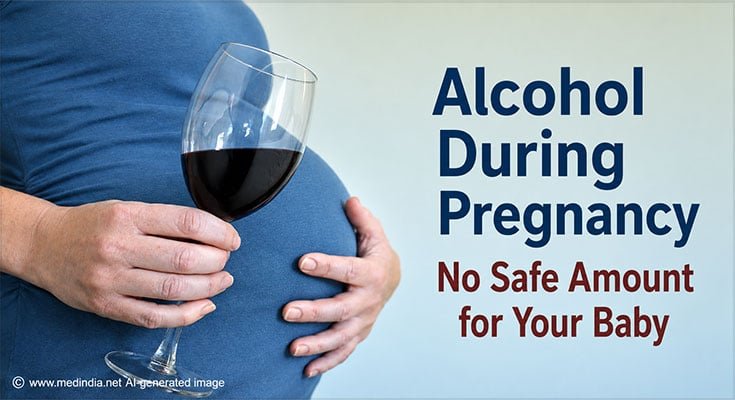
Alcohol can harm a baby’s development at any stage of pregnancy. Experts recommend avoiding it completely.

- No amount of alcohol has been proven safe during pregnancy
- Alcohol can increase the risk of miscarriage, preterm birth, and fetal alcohol spectrum disorders
- Stopping alcohol at any stage of pregnancy can still support healthier fetal development
Avoiding alcohol throughout pregnancy remains the safest choice, according to the US Centers for Disease Control and Prevention (CDC).
Alcohol can cross the placenta and reach the developing baby, increasing the risk of miscarriage, preterm birth, stillbirth, and lifelong developmental conditions collectively known as Fetal Alcohol Spectrum Disorders (FASDs) (1✔ ✔Trusted Source
About Fetal Alcohol Spectrum Disorders (FASDs)
).
While recent research has explored the effects of low-to-moderate alcohol exposure, experts continue to recommend complete abstinence because no safe amount or safe time for drinking during pregnancy has been established.
Many women worry after realizing they consumed alcohol before knowing they were pregnant. Health experts emphasize that this is a common situation and advise stopping alcohol as soon as pregnancy is confirmed.
Since the baby’s brain continues developing throughout pregnancy, quitting alcohol at any stage can still support healthier fetal growth and development. Rather than feeling guilty, women are encouraged to discuss any alcohol exposure with their healthcare provider and continue regular prenatal care.
Advertisement
Is Any Amount of Alcohol Safe During Pregnancy?
Medical experts agree that no amount or stage of alcohol consumption has been proven safe during pregnancy.
Alcohol can affect the developing baby throughout pregnancy, including before a woman realizes she is pregnant. Since every pregnancy responds differently and doctors cannot predict which babies may be affected, avoiding alcohol remains the safest recommendation for women who are pregnant or planning to conceive.
Advertisement
Alcohol During Pregnancy: What Health Authorities Recommend
|
Recommendation |
Why It Matters |
|
Avoid alcohol completely during pregnancy |
No known safe amount has been established. |
|
Do not drink at any stage of pregnancy |
The baby’s brain and organs continue developing throughout pregnancy. |
|
All alcoholic drinks carry similar risks |
Wine, beer, and spirits all contain ethanol, which can reach the developing baby. |
|
Stop drinking as soon as pregnancy is confirmed |
Quitting at any stage can still support the baby’s growth and development. |
|
Avoid alcohol when trying to conceive |
Early fetal development begins before many women know they are pregnant. |
Advertisement
How Does Alcohol Reach and Affect an Unborn Baby?
When a pregnant woman drinks alcohol, it quickly enters her bloodstream and crosses the placenta, reaching the developing baby through the umbilical cord. Unlike adults, the fetus has an immature liver that cannot efficiently break down alcohol, allowing it to remain in the baby’s body for longer periods.
This prolonged exposure may interfere with normal cell growth, organ formation, and brain development. Alcohol can also reduce placental function, limiting the supply of oxygen and nutrients needed for healthy fetal growth.
Alcohol exposure during pregnancy can affect the baby throughout all stages of development because the brain continues growing until birth.
Alcohol may affect several aspects of fetal development, including:
- Brain growth and neural connections involved in learning and memory.
- Growth inside the womb, increasing the risk of fetal growth restriction.
- Placental function and nutrient delivery.
- Development of the central nervous system.
- Physical growth and organ development.
Researchers explain that the severity of harm generally depends on several factors, including the amount of alcohol consumed, how often drinking occurs, and when exposure happens during pregnancy.
However, because these factors vary from one pregnancy to another, experts cannot identify a “safe” level of alcohol consumption.
What Pregnancy and Baby Complications Are Linked to Alcohol Use?
Alcohol use during pregnancy has been associated with several complications affecting both the mother and the developing baby. Drinking alcohol increases the risk of miscarriage, preterm birth, stillbirth, and sudden infant death syndrome (SIDS).
Children exposed to alcohol before birth may also experience lifelong physical, behavioural, and learning difficulties.
A large systematic review and meta-analysis published in The Lancet Global Health highlights the global burden of prenatal alcohol exposure (2✔ ✔Trusted Source
About Alcohol Use During Pregnancy
Researchers estimated that about 9.8% of women worldwide consume alcohol during pregnancy, and approximately 119,000 babies are born with fetal alcohol syndrome (FAS) every year.
The study further estimated that one in every 67 women who drink during pregnancy may give birth to a child with FAS, underscoring the importance of prevention (3✔ ✔Trusted Source
Estimation of national, regional, and global prevalence of alcohol use during pregnancy and fetal alcohol syndrome: a systematic review and meta-analysis
Alcohol exposure during pregnancy has been linked to:
- Miscarriage
- Preterm birth
- Stillbirth
- Sudden infant death syndrome (SIDS)
- Low birth weight and poor fetal growth
- Brain and nervous system abnormalities
- Learning disabilities and behavioral problems
- Fetal Alcohol Spectrum Disorders (FASDs)
Although the likelihood of harm generally increases with heavier and more frequent alcohol consumption, researchers emphasize that no safe threshold has been established. This is why public health agencies continue to recommend avoiding alcohol throughout pregnancy rather than attempting to identify a “low-risk” amount.
What If You Drank Alcohol Before Knowing You Were Pregnant?
Many women consume alcohol socially before realizing they are pregnant. The most important step is to stop drinking as soon as pregnancy is confirmed. Because the baby’s brain continues to develop throughout pregnancy, quitting alcohol at any stage can still improve fetal health and development.
A recent prospective cohort study published in Scientific Reports followed children aged 6–8 years whose mothers reported low-to-moderate alcohol consumption during pregnancy (4✔ ✔Trusted Source
Low to moderate prenatal alcohol exposure and neurodevelopment in a prospective cohort of early school aged children
After accounting for several social and environmental factors, researchers found no measurable differences in neurodevelopment compared with children who were not exposed.
However, the authors emphasized that their findings do not establish a safe level of alcohol use during pregnancy, and current recommendations to avoid alcohol remain unchanged.
If alcohol was consumed before pregnancy was recognized:
- Stop drinking immediately after learning about the pregnancy.
- Attend regular prenatal check-ups.
- Discuss any alcohol exposure with your healthcare provider.
- Focus on maintaining a healthy pregnancy rather than feeling guilty, as early support and ongoing medical care remain important.
Can You Drink Alcohol While Breastfeeding?
Alcohol can also pass into breast milk, exposing the baby after birth. Although occasional alcohol consumption is different from drinking during pregnancy, experts advise mothers to be cautious while breastfeeding.
If a breastfeeding mother chooses to drink alcohol:
- Avoid heavy or frequent drinking.
- Consume alcohol only occasionally.
- Allow sufficient time for alcohol to leave the body before breastfeeding.
- Discuss alcohol use with a healthcare provider if there are concerns about infant feeding or development.
Limiting alcohol exposure during breastfeeding helps support healthy infant growth and feeding.
References:
- About Fetal Alcohol Spectrum Disorders (FASDs) – (https://www.cdc.gov/fasd/about/index.html)
- About Alcohol Use During Pregnancy – (https://www.cdc.gov/alcohol-pregnancy/about/index.html)
- Estimation of national, regional, and global prevalence of alcohol use during pregnancy and fetal alcohol syndrome: a systematic review and meta-analysis – (https://www.thelancet.com/journals/langlo/article/PIIS2214-109X(17)30021-9/fulltext)
- Low to moderate prenatal alcohol exposure and neurodevelopment in a prospective cohort of early school aged children – (https://www.nature.com/articles/s41598-024-57938-7)
Source-Medindia