

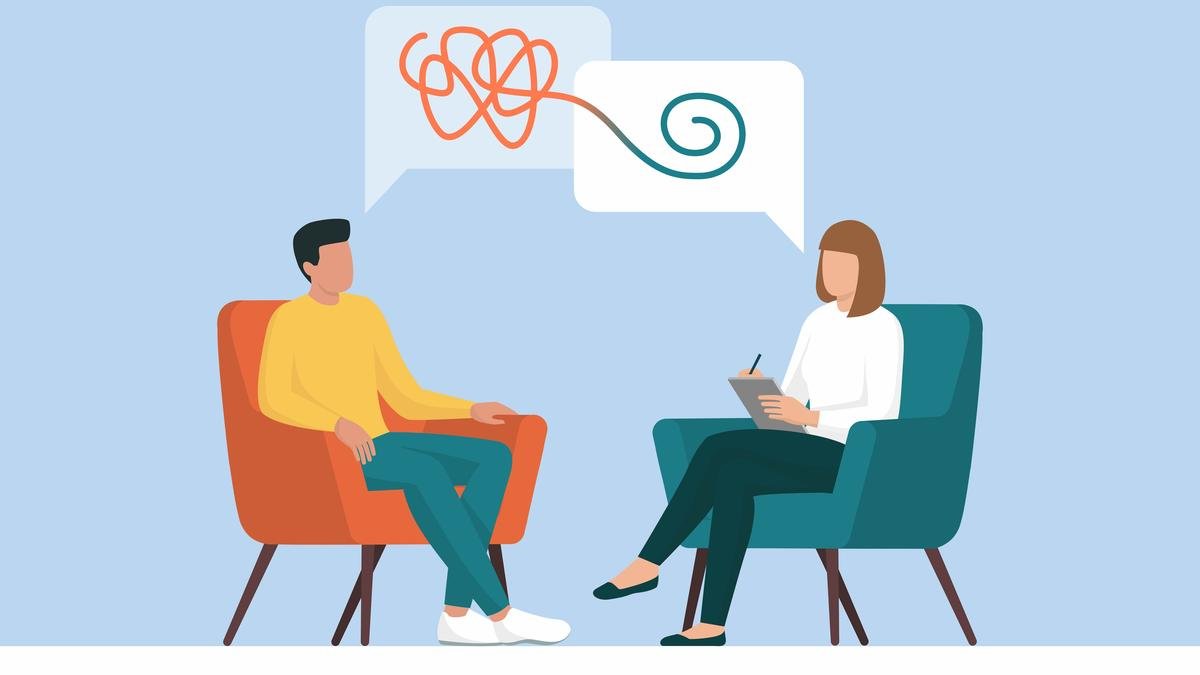
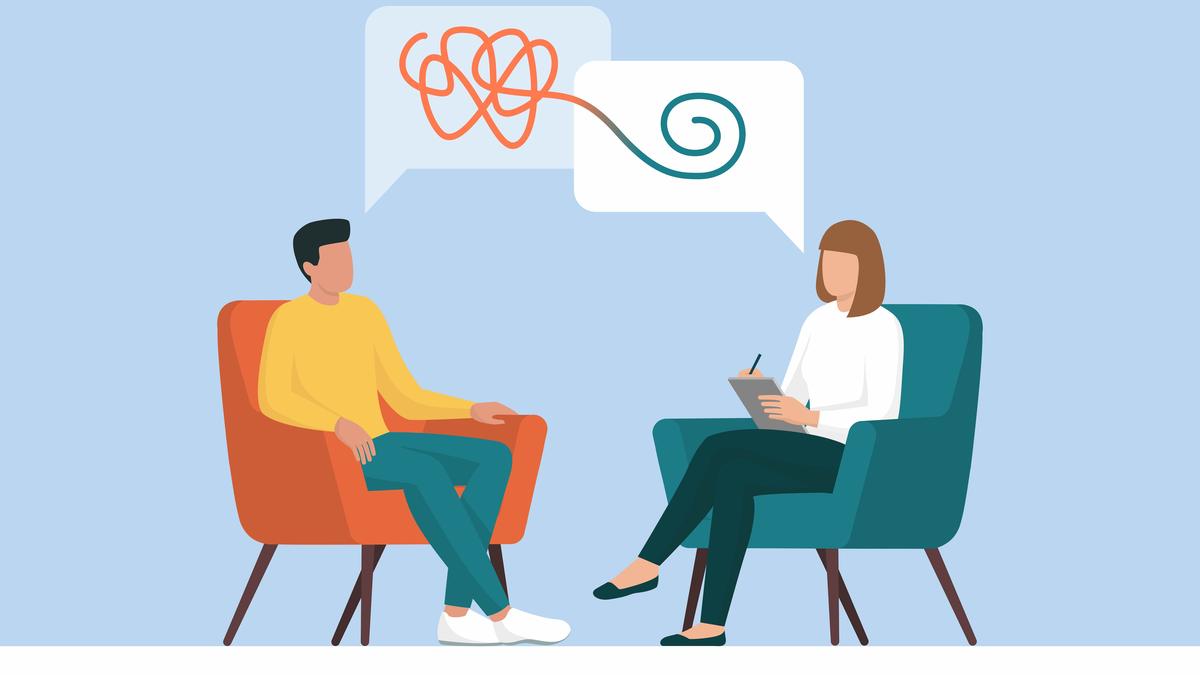
Therapist and patient talking together (she is helping him to cope with a stressful situation)
At 8.30 p.m., a call was received in Roshni, an emotional support centre in Hyderabad. The volunteer who answered stayed on the phone for the next two-and-a-half hours, listening as the caller spoke about what they were going through. The conversation ended only around 11 p.m. There was no quick solution to offer. Sometimes, callers simply want to cry, vent or have somebody to listen, representatives of the organisation say.
“Listening is what we are trying to do,” said Ratna, a Roshni representative, recalling the recent call. Volunteers often understand the pain a person is experiencing within the first few sentences, but that does not necessarily mean the conversation ends there. Some callers continue talking or crying as they unburden themselves.
Behind such conversations are 5,610 calls received by Roshni in 2025, with young adults emerging as the largest group reaching out for support. As many as 2,537 calls, or about 45% of the total, came from people aged between 18 and 30. Another 1,550 calls came from those aged between 31 and 45, while 225 were from people aged up to 18.
Men accounted for a substantial majority of the calls received during the year. Of the 5,610 calls, 4,003 were from men, 1,497 from women and 110 from others. Mental health concerns figured in 2,151 calls, while relationship issues figured in 1,733. Financial problems were reported in 987 calls and marital issues in 728.
The numbers provide one measure of the emotional difficulties callers are experiencing, but Roshni’s approach begins with something considerably simpler, giving the person at the other end of the line an opportunity to speak.
The organisation calls its primary service ‘befriending’. The idea is to provide a person experiencing emotional distress with someone who will listen to their concerns. Sharing and venting could help a person who otherwise feels they have nobody with whom they can discuss what they are going through, she said.
Currently, Roshni works through a total of 70 volunteers who are trained before taking calls and operate in shifts through the day, seven days a week.
For callers considered to be at high risk, the interaction can extend beyond the first conversation. Swarna, another Roshni representative, said that follow-up calls are made in such cases. During the initial conversation, volunteers may seek the caller’s phone number and, where necessary, try to obtain the contact details of a family member or another person who could provide support.
The process has to be handled carefully. A caller may have opened up precisely because he or she was assured of confidentiality and may fear that his or her family may be contacted later. Volunteers therefore try to retain the trust and bond established during the conversation while also addressing concerns about the person’s safety.
A subsequent call can sometimes be as simple as asking the person how they are doing after the earlier conversation, both of them added.
The organisation started in Hyderabad in 1997 with four volunteers. What began with a small group has continued for around 28 years, with trained volunteers remaining central to its operations. Although the centre is based in Hyderabad, calls have also reached it from different parts of the country, including Assam, Kerala and northern India.
(Roshni suicide prevention helplines: 8142020033 / 8142020044).
Published – August 06, 2026 07:55 pm IST