

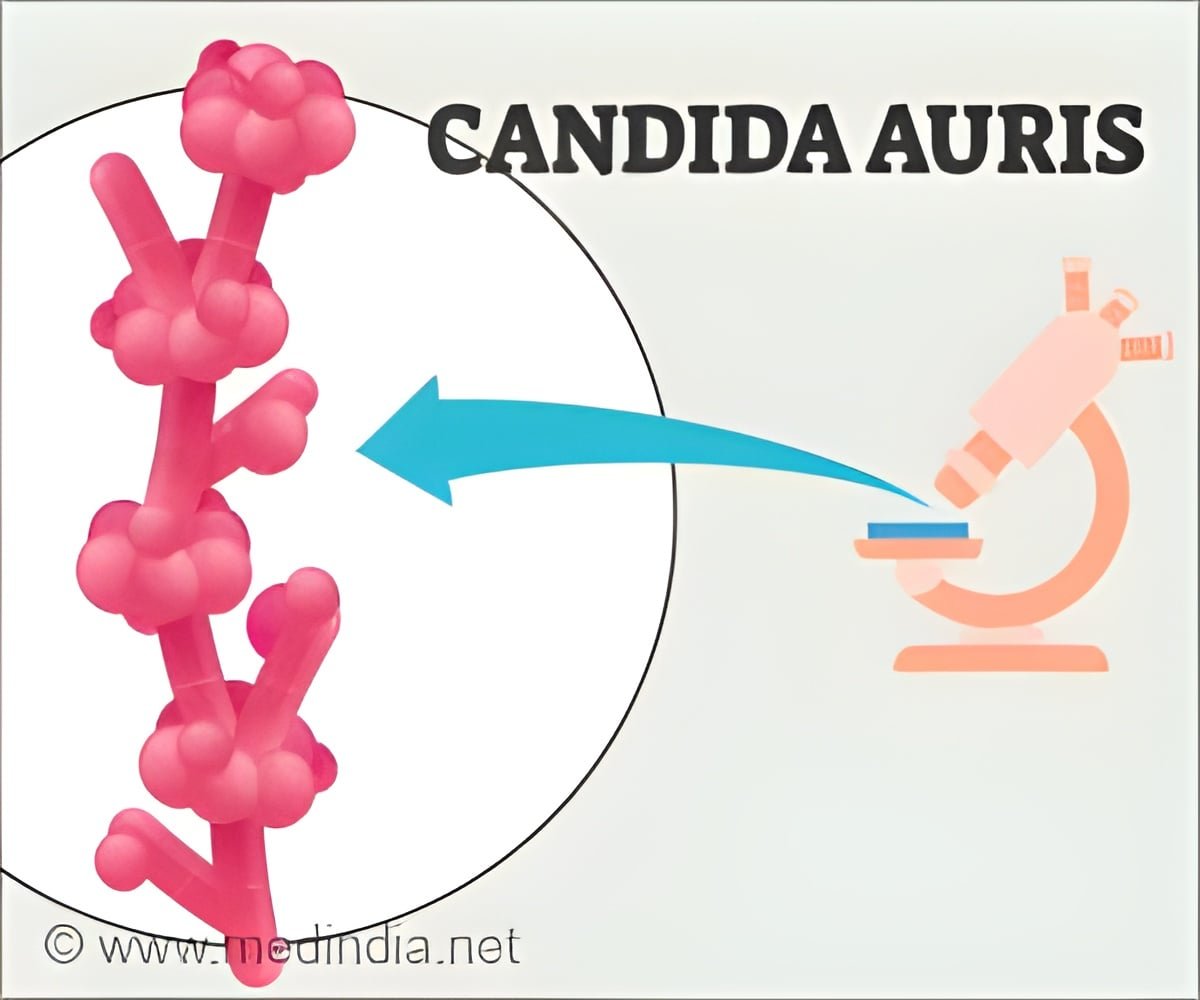
Cases of the drug-resistant fungus Candida auris have been detected across 27 US states in 2026. Data for the week ending July 25 show 3,437 clinical cases, with California, Texas and Tennessee reporting the highest numbers.

CDC-linked surveillance data show that 3,437 clinical cases had been identified across 27 states as of the week ending July 25, 2026.
California recorded the highest number with 873 cases, followed by Texas with 433 and Tennessee with 283. The national total was 853 cases lower than the 4,290 recorded at the same point in 2025, according to ABC News.
A lower year-to-date total does not mean the public-health threat has disappeared. The CDC says reported clinical cases have increased annually since the first US case was identified in 2016, although the rate of that increase has slowed in recent years.
“The rapid rise and geographic spread of cases is concerning,” CDC epidemiologist Dr Meghan Lyman said, emphasising the importance of surveillance, laboratory capacity and infection-control measures.
Advertisement
What Is Candida Auris?
Candida auris, also known as C. auris or Candidozyma auris, is an emerging yeast that can cause serious fungal infections. It was formally described as a new species in 2009 and has since been identified in healthcare facilities around the world.
The fungus can cause infections in different parts of the body, including wounds, ears, the abdomen and bloodstream. Invasive bloodstream infections can become life-threatening, particularly in people who are already critically ill.
C. auris is considered an important public-health threat because it spreads easily in healthcare environments, can be difficult for laboratories to identify and is frequently resistant to antifungal medicines.
Advertisement
Why Published Case Numbers May Differ
Earlier reports based on data available through July 18 cited cases in 23 states and national totals slightly above 3,100. The newer July 25 update reported 3,437 cases across 27 states.
The CDC’s Candida auris tracking guidance explains that published totals can vary depending on the reporting period and whether a source counts clinical cases, screening cases, specimens or individual patients.
Figures may also differ according to whether cases are assigned by the patient’s residence or by the location where the specimen was collected. Surveillance data can be revised as health departments submit, verify and reconcile reports.(1✔ ✔Trusted Source
Cases of potentially deadly fungus detected in 27 states, CDC data shows. What to know
Clinical cases are identified from samples collected while diagnosing or treating a suspected infection. Screening cases are detected through swabs taken to determine whether a person carries the fungus without symptoms.
Advertisement
Candida Auris Can Spread Without Causing Symptoms
Some people carry C. auris on their skin or elsewhere on their body without becoming ill. This is known as colonisation.
Colonised people may not know they carry the fungus, but they can still shed it onto bedrails, doorknobs, blood-pressure cuffs and shared medical equipment. Infected patients can also contaminate their immediate surroundings.
The CDC says the organism can survive on surfaces and objects for prolonged periods. Transmission occurs mainly through contact with affected patients, contaminated equipment or environmental surfaces in healthcare facilities.
C. auris is not regarded as a typical community infection. Hospitals, long-term care facilities and nursing homes remain the primary settings of concern.(1✔ ✔Trusted Source
Cases of potentially deadly fungus detected in 27 states, CDC data shows. What to know
Severely Ill Patients Face the Greatest Risk
Most healthy people face little risk from C. auris, while those most vulnerable include critically ill or immunocompromised patients, long-term care residents and people requiring prolonged hospitalisation, surgery, mechanical ventilation, catheters or feeding tubes.
These invasive devices can allow the fungus to enter deeper tissues or the bloodstream, while transfers between healthcare facilities may increase transmission if a patient’s C. auris status is not communicated.
Symptoms Depend on the Site of Infection
Candida auris does not produce one distinctive group of symptoms. Signs depend on which part of the body is affected and how severe the infection becomes.
Possible symptoms include:
- Fever
- Chills
- Extreme tiredness
- Low blood pressure
- Rapid heart rate
- Wound redness, pain or discharge
- Ear pain, pressure or fullness
- Signs of bloodstream infection or sepsis
Fever and chills that continue despite treatment for another suspected infection may prompt healthcare professionals to order additional laboratory tests.(2✔ ✔Trusted Source
About C. auris
)
Symptoms alone cannot confirm C. auris because they resemble those caused by bacterial infections and other fungal diseases. Accurate identification may require specialised laboratory testing, as traditional methods can misidentify the organism.
Antifungal Resistance Makes Infections Harder to Treat
A 2026 CDC study examined 8,033 clinical C. auris isolates collected through the Antimicrobial Resistance Laboratory Network during 2022 and 2023.
The analysis found that:
- 95% were resistant to fluconazole
- 15% were resistant to amphotericin B
- 1% were resistant to echinocandins
- Fewer than 1% were resistant to all three major antifungal classes
The findings were published in the CDC journal Emerging Infectious Diseases.
Echinocandins remain the recommended initial treatment for most clinical infections in adults. However, echinocandin-resistant and pan-resistant strains have been detected, potentially leaving clinicians with fewer treatment options.
People who carry C. auris without symptoms are not normally treated with antifungal medication. Treatment is reserved for clinical infections and should be guided by laboratory susceptibility testing and infectious-disease specialists.
Mortality Figures Require Careful Interpretation
Studies have estimated mortality rates of approximately 30% to 60% among patients with invasive C. auris infections. However, this range should not be interpreted as the death risk for every person who tests positive.(1✔ ✔Trusted Source
Cases of potentially deadly fungus detected in 27 states, CDC data shows. What to know
Many patients who develop invasive infections are already critically ill, have weakened immune systems or require intensive medical care. It can therefore be difficult to determine whether C. auris directly caused a death or contributed alongside other serious conditions.
Colonisation without illness is also different from an invasive bloodstream infection. Combining these two groups can create a misleading picture of individual risk.
early detection, patient screening and strict infection control. Healthcare facilities should maintain hand hygiene, use appropriate precautions, disinfect rooms and shared equipment, report cases promptly, communicate patients’ C. auris status during transfers and conduct susceptibility testing to guide treatment.
A recent CDC surveillance report found that reported clinical and screening cases continued to rise between 2022 and 2024, underlining the need for sustained infection-control programmes.
For the general public, the immediate risk remains low. The growing concern is primarily focused on protecting medically vulnerable patients and preventing the fungus from becoming more established across healthcare systems.
References:
- Cases of potentially deadly fungus detected in 27 states, CDC data shows. What to know- (https://abcnews.com/Health/cases-potentially-deadly-fungus-detected-23-states-cdc/story?id=135384172)
- About C. auris- (https://www.cdc.gov/candida-auris/about/index.html)
Source-Medindia