

- Ford’s U.S. EV sales are in freefall after the first seven months of the year.
- With the F-150 Lightning gone and the E-Transit falling into obscurity, the Mustang Mach-E is the only EV that’s keeping the ship afloat.
- In July, the American automaker sold just 2,065 EVs, nearly 75% fewer than last year.
Ford’s affordable compact electric pickup can’t come soon enough, as sales of the American automaker’s current EV lineup are dropping like a rock.
Last month, the blue oval carmaker’s electric vehicle sales amounted to 2,065 units across the country, resulting in a 74.9% drop over the same period last year. As a reminder, Ford currently sells just two electric models right now.

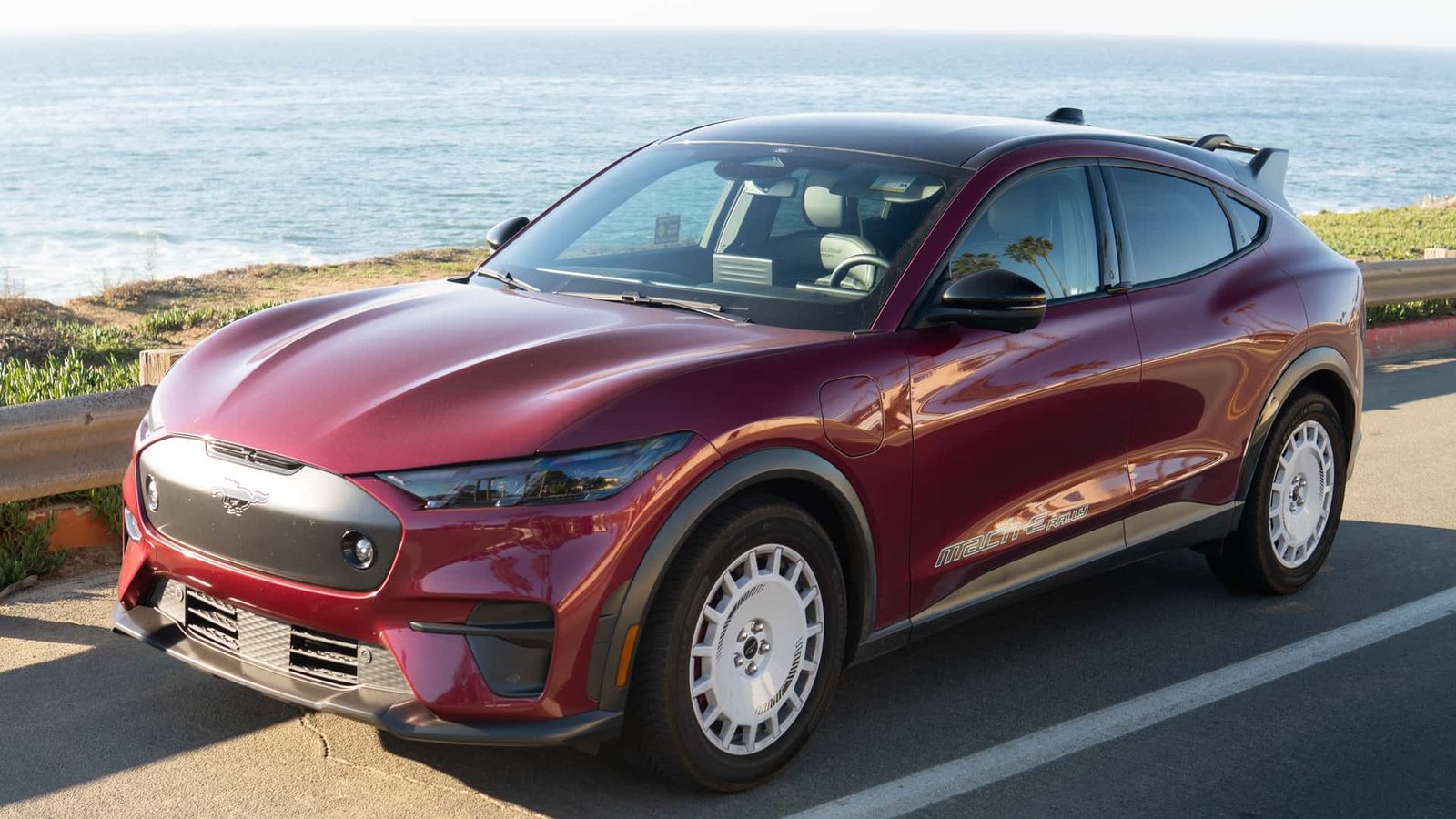
The Mustang Mach-E was Ford’s best-selling EV from January through July.
Photo by: Patrick George
After the F-150 Lightning pickup was discontinued late last year, the Mustang Mach-E crossover and the E-Transit van are the only ones standing, but judging from the most recent sales figures, the latter is hanging on by a thread. The coupe-like four-door Mustang Mach-E accounted for most of last month’s sales, with 1,863 units reaching new customers, while the E-Transit sold just 61. By comparison, even the now-dead F-150 Lightning outsold Ford’s electric van, with 141 pickups that were sitting in inventory going to new homes.
But the story doesn’t stop with July. From the beginning of the year through July, the Detroit nameplate sold 18,671 EVs, resulting in a 60.5% drop year over year. During this period, the Mustang Mach-E sold 13,495 units, down 50.2%, the E-Transit had 554 sales, down 87%, and the F-150 Lightning sold 4,622 units, down 70.9%.
Many automakers have faced slowing EV sales this year, while their hybrid offerings have seen record-high interest from buyers who are looking to alleviate some of the pain brought on by the growing gas prices. With the federal tax credit out the window, new EVs are still more expensive than their gas counterparts, and affordability is one of the main forces driving many Americans’ car-buying decisions.
That’s why more affordable options like Ford’s upcoming compact pickup, which is slated to start from around $35,000, should make a noticeable difference. The company has thrown out the old manufacturing rulebook, adopting a new way of assembling cars where three individual sections are built on their own lines, and then they’re joined at the end.
Ford has gone to great lengths to cut costs everywhere, going for a 400-volt architecture instead of an 800-volt setup that would enable faster charging. Lithium-iron-phosphate (LFP) chemistry will also be employed, further reducing costs.