

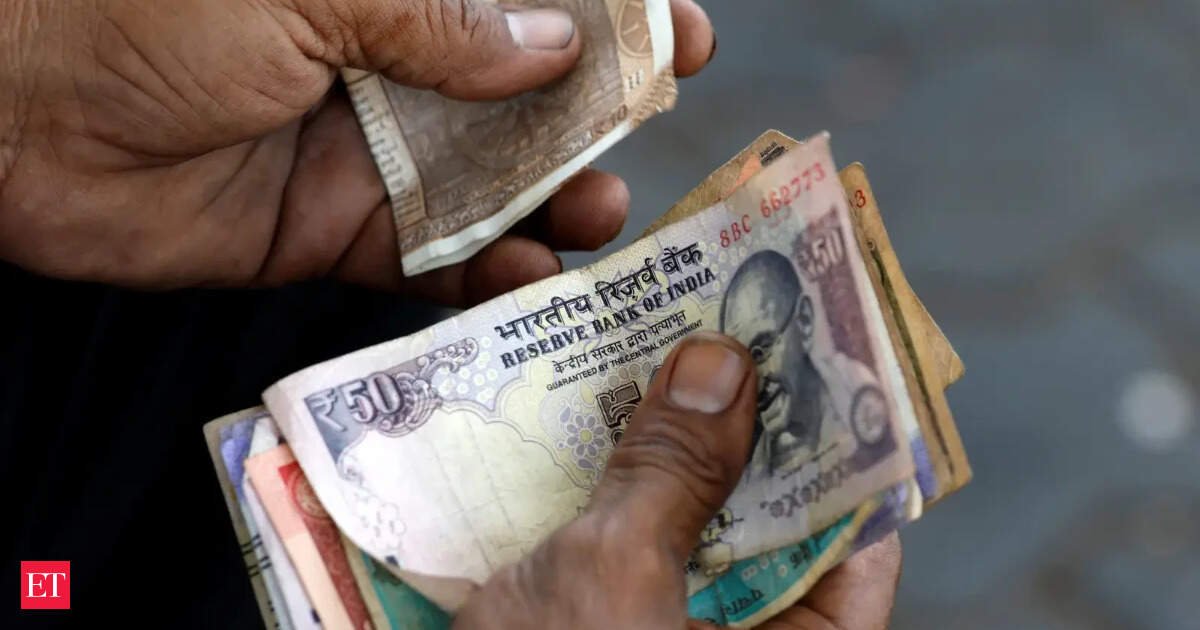
Speaking at the post-Monetary Policy Committee (MPC) media briefing, Malhotra said the RBI is targeting the rollout of polymer banknotes “at the beginning of next FY” after completing field trials.
“We are targeting that they are in circulation, as per plan, in the beginning of next FY,” Malhotra said.
Also Read: Why govt wants polymer banknotes, which countries use them and how these currencies help
The RBI has proposed introducing polymer notes in the ₹10 and ₹20 denominations on a trial basis after receiving the government’s approval. The move revives a plan that was first announced more than a decade ago but never materialised.

Why is the RBI introducing plastic notes?
Explaining the rationale behind the move, Malhotra said polymer notes are more durable than conventional paper currency, making them particularly suitable for lower-denomination notes that change hands frequently.
“Polymer notes enhance durability and life. They are relevant for lower denominations because of their higher velocity of circulation, and therefore their lifespan is lower,” he said.Lower-denomination notes such as ₹10 and ₹20 wear out much faster than higher-value notes because they are used more frequently in day-to-day transactions. Polymer notes are expected to last significantly longer, reducing the need for frequent replacement.
What has the government approved?
Last month, the government approved the RBI’s proposal to introduce one billion pieces each of ₹10 and ₹20 polymer notes for field trials. Regular issuance will be considered if the trials are successful.
The proposal gathered pace after Bharatiya Reserve Bank Note Mudran Private Limited (BRBNMPL), an RBI subsidiary, floated a tender for polymer substrates required to print the trial banknotes.
The government has clarified that the move is only for field trials and that there is currently no proposal to replace all existing paper currency with polymer banknotes.
Why are polymer notes being considered?
Unlike existing Indian currency, which is printed on cotton-based paper, polymer notes are printed on a durable plastic substrate.
International studies cited by the RBI have shown that polymer notes last much longer than conventional paper notes. While they cost more to manufacture initially, their longer lifespan means fewer notes need to be printed, transported and replaced over time, reducing overall currency management costs.
The RBI has also said polymer notes are particularly suited for lower denominations because these notes circulate much more frequently than higher-value currency.
Which countries already use polymer currency?
Polymer banknotes are already used in more than 60 countries, including Australia, the United Kingdom, Canada, New Zealand, Singapore, Malaysia, Thailand and Vietnam.
Australia became the first country to introduce polymer banknotes in 1988. Since then, many central banks have adopted the technology because of its durability, lower replacement costs and improved resistance to wear and tear.
Also Read: Economics of plastic notes: Why RBI is considering polymer banknotes
The International Monetary Fund has also noted that polymer notes have a longer lifespan than paper currency and can reduce the environmental impact of currency production by lowering replacement and transportation requirements.
Will paper notes be withdrawn?
No. The government has made it clear that polymer notes will circulate alongside existing paper currency.
The field trials are intended to evaluate the performance of polymer notes under Indian conditions before any decision is taken on wider issuance.
If the trials are successful, the RBI is expected to begin regular issuance of polymer ₹10 and ₹20 notes, with the first notes likely to enter circulation at the beginning of the next financial year, according to the timeline indicated by Governor Malhotra.