

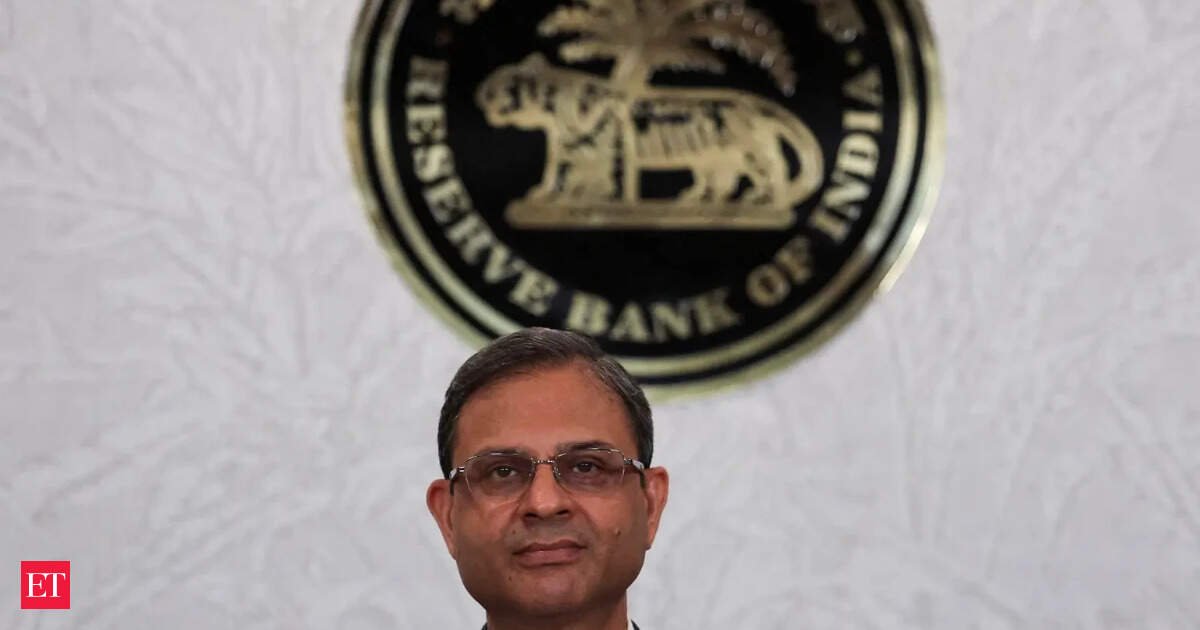
Inflation is now projected at 5.3% in Q1, 4.7% in Q2, 5.9% in Q3, and 5.5% in Q4, with risks assessed as evenly balanced, RBI Governor Sanjay Malhotra announced.
The RBI also lowered its FY27 core inflation forecast to 4.3% from 4.7% projected earlier.
ALSO READ | Malhotra & Co lift FY27 GDP forecast to 6.7% from 6.6% on growth resilience
The MPC noted that headline inflation has edged up above the target, “as expected.”

“The realised inflation for the first quarter, however, was marginally lower than projections, reflecting limited pass-through of cost pressures. The higher inflation is largely on account of food and fuel prices, with little sign of generalisation of price pressures so far.”
ALSO READ | Sanjay Malhotra & team keep repo rate at 5.25% as global risks linger with Iran war flare-up
Core inflation, excluding precious metals, continues to remain benign, Malhotra said. “As projected earlier, headline inflation is expected to rise further in the near term and is likely to peak in the third quarter of this year, primarily due to food and fuel prices, before moderating thereafter. The underlying inflation, reflected in core inflation excluding precious metals, which has remained benign for some time, is expected to align with overall core inflation towards the end of the financial year.”
Goldman Sachs and Standard Chartered expected the six-membered committee led by Governor Snajay Malhotra to revise its inflation forecast downward, reflecting the recent softening in crude oil prices.
IDFC First Bank, however, expected the RBI to leave its inflation forecast unchanged.
In addition to this, India’s top bank kept interest rates unchanged at 5.25% for the fourth consecutive review, maintaining a neutral stance.
Inflation remains key concern
For Malhotra & Co, inflation remains the primary concern. Retail inflation rose to 4.38% in June from 3.93% in May, crossing the RBI’s 4 percent target for the first time in 17 months. Higher food and fuel prices, the conflict in West Asia, and a weaker-than-normal monsoon pushed inflation higher. Food inflation crossed 5% in June, while transport inflation accelerated to 4.3% from 1.7% in May after fuel price hikes began feeding into consumer prices.
Meanwhile, the rupee faced pressure in July due to rising crude oil prices and global geopolitical tensions affecting emerging market assets, though it has since regained some of its lost ground.
In an interview with The Hindu BusinessLine last week, Malhotra said that inflation and price stability remain the RBI’s foremost priority. “Our primary mandate is inflation and price stability. Therefore, we will do whatever is required first to keep price stability and then, to see to what extent we can support growth,” he said.
Malhotra also defended the recent measures announced to attract foreign capital, saying they had mobilised nearly $32 billion, largely through Foreign Currency Non-Resident (Bank), or FCNR(B), deposits. These are foreign currency fixed deposits offered by Indian banks to non-resident Indians.
The finance ministry last week issued its first official warning that inflation was broadening beyond food, saying higher fuel costs and unfavorable weather were feeding through to a wider range of consumer prices.
More price hike pain coming
The persistently high energy costs in the wake of the Iran war means no quick relief is expected anytime soon. With the uncertainty surrounding the US-Iran fight, companies are planning a second round of price hikes for everything from home appliances to kitchen staples. Havells India Ltd. has raised prices by as much as 8%, while salt from Tata Consumer Products Ltd. is pricier by about 7%.
The latest price increases coincide with the incoming local festival season, which typically runs from August to November. This is also when consumer spending typically surges, especially during the Hindu festival of lights, Diwali. The period accounts for nearly a third of annual sales for many companies, raising the likelihood that stronger demand will allow business to pass on higher costs.
The price increases will test not just the strength of India’s consumption demand but also its policymakers as they watch inflation pressures closely.
“Some price pass-through is inevitable, given the magnitude of input cost pressure and margin pressure on firms,” said Sonal Varma, chief economist for Asia ex-Japan at Nomura Holdings Inc.