

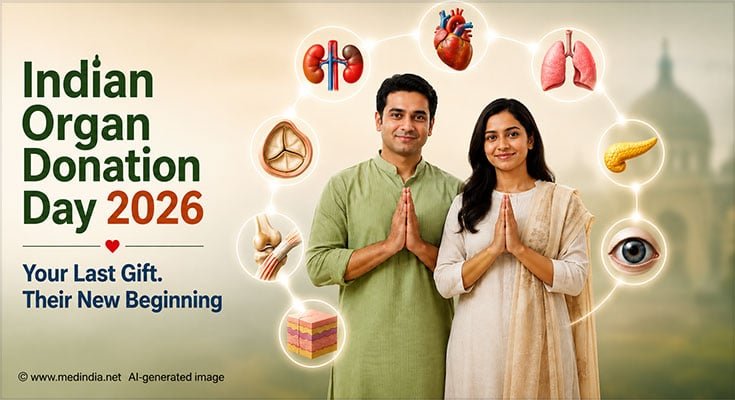
Indian Organ Donation Day 2026 highlights its history, significance, NOTTO-led events, and nationwide efforts to encourage organ donation awareness in India.

- Indian Organ Donation Day 2026 promotes voluntary organ donation across India #IndianOrganDonationDay
- NOTTO is leading nationwide awareness campaigns and public outreach #NOTTOIndia #NOTTO
- Organ donation encourages family discussions and life-saving pledges #GiftOfLife #Angdaan #Medindia
Indian Organ Donation Day 2026, observed on August 3, is more than an annual health observance. It is a national reminder that one thoughtful decision can give hope to people waiting for a life-saving transplant. According to the World Health Organization, a single deceased organ donor can save up to 8 lives, while tissue donation can improve the lives of many more people through sight-restoring and reconstructive procedures.
Led by the National Organ and Tissue Transplant Organization (NOTTO), this year’s campaign honors deceased organ donors and their families while encouraging more Indians to understand organ donation, discuss their wishes with loved ones, and voluntarily pledge to donate (1✔ ✔Trusted Source
National Organ & Tissue Transplant Organization | Government of India
).
Advertisement
Why Is Indian Organ Donation Day Celebrated on August 3?
Indian Organ Donation Day has been observed on August 3 since 2023 to commemorate India’s first successful deceased-donor heart transplant performed on August 3, 1994. Earlier, the observance was held on November 27.
The day recognizes the selfless contribution of deceased organ donors and their families while encouraging more people to understand the importance of ethical organ donation. It also serves as a national platform to improve awareness and inspire conversations that can help increase voluntary organ donation across India.
Advertisement
Indian Organ Donation Day 2026 Events and NOTTO Awareness Campaigns
The national event will be held at Bhim Hall, Dr. Ambedkar International Centre, New Delhi, where senior government officials, transplant specialists, healthcare professionals, donor families, and transplant recipients will participate in the annual observance.
The programme will include:
- Release of new NOTTO publications and digital initiatives
- Recognition of donor families and leading transplant institutions
- Cultural programmes promoting organ donation awareness
- A nationwide voluntary organ donation pledge
Alongside the central event, Regional Organ and Tissue Transplant Organizations (ROTTOs), State Organ and Tissue Transplant Organizations (SOTTOs), hospitals, medical colleges, and educational institutions will organize awareness programmes, workshops, public lectures, and community outreach activities to promote voluntary organ donation across India.
Advertisement
How NOTTO Is Promoting Organ Donation Awareness Across India
One of the key highlights of this year’s observance is Angdaan (Jeevan Sanjeevani Abhiyaan), a nationwide campaign that encourages people to learn about organ donation through educational programmes, digital outreach, and inspiring stories shared by donor families and transplant recipients.
The campaign also promotes voluntary organ donor registration through government-approved platforms and encourages individuals to discuss their decision with family members. Health authorities emphasize that family awareness plays an important role in ensuring that a person’s wish to donate can be respected when the opportunity for organ donation arises.
Why Organ Donation Is Important in India
Organ transplantation offers a life-saving treatment for people living with end-stage failure of the kidneys, liver, heart, lungs, pancreas, and intestines. Tissue donation can also restore vision through corneal transplantation and improve the quality of life of patients requiring skin, bone, heart valve, or tendon grafts (2✔ ✔Trusted Source
Transplantation
).
Despite advances in transplantation, the demand for organs continues to exceed their availability in many countries, including India. Health authorities believe that increasing public awareness, encouraging voluntary donor pledges, and promoting timely family discussions can help strengthen organ donation programmes and improve access to transplantation (2✔ ✔Trusted Source
Transplantation
Go to source)(3✔ ✔Trusted Source
GODT – WHO-ONT
How to Become an Organ Donor in India
Adults who wish to donate their organs after death can voluntarily register through the National Organ and Tissue Transplant Organization (NOTTO) or other authorized government organ donation programmes.
Registering as an organ donor is an important first step, but experts also encourage people to discuss their decision with family members. During the donation process, family members are generally consulted, making prior communication an important part of ensuring that an individual’s wishes are understood and respected.
Organs and Tissues That Can Be Donated After Death
| Organ or Tissue | Potential Benefit |
|---|---|
| Kidneys | Can help two people receive a kidney transplant for end-stage kidney disease. |
| Liver | May save one life or be split to help two suitable recipients. |
| Heart | Can provide a life-saving transplant for a patient with advanced heart failure. |
| Lungs | Can help one or two people with severe lung disease. |
| Pancreas | Can improve quality of life for selected patients with diabetes-related complications. |
| Corneas | Can restore vision in people with certain causes of blindness. |
| Skin, Bone, Heart Valves and Tendons | Can help reconstruct damaged tissues and improve recovery after injury or disease. |
Organ and tissue donation is performed only after careful medical assessment and in accordance with the Transplantation of Human Organs and Tissues Act (THOTA) and national ethical guidelines established by the Government of India.
Indian Organ Donation Day 2026: Building a Future Through the Gift of Life
Indian Organ Donation Day 2026 highlights how awareness, education, and informed decision-making can strengthen organ donation across the country. National campaigns led by NOTTO, together with hospitals, educational institutions, and transplant organizations, aim to encourage more people to learn about organ donation and make informed choices about pledging their organs.
Although organ donation depends on medical suitability and family consent, every conversation about donation helps build greater awareness and public trust. By understanding the facts, discussing wishes with loved ones, and supporting ethical organ donation, individuals can contribute to a healthcare system that gives more patients the opportunity to receive life-saving transplants (1✔ ✔Trusted Source
National Organ & Tissue Transplant Organization | Government of India
Go to source)(2✔ ✔Trusted Source
Transplantation
As India continues to strengthen its transplant programme, Indian Organ Donation Day serves as a reminder that informed choices, compassionate families, and coordinated healthcare systems can together create a lasting legacy of hope. Every pledge may not immediately lead to a donation, but every informed conversation brings the country one step closer to saving more lives.
Frequently Asked Questions
Q: When is Indian Organ Donation Day 2026 observed?
A: Indian Organ Donation Day 2026 will be observed on August 3, 2026, to promote organ donation awareness, honor donor families, and encourage voluntary organ donation across India.
Q: Why is Indian Organ Donation Day celebrated on August 3?
A: The day commemorates India’s first successful deceased-donor heart transplant, performed on August 3, 1994, and has been observed on August 3 since 2023.
Q: How can I register as an organ donor in India?
A: Adults can voluntarily register through the National Organ and Tissue Transplant Organization (NOTTO) or other authorized government organ donation programmes. Informing family members about the decision is strongly encouraged.
Q: Which organs and tissues can be donated after death?
A: Depending on medical suitability, organs such as the heart, kidneys, liver, lungs, and pancreas, along with tissues including corneas, skin, bones, heart valves, and tendons, may be donated.
Q: Why should families discuss organ donation before it is needed?
A: Discussing organ donation in advance helps family members understand and respect an individual’s wishes, making informed decisions easier if organ donation becomes possible in the future.
References:
- National Organ & Tissue Transplant Organization | Government of India – (https://notto.mohfw.gov.in/)
- Transplantation – (https://www.who.int/health-topics/transplantation#tab=tab_1)
- GODT – WHO-ONT – (https://www.transplant-observatory.org/)
Source-Medindia