

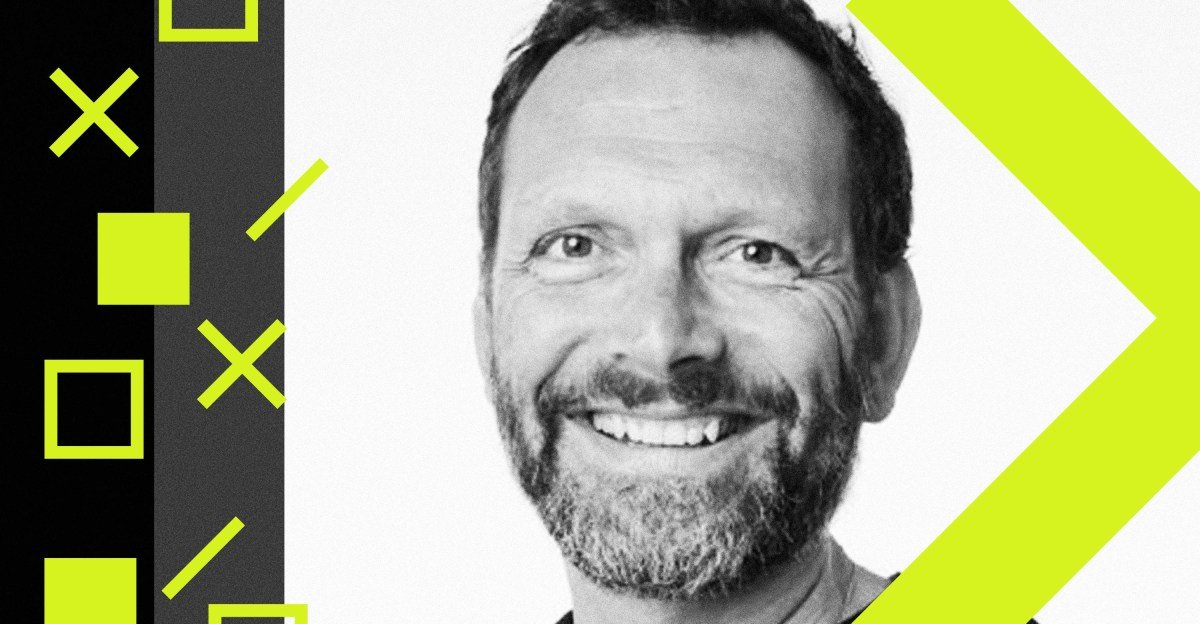
Today, I’m talking with Toni Schneider, who is the brand new CEO of the social platform Bluesky — he formally took over after a short stint as interim CEO. This is one of my favorite kinds of interviews to do on Decoder, because a couple years ago, we had Bluesky’s prior CEO, Jay Graber, on the show — she’s now the company’s chief innovation officer, and all of that kind of shuffle is pure Decoder bait. And a new CEO often brings with them new priorities, which is perhaps the most Decoder subject of all.
Bluesky in particular is a company pulling in a lot of different directions: There’s a Twitter-like social media app, which is what most people are familiar with, and then there’s the underlying technology behind that app call AT Protocol, which allows anyone to build social networking products that interoperate with Bluesky. As you’ll hear Toni say, that ecosystem is vibrant and growing — it’s called the ATmosphere, which is adorable.
But the users of Bluesky the app are not the same as the people building on AT Protocol, and the goals of a company founded to push forward the ideas of open and interoperable social standards are not necessarily aligned with the things all those users might need or want. This is a fight that bursts into view on Bluesky itself all the time, and I wanted to know how Toni thinks about balancing all of that with what remains a fairly small team.

Verge subscribers, don’t forget you get exclusive access to ad-free Decoder wherever you get your podcasts. Head here. Not a subscriber? You can sign up here.
Toni was formerly the CEO of Automattic, which makes the huge WordPress web content management platform, and you’ll hear him make the case that this period in social networking feels a lot like the early days of the web, and that success looks like a vibrant ecosystem with lots of big players that might take a decade to fully develop.
That’s quite a vision, but here and now, the open web is falling apart, and the social products of today are fragmenting and in many cases either get smaller or full of AI slop. So we talked about all of that, and about Bluesky’s reputation as a bastion of leftists insulated in their own little bubble sitting next to the increasingly hard right bubble of X. And of course, we talked about how Bluesky might start to generate revenue — and interestingly enough, it’s not just ads.
This is a fun one that touches on almost every Decoder theme there is. I think you’re gonna like it.
Okay: Bluesky CEO Toni Schneider. Here we go.
This interview has been lightly edited for length and clarity.
Toni Schneider, you are a venture partner at True Ventures, and more importantly, the now permanent CEO of BlueSky. Welcome to Decoder.
Thank you. Thanks for having me.
I am very excited to talk to you. What is happening with the open social web is maybe the most important thing happening for media. It does not get as much attention as AI, but there’s something very big happening on these interoperable social networks. I know that you are a believer in it in the same way that you believed in the web when you were the CEO of Automattic, which is the company that makes WordPress. So let’s just start at the very start. Describe what you think BlueSky is today and what you think the opportunities with these new kinds of networks are.
BlueSky today is really two things. There’s the BlueSky app, which is what a lot of people are familiar with. It’s a social network. We think it’s a better social network. It’s more human focused, doesn’t have ads. It doesn’t have algorithms. But more importantly, underneath BlueSky is an open protocol called AT Protocol. And BlueSky is only one of now over a thousand apps built on that protocol.
The whole point of BlueSky was to demonstrate that this open protocol could scale and attract other builders, building lots of apps, lots of social experiences that all interoperate and connect with each other, which is what we believe the future of social media should look like. It’s what is actually going to make social media something that we believe in, which is that the future of social media should serve the public good. That is what motivates us, and that’s why we built the protocol first and then the app.
There’s a lot in there already that is just pure Decoder bait, including the notion that BlueSky, the product, and the ATmosphere and AT Protocol, the standard, are all intermixed in one company that you now run. Right next to that is maybe the purest Decoder bait of all: the fact that Jay Graber, who was the CEO of BlueSky – she was on the show about two years ago – stepped down into the role of chief innovation officer. You were the interim CEO, and now after four months, you are the full-time CEO. Fundamentally, that is just the story that Decoder loves to tell the most. Talk me through that. What made you step in as the interim CEO, and why did you decide to become the full-time CEO?
It’s actually really cool and inspiring that a founder, after she worked on this for six years, got it off the ground. She started inside Twitter, got it out of there, made it an independent thing. There are a lot of reasons why BlueSky is facing long odds and she got into this place, and then felt like it’s at a scale now where [it’s in] her sweet spot, the things that she loves working on, which is vision, innovation, new ideas. She felt pulled back towards building, especially also because of the advent of AI and how AI and AT Proto can interoperate. She felt like that’s what she wants to go work on, and it’s time to find somebody else for the CEO job.
I was already involved with this project because I met the team a little bit over two years ago, probably around the same time Jay was on your podcast. We became investors through True Ventures. So I’ve been following it as an investor, supporting it. The team approached me and said that my background with WordPress and open source was a really good fit. And so I agreed to be interim CEO initially because I was still a general partner at True and it’s a firm I helped build. It’s an amazing firm that I didn’t want to leave behind. But also, at True, we’ve had this model where we’ve moved back and forth between operator and investor. I did that while I was running Automattic.
So I stepped into it. After working on it hands-on for a few months, it just got more and more fun, more and more energizing. You just feel the momentum. Also, True just switched to a new fund. So actually the timing was good where I could say, “Okay, I will switch my true role to part-time, become a venture partner,” which is what I used to be when I ran Automattic, “and I’ll go all in at BlueSky.”
Tell me about the difference between being the interim CEO and the full-time CEO. When you’re the interim CEO, it feels like there are probably some boundaries in what you can do. And then the full-time CEO can obviously do everything that a full-time CEO can do. What did you feel like the boundaries were as interim CEO?
On the inside, it hasn’t felt very different. I actually think the move to drop the “interim” is more important on the outside, especially for the ATmosphere and the AT Proto community, and people building on this platform and in this ecosystem just to say, “No, I’m here for the duration. This isn’t just some interim gig and then somebody else is going to show up.” So I felt like, to the outside, that makes a big difference. On the inside, the job really hasn’t changed much..
So many of my conversations here in Decoder are really about the timescale of decisions. I’ll make the comparison to my newsroom because it’s easy and it’s easy to understand. Our reporters make decisions in like 30-minute increments. A story comes up, they write it, they publish it, they move on to the next thing. I make decisions maybe in like week- or month-long increments. What are we going to cover? Where are the resources going to go?
It seems like in the interim CEO role, the timescale of those decisions is necessarily short or it has the appearance of being short. And then I’m reading your note that you published when you became the full-time CEO. In the very beginning of it, you say we’re at the very beginning of the story with a decade of exciting work ahead. And I’m wondering if the timescale of the decisions you’re making now are a decade.
Yeah. It touches on something really fascinating with this project. In general with decision making, one of the frameworks I really like is the reversible and irreversible decisions. A lot of decisions we make are actually reversible. I like to optimize to just make those decisions quickly and then make sure you can undo the decisions if you need to change them.
And then there are a few decisions that really do have very long-term implications. They’re much harder to reverse. With this project in particular, there are decisions made at this protocol level that we’re going to have to live with for a long time. There’s a part of the company in this community that thinks very, very, very long term. This is a protocol that is going to be around for decades already. It’s in enough use that it’s going to be around for a long time. Those decisions you really need to be careful about. Then it goes all the way to things we try in the product that work or don’t work.
I wasn’t in the interim mindset as much because I am also an investor in the company, so I care very much about the long-term picture. What attracts me to this whole endeavor is that it can have a really important long-term impact. I always think about, okay, how will this play out? Does this truly serve the core mission? It’s okay to make some of these harder decisions now that won’t pay off for a long time because this is going to take a while.
It’s not just one company. It’s already thousands of others that are building together. That’s just a different timeframe and decision-making process than your typical just “go fast, scale as quickly as possible” [methodology]. I like it. I’m comfortable with it.
I just want to stick with BlueSky, the company that is both responsible for the standard and the protocol, and the product that a lot of end users love and sometimes hate. That is the core tension of the company. The user base of BlueSky is or is not interested in the development of AT Protocol, is or is not interested in the wider ATmosphere.
Under Jay’s tenure, the company was very focused on building out the protocol because the product literally could not exist unless the protocol was robust enough to stand up the product. You could see that back and forth. I have always felt that the company is far more interested in the protocol than the product, that the product was merely there to show what people could do.
But now the product is big. It might be waxing or waning. It will come to whether you need to turn it into TikTok or not. Tell me where you, as a CEO with a decade-long vision for all of this, see the balance inside of BlueSky between the product, the thing that looks like a Twitter app, and the protocol, the thing that should enable thousands upon thousands of other social experiences?
I see the BlueSky app and the product as enabling the ATmosphere. It’s an on-ramp, or maybe a lobby to the ATmosphere where it’s just a great way to get lots of people in, get people exposed to the idea, and then realize as you use the product, “Oh, there are other things here. This isn’t just a microblogging app.”
An example from the last couple of months that’s gone super well is this format called Standard Site that emerged. The history of that is that BlueSky’s a microblogging app. People are asking for longer-form posting. A bunch of other apps started popping up that were for newsletters and blogging. In particular, three apps called Leaflet, Pocket, and Off Print. They got together and said, “Hey, why don’t we define a format for all of us to work together on the ATmosphere for all of the posts that we publish?” We looked at it and said, “Great, we can now take that and surface it in our app.”
So now, if you’re posting a blog post on Leaflet, it just shows up in the BlueSky app and we can make that a seamless experience. This went over really well to the point where now WordPress is supporting Standard Site and lots of other publishing platforms. They’re realizing the benefit of, “If I just publish to this new format now, it’s going to show up and work across all these other platforms without me having to do anything.” It’s caused this really nice ripple effect throughout the ecosystem where people can work together just by using this format. Nobody has to do deals with each other. Nobody has to get permissions and no money has to change hands. And it’s just taken off.
I’m hoping more and more BlueSky users will see those kinds of integrations and go, “Oh, cool. I’m not just getting BlueSky content here. I’m getting content from all these other apps, all these other networks. And it just works. I don’t have to do anything. I don’t have to go sign up for 10 different apps. It’s just one signup, one account, and it just works.”
You’re describing two different kinds of things. There’s a lot of work to be done at the protocol level. There’s a lot of work to be done to support new kinds of experiences like Standard Site. Then there’s BlueSky, a product which has 45 million people, and probably needs to be substantially bigger if it wants to be the aggregator for a massive network that can displace some of the other social products out there. That needs to be a lot of things to a lot of people. It needs to find different kinds of product market fit. How big is BlueSky the company now, and how is it structured to point in two different directions?
We’re now at 50 people, still very small. The biggest challenge is clearly trying to do everything you’ve described with a small team. We do have an ecosystem of hundreds and thousands of others working on it, so that helps. We do our best to coordinate everyone.
I would say we’re making good progress. We’re seeing good momentum, especially on the ATmosphere side. The things we look at are the number of daily active apps on the network, which has doubled since the beginning of the year. It’s about to hit a thousand. We look at SDK downloads for our tools that have tripled. It’s going to hit a million downloads a month by later this year. Those are the numbers that show that not only is it scaling, but we’re able to scale it with the team that we have.
How is that team structured?
About 50 people, all remote, structured into small teams. I’m a big believer that six to eight person teams, highly aligned, highly incentivized, and motivated are the way to get things done. Probably the only way to get things done. There are three core product teams. There’s the app team that deals with the BlueSky app. There’s the ATmosphere team that does all the developer-facing stuff. And then there’s a third product team called the exploration team, and that’s a new team that Jay has stood up and is running. We actually just launched a new version of the product they’re working on, Attie. Think of it as AI layered on top of the ATmosphere and what you can do with that.
Those are our three core product teams, and they’re each customer-facing. Consumer-facing, developer-facing, and then we’ll find out from the AI product what the market fit is there. We have a bunch of support teams that support those three core teams and that are pretty typical. We’ve got a legal team, et cetera, et cetera. I would say it’s a team that’s a very low ego, high agency. That is kind of the ethos. Low drama, just a lot of get-shit-done energy. Really collaborative.
Whenever I think about new social products and how they might scale, especially with explosive user growth – up until recently, the conventional wisdom is you’ve got to scale trust and safety and moderation linearly with the size of your user base. Maybe we’re going to add AI to this and that linear relationship will break, or maybe it’ll actually get even more costly because token spend will get more costly than having human moderators, or there’ll be more false positives and we’re going to be even angrier. So you have to have more humans in the loop.
It’s really unclear to me how that’s going to work. You’ve obviously been scaling BlueSky as a consumer social product. Then you have the complexity of, “We’re hooking onto lots and lots of other products that are putting content in front of people.” How does the moderation layer work? And have you seen it be a linear increase in cost with the size of the network and the user base?
Moderation is huge in any social product. In addition to our 50-person team, we do have contractors that help us with moderation. What we’ve done differently is that our whole moderation system is composable or pluggable. It’s not just us that can label content and moderate it. Anybody can do it and add labels. It’s part of the protocol. Anybody else who builds products can decide if they want to use those labels or not. So if somebody on our moderation team labels something as, let’s say, AI slop, everybody else who’s building in this ecosystem can take advantage of that piece of data. They don’t have to, but they can.
So what we’re seeing and what we’ve seen is we have our moderation team, but then there are other teams that have decided to moderate label content the way they want. For example, maybe the first non-BlueSky project on the protocol was BlackSky. And it’s now become a thriving company on its own. It’s a team building all kinds of interesting things. And they started out by saying, “Hey, we want to build a version of this network that is optimized for Black users and their needs. And we want to have our own moderation policies.” And they are able to do that and plug that in. But everything they’re doing is still part of the larger network. And now there are hundreds and thousands of these kinds of systems.
This has really helped where the moderation burden isn’t all on one team that has to scale and look at everything. There should be lots of different teams and lots of different systems because each network, each community has its own idea of what moderation should look like. So we feel like this kind of distributed moderation approach is more powerful. That said, yes, we’re continuing to scale up ours, but it’s manageable. It’s a lot of work, but it’s manageable. It’s worth it when the whole network can benefit from it.
The next part of that story that’s going to be really interesting is that the biggest thing we’re actually working on with AT Proto, the next evolution of the protocol, is private data. We all know that the public square, public social networking has reached a certain scale. And there are a lot of people who want to retreat into more private spaces. We’ve seen explosive growth in group chats. We’re all in a million group chats. This has been the number-one request from our community, from our developers: “Let us build more private, membership-based, various versions of private spaces on this protocol.”
We’re in the middle of building that. It’s a community effort. It’s rolling out very soon. Now, moderation moves and gets broken up into even more and smaller spaces. People can decide, “If I don’t like a network or I don’t like the way it’s moderated, [I can] go start my own.” Go start your own community. That’s the most interesting thing ahead of us, because right now everything on AT Proto is public. It can only be used for a completely public product. Once we enable private data, I think that it’s like 10 or 100X the number of use cases we can serve.
Not to be reductive, but I think it’s useful to talk about this in comparison to other social products people might be more familiar with. With AT Protocol right now and the ATmosphere, everything is very public. The models in my head are Twitter, and RSS, and massive broad-based publishing platforms, right? One-to-many. I think what you’re describing is much more like a Reddit style approach, where you have smaller, closed communities. Some of them can be totally private unless you’re invited in. And yet, they’re still on the ATmosphere in some way. Is that right?
That’s right. The trade-off has traditionally been that if you want to be on a launch network, you have to be on a public network. Or if you want to control, have ownership over your own community, you have to set up your own thing. You have to run your own server or you have to run your own forum. There’s clearly a need for that because there are lots of those out there. But the challenge is each one of those is now a little island. And you have to convince people.
We think we can pull off as the best of both worlds. When you build a community or private space on AT Proto, it’s absolutely 100% owned by you. It’s not owned by BlueSky or by any company. It’s just like everything else on a protocol. It’s owned by the users, not by the platform. So it’s really truly yours. You can move it around. You can make all the decisions. But because it’s on a shared protocol, all of these communities plug together. You can go to a place like BlueSky and get all your notifications in one place. You can see what’s going on across everything. You just need one login, one place to check, but you still have the independence and the identity of these individual communities.
That is something that no other platform can do right now. You’re either on the large platform owned and controlled place, or you run your own and you’re a little siloed. We think we can solve that. We see the energy behind this idea and the number of things people are already prototyping is very palpable.
I have to ask you the other Decoder question because I’m very curious where this idea came from and how you decided to bet on it. How do you make decisions? What’s your framework for making decisions?
I already talked a little bit earlier about the reversible and irreversible decisions. The hardest thing about running any project is that, especially if it’s successful, it’s just an endless flow of things you have to prioritize and decide on. I find you could make that a lot less daunting and exhausting if you move a lot of decisions into this category of “they’re not that big a deal.” Let’s make it easy to experiment and reverse things, and really only focus on the truly long-term impactful things that we have to get right.
You have this lightness or almost playfulness about some of these things, where it’s just not that big a deal. Let’s just try something. Let’s be creative and improvisational about it. This is a lot of how Automattic runs. I actually credit a lot of that to Matt Mullenweg’s approach to first running an open-source project. Inside Automattic, there are a lot of jazz analogies because Matt started out as a jazz musician. Just this improvisational, “don’t take it so seriously if you don’t have to.”
There are very serious decisions we have to make as well. For those, I like spending a lot of one-on-one time with the leaders, and then gathering and going through the list and talking through the trade-offs. Making sure that at least in a good cadence, monthly or maybe quarterly, we go through and make those hard trade-off decisions and don’t leave the room until we say, “No, we’re only doing these two things on the important list. We can’t do everything. Let’s voice all the ideas, but get to agreement on the few things we’re trying to get done. If we get those done, then we’re actually in good shape and we keep making forward progress.” That’s the ongoing flow that we go through, and it seems to be working.
I have to call out an email I got from a listener, ex-Amazon, who said, “Everyone always comes on your show and talks about reversible decisions and irreversible decisions. And I just want to point out that if you have enough money and time, every decision is reversible.” And I said, “Yeah, that’s right. Especially at Amazon scale, that’s certainly right.” What’s the line for you? What makes the decision irreversible? How much money and how much time does it take to reverse it?
To me, it’s less about the money. It’s more the time. Some things just take years to unwind. I think anything that has – let’s call it a five-year time horizon, where it’d be really painful to change course. Or maybe on the positive framing, it’s more like, “If we get this right, we don’t have to think about it again for five years.” That’s the category of things where – people talk a lot about, for example, with startups, it’s your investors. Especially early on, the first investors you work with are going to be with you for five or 10 years. And that’s a pretty big decision. You shouldn’t just take the first check that comes along. You should really think that through because I’ve lived that.
True has invested in 500 startups over the last 20 years, and we’ve seen every possible way that that plays out. That’s a good thing to really pay attention to early on, not just rush. Early in my career, I was like, “I just need money. Just give me a check and I’ll keep building. I just want to build things.” That’s an example of the timeframe where I feel like it’s really nice when it just works for several years. You [don’t] have to go back and invest more time, more money to reverse something.
So I want to put two decisions in practice here. And your framing here is perfect for this question. You decided to be the CEO of BlueSky, to become the permanent CEO of BlueSky. You’re calling that a 10-year decision, right? It’s in your note. We’ve talked about it here. How did you make that decision? Did they come to you and say, “You’re going to be the CEO now. Sorry, we’re stripping the title away”? Did you have to write a memo? How did that all happen?
It was a gradual process. The job is great. The team is great. The mission is what I want to work on for the next 10 years. So that was not a hard decision. It was really that I already had a job, and just figuring out a way to make those two pieces work together and to make a transition work. From early on, the BlueSky team and board said, “We think this is working really well. Can we make this permanent?” It was probably a couple months of just working through how a transition would work.
So you were the interim CEO for two months, and you spent two months figuring out how the transition worked and then you became the permanent CEO?
Yeah. Yeah, that sounds about right.
It’s quite a timeline. The second one, maybe much more importantly is, “We’re going to make this big bet on private communities. We’re going to extend the protocol.” Logically, you’re going to have to extend the BlueSky app itself. You’re going to have to make a big bet on both the standard itself and how the consumer app will work. I would say, and maybe this is too reductive, the community on the BlueSky app does not like change, so you’re going to have to endure some change with them. “This is a bet. This is a big decision. This has to be the future of the protocol, the future of the ATmosphere.” How did you make that decision, and what made you convinced that it was the right one?
The decision to extend the protocol has been underway. A year or two years ago, or maybe even from the very beginnings of the protocol, people said, “What are we going to do about private data?” So that’s been building, and it’s natural. Once people start building on your protocol, it’s the first question. “This is great, but I do have some private data.”
Even inside the BlueSky app, we have DMs. Those aren’t on the protocol. We don’t want those out in the public. We have features inside the app that we had to build off protocol because it couldn’t support private data. So we have our own use cases. We got lots of them. That’s an obvious “we just have to do it.” How it affects the community, that’s what our app team is working through right now. One of the things that I feel like we’ve gotten better at in the last few months is to do that out in the open.
Alex Benzer, who’s our head of product, who makes those decisions around what goes in the app and what doesn’t, has been posting about it and inviting feedback and saying, “Look, this is coming. What do you think? What kind of communities do you want? Do you want them? How similar should they be to the current app? How different?” I think we have 500 people who’ve signed up to give us feedback. We’re going through user interviews.
People are already building communities on BlueSky actually because we have this functionality where people can make custom feeds. One of the huge differences in BlueSky is no algorithms. You get to make your own. You can plug in your own. People have made over 100,000 feeds. Some of those are really communities themselves. There are things like BookSky and AstroSky, where it’s just communities of people talking about a certain topic within a custom feed. People have taken what we have to bend it into a community shape.
It’s already happening on a network. That makes it a lot less scary. It’s not like we’re going to stop one thing and pivot somewhere else. We’re just doing more of a thing that some users are already doing. I think we can do it in a way that doesn’t disrupt. If you never want to join a private community, you don’t have to. BlueSky the app as it stands today isn’t going to change. The public part of it is popular, it’s growing. So we’re not going to mess with that.
Let me ask you about BlueSky the app not changing, because I think that’s the thing that I’m poking at. It feels like every other social network evolves into a crab. Everything is evolving into TikTok. We can see it happening every single day. Meta today announced a test in which the big blue Facebook app will open for some set of users into full-screen video. “Screw it. We’re just going to turn Facebook into TikTok.” Everything heads in that direction. X has headed in that direction. That’s the competition, and maybe that’s the thing the market wants.
You’re saying, “We’re going to build private data. We’ll have a more Reddit-like experience.” BlueSky may be the last really text-first social platform of its kind that exists. Do you feel that pull into different directions, into different formats? Because that’s a thing that your user base also pushes against.
This is the beauty of an open protocol. Let somebody else build the TikTok of AT Proto. Let somebody else go push into new formats. We’re perfectly happy with a text-first, microblogging network. We love it. Honestly, I’m glad if others are chasing off in other directions because we like what we have.
We talked earlier about traffic. A lot of these other networks, as you know… You’ve coined the term Google Zero right there. All these walled gardens, all these other platforms are getting more and more walled. They say, “Once we’re open enough to attract an audience, and then once you’re here, we’re not going to let you go. We’re just going to keep trying to find ways to keep you in there.”
BlueSky’s the opposite. Because of the protocol, it’s locked open by default. We couldn’t keep you in it even if we wanted to. We want people to build other apps and experiment with other things. We want people to find great content on BlueSky and leave. We’re still a place where we don’t downrank links. We love sending traffic to people. We send two million clicks a day to publishers. We’re the number-one referrer to a bunch of publishers, and we want to do more of that. We love the way that the open web works and people come to BlueSky to connect, to learn, to have fun, and then to find interesting things to go to. There’s no way we’re going to change that.
I’m curious, if someone wants to build the TikTok of the ATmosphere, is there a bunch of protocol-level work that needs to be done to support it? I know there are attempts to do this. Skylight, I think, is a TikTok-like app on the ATmosphere. There are others. But all of your technical innovation on the standard itself is pointed at text. I’m wondering if there’s something you need to do to be better at video to compete with what all of the closed platforms are chasing at a much larger scale.
No, I think at the protocol level, it’s easy to do. You can define your own records on the protocol. Yes, ours are text-focused or posts, they’re follows, they’re likes, things like that. But there are already people publishing all kinds of different things within a protocol. I saw yesterday that somebody’s publishing a patent database onto AT Proto, so everybody else can just tap into that patent information. There’s somebody who’s publishing the health data off of their Apple Watch onto their PDS. So they’re just live-streaming their health data onto the protocol. People are putting out all kinds of things.
The protocol can be used for anything. What’s harder is that you need people there, so that when you build the next TikTok on AT Proto and you launch that app, it launches into millions and millions of people who are already there. That’s what we’re working on, to just keep getting more and more people onto the ATmosphere so that you don’t have that cold start problem as a new developer where you want enough people. Eventually our 10-year goal is a billion people on AT Proto. You don’t need a billion to have success with a new product, but you need a critical mass so that when people show up, then they ask, “Oh, where are my friends?”
This is the dynamic that I’m really interested in with the BlueSky app and then the protocol itself. It’s no secret that I’ve been talking about federating The Verge for like a hundred years, and we’re going to do it one of these days. One of the issues here is we publish in a lot of formats in a lot of different places. If I just immediately federate The Verge tomorrow, we have a lot of video. Where’s the video going to go? It’s going to go out on the network. Maybe I can convince a lot of people to download a Verge app and they’ll see a bunch of stuff in it, and that would be great.
But if what you’re describing is that BlueSky the app will be the entrance point for a lot of different people, and BlueSky the app has not prioritized video as part of the core part of the user experience – for any number of reasons why you might not prioritize video – then that part of the network won’t get that effect. It won’t get what feels like a network effect, which is, “Oh, there are lots of people here.” The way that if I federate The Verge, I’d say, “Look at all these great posts from other tech writers,” I could do that tomorrow.
It’s almost easy to do. It’s easy to vibe-code that prototype, I will tell you. It’s hard to get it all the way to the finish line. That’s the dynamic. If you want BlueSky, the consumer app, to be the entry point to the diversity of the network, the app itself has to be diverse in a way that might dilute the app and make it lose its product market fit. How do you think about that back and forth?
I think what we’re seeing works well, and I’ll go back to the Standard Site example. If the other piece of content that’s not text is something that can show up inside a post, we call them link cards, and that could be a video. It could be a game. It could be something where somebody can post about it and say, “Hey, check out this new game.” Somebody can see it and then go there. That’s a perfect fit because then it fits our mode of how people discover things. But then when they want to engage with it, we send them off to that place.
Same with video. As long as somebody can embed it and promote it on our end, we’re not going to try and become a video network where we then say, “Oh, all video has to be watched on BlueSky.” No, no, no. Go off to The Verge, go somewhere else, go explore. I think BlueSky as an app is a great place to surface things and notify people of new things, but it does have to somehow fit inside the post. You can give people a preview essentially and say, “Okay, now go play this game. Go subscribe to this publication. Go donate to this cause.” That’s the kind of action we’re trying to surface for everybody else in the ATmosphere and then just send people off on their way.
I want to ask you to compare your role at BlueSky to when you were the CEO of Automattic. These are big companies, or we want them to be big companies that operate on standards and protocols and the open web in different ways. At BlueSky, you control the standard itself. This is a very important piece of the puzzle that the standard is in development. And you’re making products on top of it and you want other people to build on top of the standard.
A lot of people can say a lot of things about Automattic’s relationship to the web, but technically you don’t control the standard. And maybe it has enough scale so that the way Automattic does it becomes the way everyone else does it. But at Automattic, you didn’t make the browsers. You weren’t on the steering committees of the big standards in a way that allowed you to actually dictate what they were. You were making a web-server product that interacted with an ecosystem of other open products. Do you want BlueSky to get there where it’s just one player among many, or do you want to retain control of the standard too? And how do you think that’s different from how Automattic exists in the web ecosystem?
We 100% do not want to control the standard at BlueSky. We are actually very actively doing everything in our power to divest control of it. First was to design the network in a way that if BlueSky goes down or goes away, the rest of the network is fine. That’s a big test case for us. It actually got tested a couple of months ago, not the way we had hoped, but we got a DDoS attack on the BlueSky network. A very, very massive one. It did take us down for several hours. Other parts of the network, like I mentioned BlackSky earlier, operated just fine, totally independently. That’s a big part. Just the practicality of it is, can other nodes in this network operate independently? Are there things left that BlueSky runs that everybody else is dependent on? And if so, what can we do to fix that?
A big part of that, too, is that – this gets a little nerdy into the whole stack and the protocol – when people look at the design of this network and they like to find out, is it truly decentralized or not? There is one thing at the heart of it that absolutely no company should control, and that’s the identity directory, the lookup. When you log in your identity in the ATmosphere, where does that lookup actually happen? It’s like DNS on the web when somebody looks up a URL. We have been running that core directory, and we’re actually in the process of setting up a Swiss nonprofit with a separate board, a completely separate entity, to which we’ve handed over that directory. We’re in the process of handing over the domain to it. So that’s one example.
We’re also handing the protocol spec itself to the IETF. Last week, the IETF met in Vienna, and AT Proto is now a work stream, an official work stream to take that out of BlueSky and hand it to the IETF. It’s going to become a blessed internet standard run by a completely separate entity. We’re constantly taking all the pieces that we had to bootstrap and handing them off to other entities. We’re super serious about that. The end state is that, yes, we are one app of many, one company of many running in this protocol, and we won’t control the protocol.
The parallel to Automattic is that WordPress, the core software that Automattic is hosting, is open source and it’s GPL. Anybody can use it, but anybody who uses it and changes it has to give back to open source. In our case, it’s AT Protocol where anybody can build on AT Protocol. The beauty of building on AT Proto as a developer is all the data is owned by users and it’s accessible to any other app. But as an app, then your data also goes into those user repositories. So it makes it better for everybody else on the network. It’s similar to the way open source gets better through collaboration. This network gets better through everybody having their data shared and remixable and interoperable.
When you get that balance right – or you have a company that helps bootstrap the whole thing, but by definition keeps itself separate and makes sure it can’t control the shared resource – then it can work. We did this successfully with Automattic and WordPress. Automattic became a big company. WordPress became a huge open source ecosystem, and then tons of other companies formed around it. Our test case was always, “What if Automattic goes out of business or gets acquired by somebody evil? Is WordPress going to be okay?” That’s why we put the WordPress trademark into a foundation so the company couldn’t mess with it.
It’s complicated to set those things up. This is one of those, not even five years, like 20 years out decisions. If this thing gets big, will it be truly independent? Or could somebody come in and change their mind and mess with it? We think about that constantly at BlueSky and getting that balance right. Handing off pieces so that this – because it’s not going to work if one company tries to control it, we’re right back at square one and we’re just another walled garden, which is completely the opposite of what we’re trying to achieve.
There’s a lot of drama with WordPress and the open-source community and other companies monetizing open-source in different ways. There’s drama with the foundation. I’ll set that all aside. People can go listen to Matt’s episodes. We did it in detail, and certainly will have him back. I like talking to Matt a lot. But that’s all coming for you too, because at some point all of this has to make money.
A real theme on Decoder is we’ve set up complicated structures so that capitalism can’t ruin everything. We just had Proton on the show. Complicated Swiss foundation structure so that capitalism can’t ruin everything and all the promises they make to their customers. You don’t have that problem yet. As far as I can tell, there’s no revenue flowing into this and probably thus no push to make that revenue number go up in bad ways. At some point there is going to have to be some revenue. You’re an investor. I’m assuming you want to get paid out into your own fund. How is BlueSky going to make money on the app level, and how is the protocol going to make any money?
The way we’re going to make money as a company, we’re only interested if that economic model works for the entire ATmosphere. We make money when everybody else makes money. That rules out a bunch of things that will be purely app-based. I’m not ready to announce the specifics, but we will start monetizing this year. The way I look at it is there’s already money being made on this network. We’re sending lots of traffic to people who then convert that traffic into subscriptions.. I think our job is to just help more of that happen. Right now it’s just organic, and we can build things into our app and into the protocol that make it easier for people to start making a livelihood on this protocol and start doing ecommerce with each other. That’s the direction we’re headed in. We’re going to do it in a way where the whole idea is for the pie to get huge and for us to be a small slice of a big pie and for everybody to make money. If we can help you as a publisher make more money, then we can do business together.
I know you said you weren’t going to do specifics, but I have to poke at this a little bit. Your options, if you want a small piece of a big pie, are “We’re going to let you run ads for your subscription newsletter and then that’ll convert.” That’s Facebook’s model, right? “We’re going to let you run ads at whatever CPM, and your return on ad spend will be high enough so that enough subscribers signed up based on how many ads you were on.” And the other one is, “We’re just going to take a percentage of every signup fee.” Which direction do you think you’re headed in?
It would definitely be the latter, but we would only take a percentage of anything that we actually enable. If we send extra traffic to you, then it would be a percentage of that.
So basically affiliate-style monetization. If I’m selling a newsletter for $10 a month and you send me a new subscriber, you’re going to get some of that back.
Affiliate style and in a way that works for the entire network. Anybody on the network that sends you traffic can participate. We want everybody to have a part in it.
Can you decentralize the billing and financial layer of that?
We can make it work in a decentralized network. Billing does require some centralized trust, and that’s certainly something we’re looking at.
I asked you that question because I was terrified of a crypto scheme basically, but it does not sound like you’re going to do crypto schemes.
No, no. Similar intentions, but definitely not a crypto approach.
One of the things that you’ve been describing is, “We have to build all these structures to withstand the bad incentives. If somebody shows up and buys BlueSky, and they’ve got bad intentions or they just want to use it to do crypto schemes, we have to build the structure that will withstand it.” Adding monetization in whatever form – and I agree the network should be monetized in some way – creates a bunch of these incentives at first launch. It will be your first contact with those incentives. You have some experience with this, certainly even thinking about it. How do you expect that to go both with your team and with the user base of BlueSky itself?
The team is eager to figure this out because we realize that there has to be an economic model for this network. Otherwise, we’re in the early bootstrap phase still and lots of people are getting excited to build on this. But it’s the number-one question for my team, from all the people building. “What’s that model going to be?” Everybody’s eager to figure this out and to do it in a way that we don’t fall into the traps of trying to create the incentives that we’ve seen in other networks, which just cause all kinds of unintended consequences.
Looping back on the WordPress example, it can work really nicely. WordPress is a slightly different model because it’s a hosting model. But there are thousands and thousands of WordPress hosts out there that are doing just fine and it just works. You can host your site anywhere, you can move it anywhere. They compete to be the best host for your content, but it’s a very good model. As far as I can tell, it hasn’t created anybody to take all the market share or create these weird incentives where the product gets worse.
There’s a very nice dividing line there between “I’m your host” and “you go and do whatever you want.” You can build an ad network if you want. You can build a store, you can build something else. Our business model doesn’t dictate what your business model should be, which is kind of what happens in these other networks when it’s only ads. “Oh yeah, come here, build your following on here and then we’re going to put ads on it. If you want to do anything else, no, no, no, it’s going to be ads.”
Those are the kinds of things we think about. Talking about irreversible decisions, that’s going to be a huge one when we start to zero in on the right model to make sure that we can picture this scaling to billions of users and all kinds of businesses emerging on this network, not just one type that we happen to think about.
You’ve mentioned BlackSky a handful of times in this conversation. I’ve been lucky enough to be at a dinner with Rudy [Fraser] who runs BlackSky. He’s prolific in talking about what it’s like to actually build on the ATmosphere and what a lot of the challenges have been. Because it hasn’t yet really, truly been decentralized.
Now it’s my turn to say, I won’t go into the weeds of the protocol, but there are parts of the BlueSky stack and parts of the ATmosphere that have been pretty heavily centralized up until fairly recently. Is it easy to stand up a competitor, in the way that you’re describing people can stand up competitors to WordPress and operate in their own universe using the same tools and same access to end customers? Or is there still work to be done there? Because it hasn’t been easy up until now, at least using the example of BlackSky.
Rudy deserves a lot of credit for taking those early risks when it was much harder to build and being the first to prove that it can be done, but it’s getting easier and easier. We are seeing more and more BlueSky- and BlackSky-style networks pop up pretty often. We’re actually seeing a whole bunch of energy in Europe. We’ve got EuroSky. W Social just launched. There’s another one I think that’s about to launch.
It’s getting easier, and we’re investing a lot to make it as easy as possible. In addition to being an open protocol, all of BlueSky’s open source. You can take the BlueSky app and just fork it and go do your own BlueSky. That’s great, but we’re really also interested in people building other things that are microblogging on the network and making that super easy.
We’re seeing Tangled as an example that a lot of people like to use recently because it’s a great project. They raised VC funding. It’s a social coding platform, like a social GitHub that’s growing really nicely using AT Proto for the social layer of the social coding aspect. Has nothing to do with microblogging, but it’s another thing that we can collaborate and integrate. People use both Tangled and BlueSky. It all just works together. But those are examples where it’s getting really easy to just build a new app on AT Proto and have it have social functionality. It doesn’t have to be an entire BlueSky-style network that you have to run.
We put effort into making it easier. When BlackSky started two or three years ago, it was a big lift. You had to be very technical to do it. Now it’s gotten easier and easier.
Finally, we haven’t talked about AI yet. AI makes it even easier. A lot of the growth we’re seeing now is that you can point to one of the AI coding tools on AT Proto and say, “Hey, build me a social app, build me a community.” And that makes it that much easier. Those are some of the tools and integrations that we’re working on on Jay’s new team, but that really changes the game pretty substantially for just how easy all this stuff is getting.
I do have to ask you the AI question. You’re a software CEO again. How do software companies work in the age of AI? Have you rethought your teams? Do you have the traditional product-manager-designer-engineer trio? Or is everybody doing everything? It’s a small team and you’re the new CEO. So you have lots of opportunity to rethink everything.
It is very empowering once you get it right. We have to use our exploration team as an example. That’s a three- to four-person team that’s launching at very high velocity, launching brand new products. It’s really fun when you have an existing company with existing resources and very senior talented people can then go after a new greenfield opportunity with these new tools. That’s when you see a ton of velocity.
If you have an existing product with all the complexity of how it’s been built, AI helps, but you’re still dealing with that same complexity for a while. I see it accelerate everything in terms of the development pace. You still need great product managers, you need great designers. You need [to know] how to build. The building part is faster than what to build. The ideas are just as hard as ever, in a way harder because there’s so much noise out there and so many things popping up every day. Setting yourself apart, building something really great that lasts. Just because it’s faster with AI doesn’t make it any easier.
We’ve talked a lot about standards and making AT Protocol and the ATmosphere a more standardized project at the IETF and whatever Swiss foundation is going to do name lookups. It feels like we’re going to recapitulate ICANN. But that’s a totally different episode of Decoder, and we’ll come to that drama when everything is successful.
There is another standard that has already gone through all this. There’s ActivityPub. Mastodon runs an ActivityPub. Famously, Threads runs an ActivityPub, to whatever extent Threads runs on ActivityPub. There’s an argument that Meta did all of that just to satisfy European regulators, and that’s all it’s there for.
Have you talked to the Threads team about integrating with ActivityPub or moving them to the ATmosphere? Once you become an official standard, I imagine that must be easier for them to continue throwing bones to European regulators. That would be the big unlock, right? That is the hundreds of millions of users on a nominally open network. Have they shown any interest?
We have not talked to Threads. We’re definitely talking to Mastodon and ActivityPub. They definitely feel we’re very aligned. Our missions are very aligned. We’re all on Team Open together. These are two different standards that do slightly different things. And some use cases for ActivityPub are great and some are great for AT Proto.
What are use cases that are good in ActivityPub and what are use cases that are better in AT Protocol?
ActivityPub is based around this notion of a server. At the heart of it, you set up your own server, you control it, you run it, that’s your community, and then all the servers can federate if you want. You don’t have to, you can just run it by yourself, or you can plug into the federation, into the Fediverse. That’s how their system works. It works really well. They have a lot of successful governments who want to set up their own server infrastructure and run their own community infrastructure.
AT Proto has a different goal. We don’t have a server at the heart of it. We have the PDS, the personal data server that is your data. The heart of AT Proto is personal identity and portability and ownership of that so that whatever you create and the social graph that you create is owned by you and lifts wherever you want to host it. It’s really a federation of millions and millions of these tiny little personal servers that can all talk to each other. That works if your social product is focused on people, not on an entire server with a community on it.
So a slightly different shape. They interoperate too. There’s something called Bridgy Fed that connects these two worlds together. So if you’ve built products on this yourself, if you want to post or publish across all of it, you can and the end user doesn’t even have to know. That’s the beauty of an open protocol: you shouldn’t have to. Consumers of this should never even hear about these new protocols. Because it’s one of these things where you have to get the protocol right and it has to be open, but then people should just forget about it. It should just disappear.
The examples we use a lot are email and websites. If I’m on Outlook and you’re on Gmail, we can just email each other. You never think about the fact that those are two completely separate systems. It just works. But on social media, it just doesn’t work that way. If you’re on Instagram and I’m on TikTok, we can’t talk to each other. You have to do everything five different times and on five different apps, and it’s crazy making. If we get this right at the protocol level, that just goes away. All this stuff just works just like email does or just like websites do.
Our job is to make all of that work under the hood, but nobody has to think about it. In the end, you just have one account, you log in anywhere and it just works, and all your friends are there and all your data’s there. And you never have to be locked in again into somebody’s system [where] you can’t leave.
This is very nice, but it’s rare that two standards that nominally seek to achieve the same thing coexist forever. There are not two Bluetooths, there are not two Wi-Fis. There are not even two webs. People can argue with me about how many webs there are, but there are not even two webs. Do you expect ActivityPub and AT Protocol to coexist? Do you expect, I don’t know, BlueSky to be able to show content from Mastodon servers and then slowly eat ActivityPub as a protocol? That’s one very common pattern that happens in these situations. Or do you expect long-term coexistence?
I expect long-term coexistence because both of these protocols have enough users and use cases that want to continue on. They can talk to each other when you want, but that’s not the main use of it. There are a lot of people who run ActivityPub instances who don’t even want to talk to other Mastodon servers. They just want to run their own thing. They don’t want to talk to AT Proto, but they can if they want.
I don’t know what a good example is from other platforms. But they’re both going to be around for a long time and they’re just slightly different tools. They’re both in the social space, but they’re different tools that you reach to for different types of use cases. I’ll put it this way: In my mind, both can be wildly successful, and it’s not one or the other. AT Proto doesn’t need to eat ActivityPub to be successful, or vice versa. We’ve already seen that.
I want to end by talking about the consumer app a little bit more. We’ve talked a lot about the protocol, the ATmosphere, the standards. We’ve gotten all the way to the internet engineering task force in this conversation. We’ve been in the weeds of how the technology works and how it’s governed. And right next to that is, well, it’s an election year here in the United States. And a lot of people truly believe that BlueSky is the wild progressive social media network and it is a bubble of one kind. X is a very different kind of bubble. It’s the hard-right network that has vastly more AI-generated anime porn on it. There’s not some thing that is actually the global town square. That thing has maybe gone away and all the social networks have fragmented.
Do you want BlueSky to have the reputation it has? Do you want it to get bigger? Do you think that the right answer is someone starts a MAGA BlueSky and it interoperates the way that it needs to? This is the perception of the consumer product. Do you want that to change, and how would you change it?
Yes, we definitely want that to change. It is already changing. It certainly wasn’t designed to attract one specific group of people. It works for anyone. What we see is there is a lot of political discourse on BlueSky and any of these open networks. People are very engaged. What we’ve seen in the lead up to the election so far – we’ve hosted a lot of live election feeds, and we see a lot of really good feedback from our users, a lot of engagement, a lot of, “This is actually really interesting content about this topic.” Whereas on other platforms, I think these election topics just get completely overwhelmed by slop and spam. It’s just noise and chaos. What we’re focusing on is to deliver a live experience.
We do it around elections. We do it around sports as well, very successfully, where the people on the network that participate get a really good experience and get really good content. Once we have that, then hopefully we can just keep expanding to more and more types of users and use cases. We’re an open network for anyone and we don’t want to serve just one type of user base. I’ve seen it already in the last few months, really trend in the right direction where we just have more and more people show up and build their own corners of the network. It sort of balances out over time. We don’t just have a few topics you’re super deep on, but it just gets more and more diverse.
In my opinion, yes, it’s a public square, but we don’t need everybody talking at the same time. Policy is very loaded, but if you’re super into sports, you’re not going to be into all sports. I’m super into the San Francisco Giants, so that’s what I want to follow. I don’t need to follow all of sports, and that’s fine. It can be like that with all topics. It just needs to be civil and positive and we need to have the tools that if it goes off the rails, people can regulate it and can have a good experience instead of it just devolving into a shouting match.
By “people can regulate it,” you mean people can moderate their own feeds, not regulators can moderate speech?
Just checking. That’s important.
Build their own feeds, pick their own feeds. We have very good tools for people to mute and block. We spend a lot of energy on making sure it stays positive because again, we’re interested in social media that actually serves the common or the public good. That’s not going to work if it’s just people yelling.
You’ve talked a lot about the network. Even in this answer, I said BlueSky the app has this reputation, and you started talking about the network. It’s true, the network can serve everybody. Anybody can start whatever kind of app on the ATmosphere they want and they can go target the users they want.
But I want to push you again on BlueSky the app. The thing that has a brand that exists out in the world that is totally divorced from the technical specifications of the ATmosphere. There is BlueSky the app and it does have a reputation. Do you want more users from X to leave X and join BlueSky and expand what that brand is for people?
Yes. It can stay on X too. You don’t have to pick one or the other, but yes.
Have you talked to Elon about federating X? I suspect he’s not interested.
No, same answer with Threads. It would be full circle, right? BlueSky started inside Twitter, and then Twitter went away and became X. And then if X adopted AT Proto, then the whole original idea of the project would actually come to fruition.
Yeah. This is Jack Dorsey saying Twitter wants to be AT Protocol, not a product. Here we are, and that’s BlueSky in big ways, but it is also a product. People know what that logo means. Political pundits say “the BlueSky crowd,” and that signifies whatever they want it to signify. I’m just wondering if you want to break that branding in any meaningful way.
Yeah, we want to expand it. “Breaking” is maybe the wrong word, but yes, we want to expand more and more so that BlueSky means not just one thing, not just liberal politics, for example. I will point to sports as an example from the last year. We’ve made a very concerted effort to bring on sports leagues and sports writers, and it’s worked really well. There are a ton of sports conversations now on the app, and those people come here for the sports, not for the liberal politics. It’s possible to expand.
In politics, it’s probably our hardest challenge because we have one type of user base there that’s very active. That’s good too. They are super active, and they’re very much at the forefront of politics and very engaged and very informed. But we can just keep adding more communities so that it balances out.
It feels like we’re going to have to have you back, particularly as these private communities launch, to talk about where things go from here. But this has been great. Thank you so much for being on Decoder.
Thank you very much for having me.
Questions or comments? Hit us up at decoder@theverge.com. We really do read every email!
Decoder with Nilay Patel
A podcast from The Verge about big ideas and other problems.