

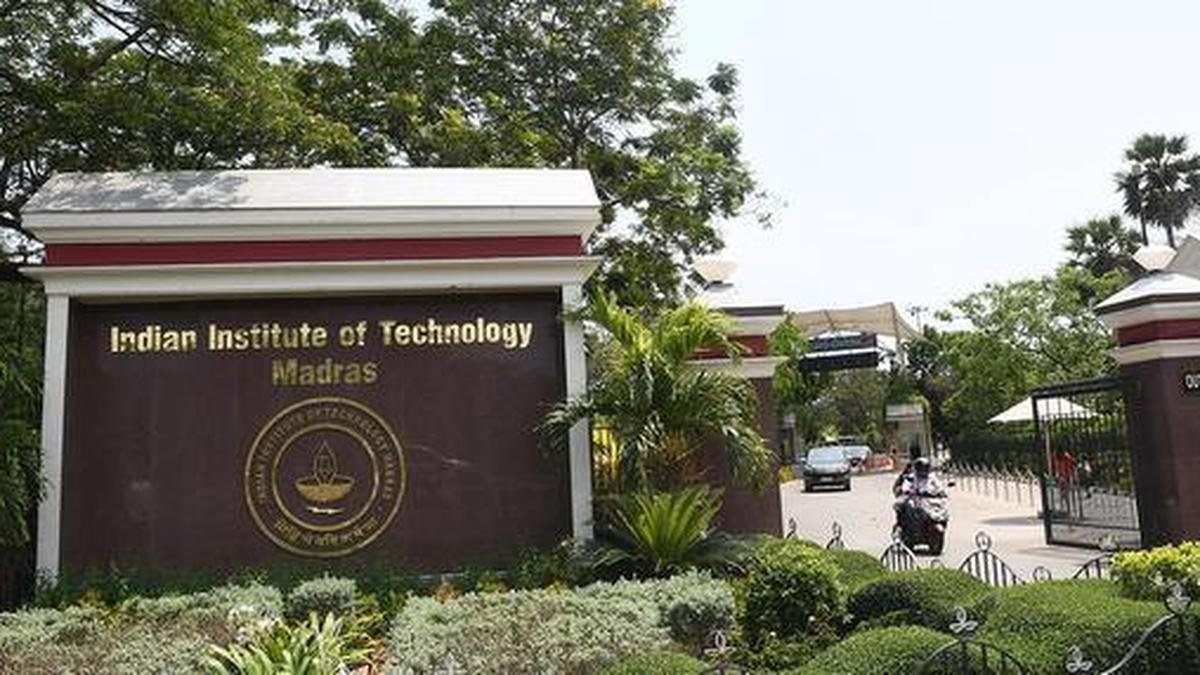

Image used for representational purposes. File
| Photo Credit: The Hindu
Under directions from the Union government, higher educational institutions across India, starting with IITs and IIMs this year, have begun suggesting that incoming students submit a voluntary urine test for drugs such as amphetamines, cocaine, marijuana, benzodiazepines, and phencyclidine (PCP) with their admission paperwork.
According to government officials and admission documents for incoming students, the test is voluntary and is to be taken on the understanding that it will be kept confidential, is anonymised, and will not influence the student’s admission.

This initiative by the Education Ministry’s Department of Higher Education is part of the Union government’s broader efforts to tackle narcotics in the country, as outlined in the Narcotics Control Bureau’s ‘Vision Document on Narcotics Control 2026-29’ — a key strategy of which is to screen around 10 lakh students across 170 centrally-funded higher education institutes for drugs in the next three years in a phased manner. The vision document has characterised the misuse of psychoactive substances among students in colleges and universities as “a growing health concern”.
PM to launch scheme
The mission to screen 10 lakh students by 2029 for drugs and substance use comes just as the government is finalising the questions for its next and most expansive yet survey of substance users across India, the results for which will be expected over the next few years. Further, Prime Minister Narendra Modi is scheduled to launch the ‘Nasha Mukt Yuva for Viksit Bharat Sankalp Abhiyan’ on Sunday (August 2, 2026), which is meant to “inspire youth to stay away from substance abuse”.
Government officials told The Hindu that the basic guidelines for drug testing of college and university students were provided by the National Drug Dependence Treatment Centre at the All India Institute of Medical Sciences in New Delhi. Under this framework, the test is meant to be strictly voluntary and confidential, cannot result in any “negative repercussions on the students taking it whatsoever”, and should be kept for counselling purposes only.
According to the brochure issued to the incoming 2026-28 batch of MBA students at IIM Lucknow, the Department of Higher Education has required that the urine test drug panel should be conducted at an NABL-certified laboratory within seven days of submitting the report. It further said that the students should submit the report in a closed envelope marked “confidential” for the eyes of the student wellness committee alone.
A similar document issued to incoming B.Tech students at the Indian Institute of Technology in Goa has noted that the test is voluntary and confidential in nature, and that the Ministry of Education had designed it “primarily for preventive health and support”. The IIT Goa admissions document added that any findings from the submitted tests will not affect “academic status, admission, or hostel eligibility” and “shall not lead to disciplinary measures, suspension, or any form of expulsion”.
IIM Lucknow’s brief for students, however, says that the test results will not affect admission but does not explicitly mention that students will not face any negative repercussions during their time at the institute.
Three-phase programme
This drug screening programme is being implemented in three phases, with IITs, IIMs, and one central university starting this year under the first phase. The following year (2027-28), the government has planned to take the screenings to 32 NITs, eight IISERs, three SPAs, 25 IIITs, and four centrally-funded technical institutes. This will be followed by taking the programme into 46 central universities and four deemed-to-be-universities during 2028-29.
Apart from the screenings, the vision document for drug demand reduction among the youth outlines plans to start declaring university and college campuses and the areas around them as “drug-free” and training teachers on prevention of substance abuse.
Published – August 01, 2026 08:40 pm IST