

There’s a condition I’ve treated for over two decades that doesn’t kill, blind, or even leave a visible scar. Yet, for the way it can shatter a life, it is among the cruellest I have encountered in my career. It’s called hemifacial spasm, or HFS. A few years ago, I nicknamed it “the disease of the winking eye” in an article, and the name stuck because it’s tragically accurate.
It all begins with a flicker, a tiny twitch around the eye that anyone might dismiss as a sign of a long, tiring day. But with hemifacial spasm, the waiting changes nothing. The flutter comes back, more often, until it becomes a full-blown wink. Over months and years, this involuntary contraction travels down the face, pulling the cheek and the corner of the mouth into a constant, uncontrolled grimace.

Living with the condition
The real cruelty of HFS lies in how the world misinterprets it. A person at a bank counter, in a classroom, or at a reception desk appears to be winking deliberately, even suggestively. They are doing nothing of the sort. They have as much control over that wink as they do over their own heartbeat.
Some patient stories are impossible to forget. Sandeep, a man in his mid-thirties, came to us with his wife, his hand cupped over the side of his face, a posture I now recognise instantly as someone trying to hide from the world. He told me that while reading a magazine at a bus stop, his eye began its rapid, rhythmic blinking. A woman standing next to him became furious, accusing him of winking at her and threatening to call the police. Before he could even try to explain, two strangers had hit him.
I think of the receptionist whose job was to smile and greet people, until the spasms made it impossible for her to look at anyone without her eye betraying her. She lost the career she loved. I remember the young man whose marriage proposals were repeatedly rejected, the patient whose marriage ended, and the elderly man who hadn’t slept through the night in years because the spasms never stopped.
After successful surgery, almost every one of them has said the same thing to me: “If only I had known this could be cured. If only someone had told me about this sooner. Think of all the years I lost.”

Why it happens
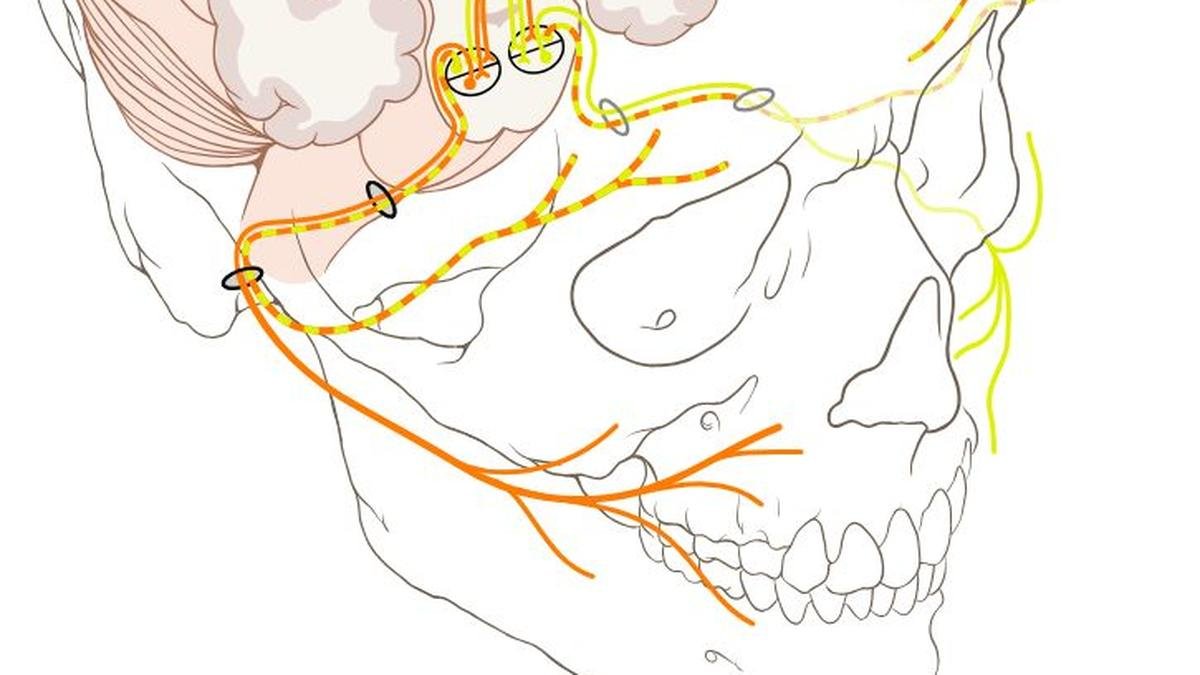
The cause of this torment is found at the base of the skull, where our cranial nerves emerge. The facial nerve, which controls every smile, frown, and blink, sometimes has a tiny gap in its protective insulation. Usually, this is harmless. But if a small, looping artery comes to rest against that exact spot, it begins to tap against the nerve with every single heartbeat. We call this a neurovascular conflict. Over time, this relentless pulsation wears down the nerve’s insulation, causing its signals to short-circuit. The facial muscles receive commands that were never sent, and they contract into a spasm.
There is a treatment that addresses the root cause: microvascular decompression, or MVD. The logic is straightforward: if a pulsating artery is the problem, we must move it. Through a small incision behind the ear, we navigate to the nerve, find the artery, and place a soft Teflon cushion between them. The tapping stops. In the months that follow, the nerve’s insulation begins to heal, the short-circuiting ceases, and the spasms disappear.
This surgery demands absolute precision, but with an experienced team, the results are life changing. Safety and expertise remain key. As Aristotle said, excellence is not an act, but a habit.
Patients often ask about botox injections. While Botox can offer temporary relief by paralyzing the facial muscles, it is not a cure. The injections must be repeated every few months for life, and all the while, the artery continues to damage the nerve. What patients are rarely told is that delaying surgery in favour of repeated injections can worsen the underlying nerve injury, making the eventual outcome of MVD less certain.

Building awareness
The face is how we connect with each other, how we convey trust, warmth, and safety. When that connection is broken by a condition like HFS, people withdraw. They avoid social gatherings, decline promotions, and shrink from the world. For teachers, nurses, and anyone whose work depends on face-to-face interaction, it can be a professional death sentence.
The single most important fact I want people to know is this: hemifacial spasm can be cured. Not just managed but completely cured. Patients can get their face back, and with it, their life. This information is simply not reaching the people who need it most, and that is a tragedy. My mission is to ensure that everyone suffering from this condition knows that there is a path to being permanently well. Modern neurosurgery has the answer; our job is to make sure people can find it.
(Dr. Jaydev Panchawagh is a senior consultant neurosurgeon at Sahyadri Super Speciality Hospital, Deccan Gymkhana, Pune andfounder-chairman of the Synapse Brain & Spine Foundation. jpanchawagh@gmail.com)
Published – August 01, 2026 02:30 pm IST