

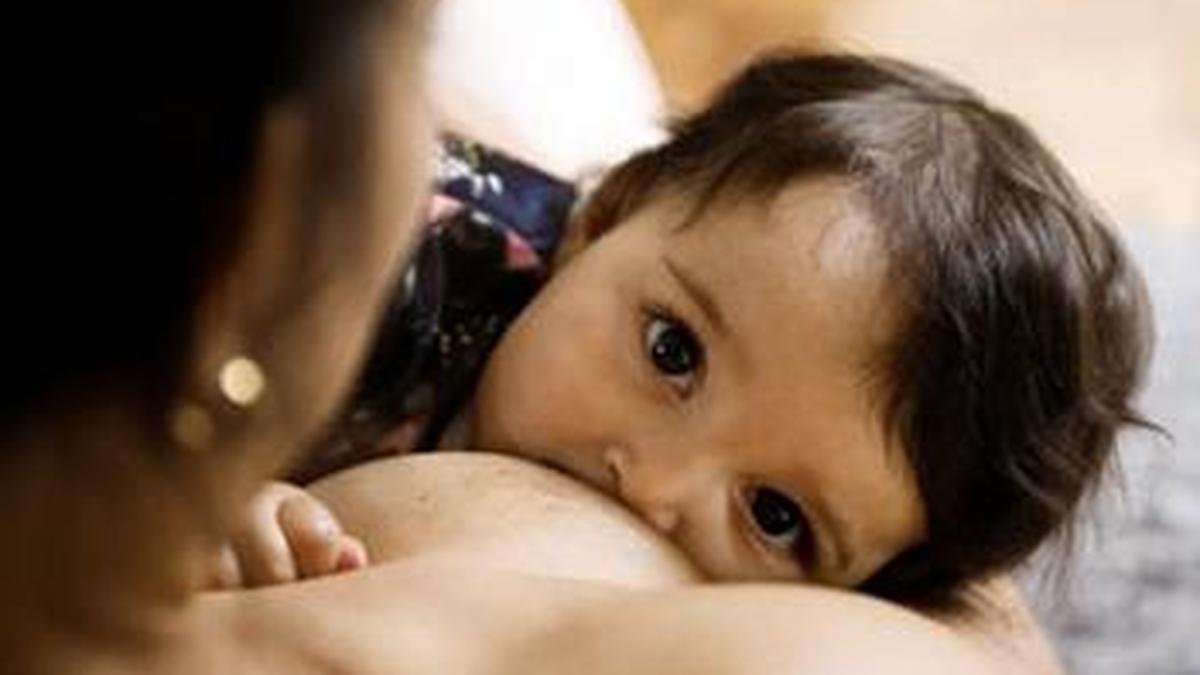
Lactation, or the process of making breast milk, starts months before a pregnant woman gives birth. The body prepares the first milk, a thick, yellow colostrum—often called ‘liquid gold’ —for the baby to drink soon after birth. A day or two after delivery is actually when the milk production intensifies.
The World Health Organization emphasises feeding colostrum in the ‘golden hour’, the first 60 minutes after birth, discourages pre-lacteal feeds (liquids or non-breast milk foods before breastfeeding onset), and recommends exclusive breastfeeding (EBF)—only breast milk for the first six months of life. However, India’s National Family Health Survey-6 reveals that only 55.8% of babies under six months of age were exclusively breastfed in 2023–24.
This figure—55.8%—is not just a number; it is a red flag. It highlights a missed health opportunity for nearly half the country’s future, an opportunity that could have served as a gateway for not just better health, but improved immunity as well.
Why is the number so low? There are a number of barriers to exclusive breastfeeding. Low implementation of Baby Friendly Hospital Initiatives (BFHI) in private hospitals, lack of skilled breastfeeding support within healthcare systems, insufficient breastfeeding counselling during antenatal check-ups, knowledge gaps, poor maternal support, a bias towards ‘top’ feed, as well as financial constraints that necessitate women going back to work within weeks after giving birth, and a lack of workplace policies supportive of breastfeeding in both the formal and informal sector — are some of the many barriers that lactating mothers face, barriers that can negatively impact an infant’s microbiome and long-term health. Cultural norms and religious reasons are additional barriers.

The power of human milk
Breast milk is customised to meet an infant’s needs—in terms of nutrition and more. It contains a perfect blend of nutrients in proper balance, growth factors, hormones, human milk oligosaccharides (HMOs), antibodies, lactoferrin, and metabolites. It also contains diverse microbes, which, upon breastfeeding, ’seed’ the baby’s sterile gut at birth. Breast milk factors, especially HMOs, then feed and support the growth of this ‘seeded’ beneficial bacteria in the baby’s gut, thereby shaping the gut microbiota, which tunes specific bodily functions.
Recent findings emphasise that human milk is a dynamic and complex biological fluid. The mother’s health, diet, circadian rhythm (biological clock), and environmental exposures affect breast milk composition. For instance, research has found the breast milk microbiota and bioactive molecules fluctuate between day and night—with elevated concentrations of melatonin and tryptophan in night milk and cortisol in day milk.
Therefore, breast milk, a living, adaptive biological fluid, not only supports an infant’s nutrition, metabolism, and immunity, it also contributes to long-term health programming by shaping the infant gut microbial composition.

Why isn’t infant formula the same?
Mothers commonly cite nutrition, satiation (and thereby less infant crying), and desired weight gain as reasons for starting formula or ‘top’ feeds. Additionally, as commercial infant formulas undergo considerable modifications to resemble human milk composition, formula feeding is often replacing breast milk.
Today, the aggressively marketed ‘breast milk substitutes’ contain biotics—probiotics (beneficial bacteria), prebiotics (feed the beneficial bacteria), synbiotics (probiotics + prebiotics), and postbiotics (beneficial bacterial products)—in addition to nutritional supplements. However, the caveats of these optimised formulas are many, including the need for water to prepare the feed, which can alter the infant’s gut microbial profile.
In addition to the absence of hormones and antibodies in optimised formulas, other prebiotics (GOS and FOS) most often replace HMOs, a natural prebiotic present in breast milk that also helps prevent infection. Also, the health benefits of the probiotic-containing formulas—with Bifidobacterium spp. and/or Lactobacillus spp.—are highly dependent on the bacterial strain and host (baby).
Thus, although feeding optimised formulas might improve infant health more than classical infant formulas, they still don’t support the development of a balanced gut microbiota, as seen in EBF.

Source of breast milk microorganisms
Researchers from Guangzhou, China, identified the mother’s gut microbiota as a source of breast milk microbiota and microbial metabolites. Another study published in Frontiers in Microbiologylists the microbiota of mothers’ mammary glands, nipples, and areolar skin as additional sources.
These findings highlight the importance of breastfeeding, in light of the fact that the body alters the composition of breast milk based on the infant’s needs, while this is not the case with infant formula, which is a static composition. An optimised diet (fermented and fibre-rich foods, Mediterranean diet) and supplementation (probiotics, prebiotics, vitamin D, iron) by lactating mothers are strategies that can modulate breast milk composition, including its microbiota.

Infant gut microbiota in health programming
Studies have shown that early gut colonisers in breastfed infants are dominated by abundant Bifidobacterium spp., with Lactobacillus spp. also present, and a lower abundance of opportunistic pathogens. These early colonisers produce metabolites and antimicrobial compounds that strengthen the protective barriers and inhibit pathogens, setting the stage for immune system training and potentially influencing long-term health.
Scientists from Harvard Medical School, United States, reviewed studies that investigated the effects of microbial colonisation during the ‘window of opportunity in early life’ on immune system development. Animal model studies demonstrated that, unlike an adult immune system, the neonatal immune system is adaptable and easily trained. The early colonisers, acquired during vaginal birth and from breast milk, educate the immature immune system through signalling molecules, thus, developing recognition of and tolerance towards harmless, beneficial microbes. The studies indicated that if a neonate does not acquire beneficial microbiota within the first two to four weeks of life, or the window of opportunity, it might present dysfunctional immune cells. This could potentially make them susceptible to diseases (asthma, allergies, autoimmune disorders) in adult life.
Another review by researchers in China gathered evidence on the role of infant microbiota in brain development. Metabolites or molecules produced by the gut microbiota can enter the bloodstream and thereafter the brain. There, these metabolites (e.g., short-chain fatty acids) participate in regulating the central nervous system, of which the brain is a part. On this basis, in recent years, a link between the gut microbiota and neurological effects—behaviour and nervous system disorders—has been suggested.
Also, beneficial bacteria in the infant gut convert complex milk components into simpler, absorbable metabolites. These, and microbial metabolites influence nutrient absorption and metabolic programming—energy regulation, insulin sensitivity, and appetite regulation. Microbial metabolites also change the way genes are expressed, including those in lipid metabolism.

Promoting wellness
Decades of research have conferred the ‘gold standard’ to EBF and breast milk for a hygienic way of providing complete nutrition and protection to babies. Growing evidence now indicates the importance of breast milk in shaping the infant’s gut microbiota, and its implications for long-term health programming.
While the mechanisms underlying these biological effects are under active research, health systems and policymakers should work towards overcoming EBF barriers, strong implementation of the Infant Milk Substitutes (IMS) Act to stop promotion of infant formulas, and promoting access to pasteurised (and fortified) donor human milk (when maternal breast milk is unavailable) to ensure optimal infant nutrition and long-term health.
(Smruthi Prabhu is an independent science writer from Mangalore. smruthigp@gmail.com)