

Venus dominates the evening sky throughout August, but early risers have a special treat too, as Mercury and Jupiter draw together in a beautiful dawn conjunction around mid-month.
From our vantage point on Earth, Venus reaches the end of its tether to the sun on the evening of Aug. 15, when it is at greatest elongation 46 degrees to the east of the sun. And yet, paradoxically, instead of appearing high up in the west, Venus is getting noticeably lower to the west-southwest horizon as the month progresses. This is because its declination in the sky is taking it well to the south of the sun. In fact, Venus’s greatest elongation coincides with the time that it sets right at the end of evening twilight.
During the second half of August, into September, Venus will no longer be setting in a dark sky, but rather in a progressively brighter twilight sky. This is all due to its increasing southerly declination and the fact that the ecliptic — the apparent path of the sun, moon and planets through the zodiacal constellations — appears to slope closer to the western horizon at sunset during late summer and early fall.
The planet best positioned for telescopic observation this month is the “Lord of the Rings,” Saturn, which comes up during late evening and is in a commanding position, well up in the south-southeast at the break of dawn.
Mars becomes evident a few hours before sunrise. During August, Earth approaches it at an average daily rate of 425,800 miles (685,100 kilometers). Still, even at month’s end, Mars will be 172.2 million miles (277.1 million km) away, so while it continues to brighten, that process will still be quite slow.
Mercury and Jupiter are morning objects. Mercury will be evident during the first half of August, low in the east-northeast within about an hour of sunrise. It will be joined at midmonth by Jupiter as that big world emerges into view out of the glare of the rising sun.
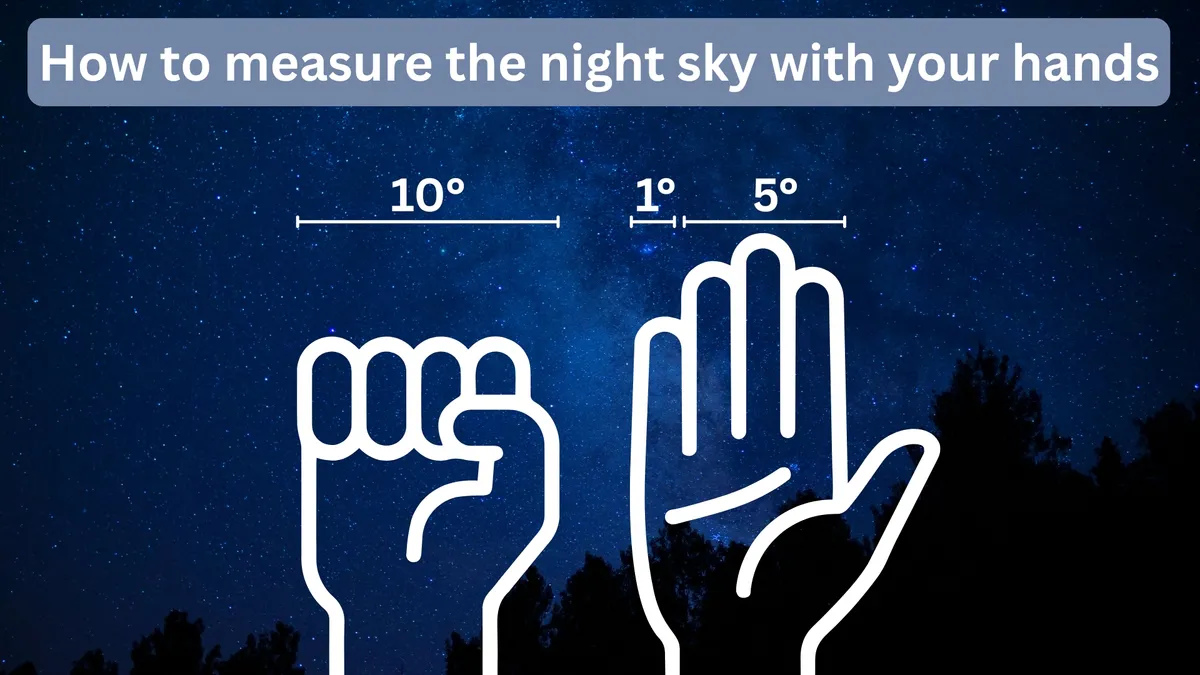
In our schedule, remember that when measuring the angular separation between two celestial objects, your clenched fist held at arm’s length measures roughly 10 degrees. Here, we present a schedule below which provides some of the best planet viewing times while directing you as to where to look to see them
Mercury
Mercury reaches greatest elongation from the Sun (19 degrees) on the morning of Aug. 2; it should be an obvious, +0.2-magnitude point low in the east-northeast if you look 50 minutes before sunrise. About a week later, look for Mercury very low in the east-northeast about an hour before sunrise. This small fleet world gets lower each dawn in early August, but it also rapidly brightens, from magnitude -0.7 on Aug. 9 to -1.3 (a trifle fainter than the brightest star, Sirius) by Aug. 16.

Also on Aug. 9, Castor and Pollux, the “Twin Stars” of Gemini, point directly toward Mercury. Just extend an imaginary line twice the distance between these two stars, down toward the east-northeast horizon and you’ll come to Mercury. Early on the morning of Aug. 11, an exceedingly thin crescent moon — just 2% illuminated and about 32 hours from new (and a solar eclipse) — will lie about 2 degrees to the upper left of Mercury. From Aug. 13 through Aug. 17, Mercury will engage in a close interaction with Jupiter. Mercury arrives at superior conjunction with the sun on Aug. 27 and transitions into the evening sky.
Venus
Venus continues to outshine August’s other evening stars and planets by a huge margin, brightening from magnitude -4.2 to -4.5 over the course of the month. It reaches its greatest elongation from the sun (46 degrees) on the evening of Aug. 15 and now resembles a roughly half-moon phase (48% illuminated) through a telescope. On the same evening, a three and a quarter day old crescent moon is poised to the lower right of Venus.
Mars
Mars rises around 2 a.m. local daylight time. When dawn breaks just over two hours later, it will stand 20 degrees above the east-northeast horizon. On the morning of Aug. 9, it can be found about 4.5 degrees to the right of a waning crescent moon.
Jupiter
Jupiter was in conjunction with the sun on July 29 and on Aug. 5, it is still too close to the sun to be visible without optical aid. But Jupiter appears two-thirds of a degree higher each morning and by Aug. 12, it should be visible about 5 degrees to Mercury’s lower left shortly before sunrise, appearing dim in the bright twilight even though it shines at magnitude -1.8. Jupiter and Mercury shine less than 4 degrees from each other from Aug. 13 through Aug. 17.

Early on the morning of Aug. 15, the smallest and largest planets will meet in a close conjunction, with Jupiter shining about twice as bright as Mercury and separated by less than 0.6 degrees. However, seeing this tight pairing will be a challenge, as the duo lies just 12 degrees west of the sun and are up just 65 minutes before sunrise as seen from mid-northern latitudes. This majestic pair is about 10 degrees above the east-northeastern horizon at sunrise. You probably are going to need binoculars to fish them out against the brightening twilight sky. Still, it’s worth the effort. After that, Jupiter moves rapidly off to Mercury’s upper right, climbing into better morning view as its year-long apparition gets underway.
Saturn
Saturn rises a few hours after sunset, brightening in a lonely spot near the Cetus–Pisces border. In a telescope, its rings are tilted enough for good viewing; they narrow somewhat in the months ahead. Late on the evening of August 3rd, you’ll find Saturn shining to the lower right of a gibbous moon.
If you’re looking for a telescope or binoculars to observe the night sky, our guides for the best binocular deals and the best telescope deals are here to help. Interested in capturing the night sky? Check out our best cameras for astrophotography and best lenses for astrophotography.
Joe Rao serves as an instructor and guest lecturer at New York’s Hayden Planetarium. He writes about astronomy for Natural History magazine, Sky and Telescope, The Old Farmer’s Almanac and other publications.