

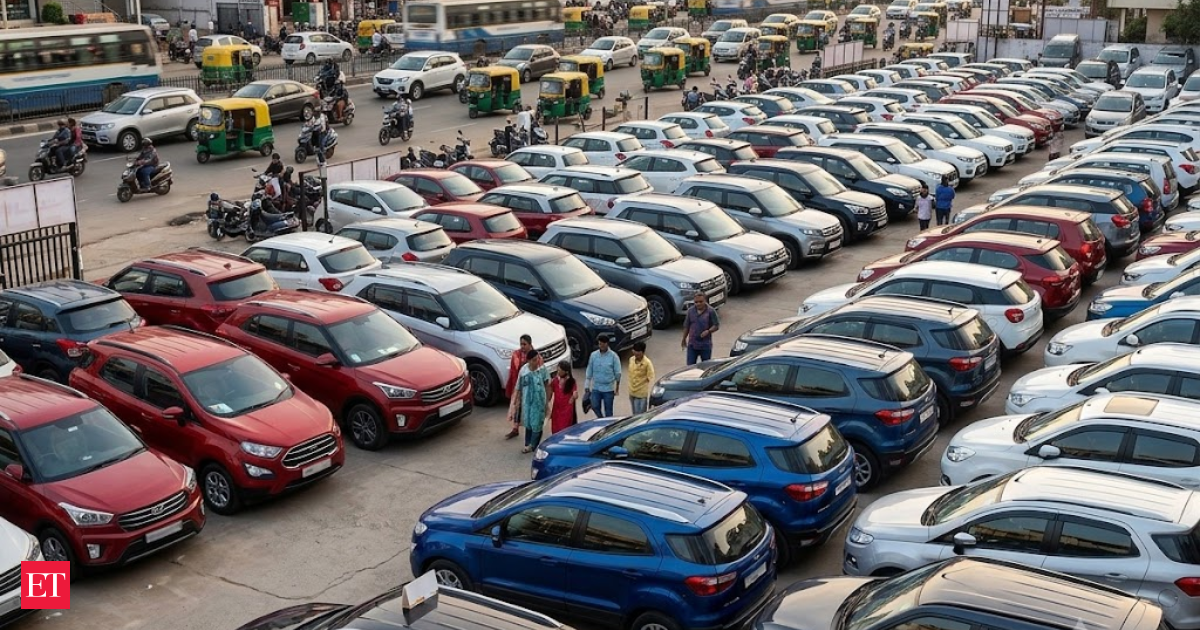
What’s less obvious is why this segment refuses to cool off even as newer body styles and electric options crowd showrooms, and first-time buyers scroll through listings at midnight trying to figure out if they’re getting a fair deal.
The reasons go deeper than ‘ground clearance.’ They touch infrastructure, monsoon hydrology, resale economics, and a buyer demographic that genuinely runs the numbers before signing anything.
What makes compact SUVs such a natural fit here
The roads do half the selling. Nobody at a dealership will say that out loud, but it’s true.

Stretches in Bangaluru alternate between freshly laid tarmac and crater-ridden patches that punish a low-slung sedan’s underbelly on an ordinary Tuesday commute. A compact SUV sitting at 190-200 mm of ground clearance handles those transitions without drama – not always elegantly, but without damage.
Then there’s the rain. Bengaluru’s monsoon months turn underpasses into shallow wading pools, and a higher air intake position offers a small but real buffer compared to hatchbacks sitting closer to the waterline.
Anyone who’s seriously browsed used cars in Bengaluru will notice something quickly: compact SUVs from 2019 onwards hold their value noticeably better than equivalent-age sedans.
Not always dramatically, but enough that the total cost of ownership argument tilts in their favour once resale recovery enters the calculation.
The resale economics that keep demand sticky
Here’s the counterintuitive part: Compact SUVs depreciate more slowly in Bengaluru than the national average for the same models. The demand pool is simply larger.
A Venue, Nexon, or Brezza listed pre-owned draws buyers ranging from first-timers moving up from a hatchback to families who’ve downsized from a full-size SUV and don’t want to surrender ride height entirely.
That wider buyer pool means shorter listing-to-sale times. Shorter sale times mean sellers price more confidently, which signals to the next buyer that the segment holds value – and so it does. Self-reinforcing cycle.
It’s the same mechanism that keeps certain postal codes expensive even when comparable housing exists three kilometres away, and nobody can quite explain why.
Model matters enormously, though. Not every compact SUV ages gracefully.
Variants with automatic transmissions – especially CVTs in the 2018-2019 production batch – sometimes carry maintenance bills that quietly erode the resale advantage buyers assumed they had.
Which models actually move fastest
The Hyundai Creta – across both generations – is the volume leader by a clear margin. A used Hyundai Creta in SX or SX(O) trim with a diesel engine consistently draws strong interest.
The math works out around the 18-month mark for most hybrid city-highway use patterns.
The Maruti Brezza and Tata Nexon follow, but for genuinely different reasons – and that distinction matters when you’re buying.
Brezza buyers are largely optimising for service network density and running costs. The car won’t surprise you. That’s the appeal.
Nexon buyers tend to weigh safety credentials more heavily; the model’s crash test performance is well documented, and it shows up in how confidently those buyers negotiate.
Kia Seltos rounds out the top tier, pulling in buyers who want a near-premium cabin without the premium price tag bolted on.
Condition overrides everything else in this segment – a top-spec Creta at 80,000 km with patchy service records will lose to a mid-spec Nexon at 40,000 km with a complete document trail.
The spec sheet becomes irrelevant the moment the ownership history gets murky.
Some things worth scrutinising in any compact SUV pre-owned listing:
- Full service records – Not just a printed summary, but the stamped booklet or OEM app digital history showing actual workshop visits
- Ownership count – Three owners in four years is worth investigating, not ignoring
- Tyre wear pattern, which reveals alignment history far more honestly than any inspection report
- Rust around door sills on vehicles that survived three monsoon seasons without undercoat treatment
How Bengaluru’s buyer profile reinforces the trend
The city’s demographics are young, tech-comfortable, and research-heavy. Roughly 3 in 4 used-car buyers in this market are first-time owners.
Buyers here compare listings before deciding and model total ownership costs across three to four years rather than sticker price alone.
When they run those numbers, compact SUVs tend to win on cost-per-kilometre once resale recovery factors in. It’s not brand loyalty driving this. It’s a spreadsheet.
The real question is whether this dominance lasts. Electric compact SUVs are starting to appear in the pre-owned pipeline – Nexon EVs and MG ZS EVs from early lessees returning them as contracts expire.
Bengaluru’s charging infrastructure, while imperfect, is relatively more developed than most Indian cities, which could let electric compact SUVs carve out a meaningful share within two to three years.