

An overseas concert. A trek through the Himalayas. A culinary tour in Southeast Asia. A weekend at a Formula One race. A destination wedding. A long-awaited family holiday.
Experiences have become a financial priority in their own right.
This is not merely anecdotal. According to the Mastercard Economics Institute’s Travel Trends 2025 report, consumers globally continue to prioritise spending on travel and experiences despite broader economic uncertainty, with experiential spending remaining resilient as people increasingly choose to spend on memories rather than material possessions1. The shift reflects a deeper change in consumer behaviour – one that extends well beyond tourism and hospitality. It is beginning to influence how financial products are being designed.
Why are experiences becoming a financial priority
For much of India’s post-liberalisation period, household wealth creation was closely associated with physical assets. The government’s All India Debt and Investment Survey shows that land and buildings account for the overwhelming share of household assets – around 91% of total asset value in rural India and 87% in urban India (land and buildings combined)2.

Today, that definition of value is broadening.
Experiences have gradually moved from the margins of household budgets to the centre of financial planning. What was once treated as discretionary spending is increasingly viewed as a meaningful investment in quality of life. Travel broadens perspectives, time away from work supports well-being, and shared experiences strengthen personal relationships. Holidays, cultural events and milestone celebrations are no longer financed only when surplus income permits. They are planned, prioritised and budgeted for alongside more traditional financial goals.
The experience economy has transformed not only what consumers spend on, but how they organise their finances.
Financial institutions are beginning to respond to this shift. Premium credit cards, for instance, are increasingly being designed around travel, lifestyle and global mobility rather than simply retail transactions.
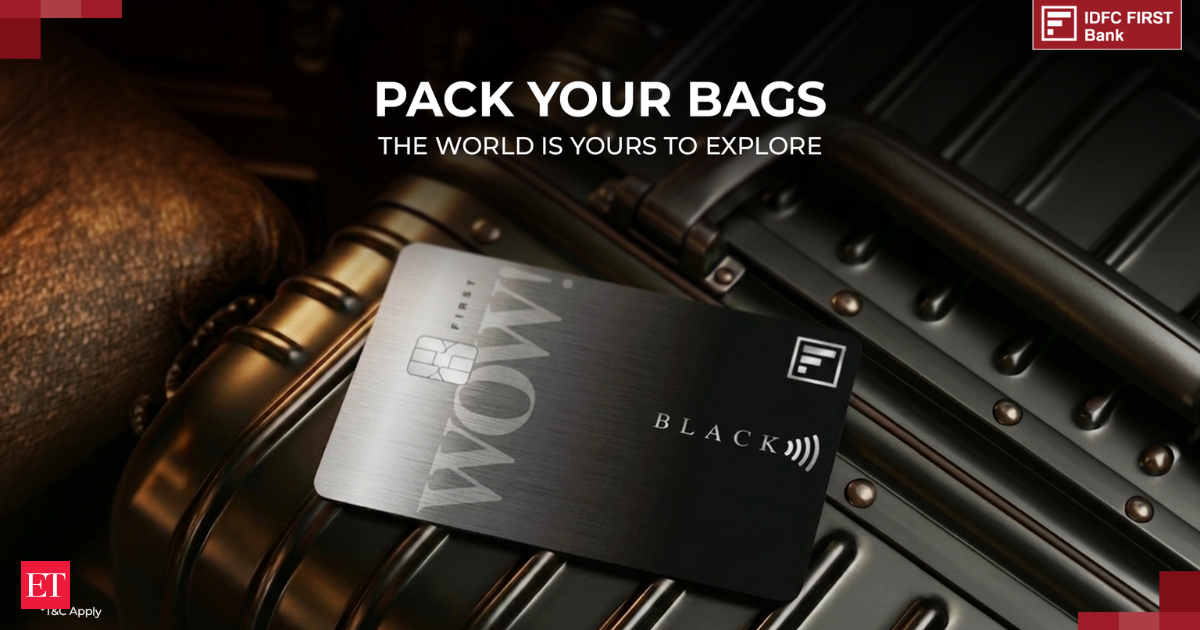
The FD-backed FIRST WOW! Black Credit Card by IDFC FIRST Bank reflects this evolution. It combines travel oriented features like airport lounge access, zero forex mark-up, rewards on daily spends and bonus reward points on travel bookings via the IDFC FIRST Bank app, while providing convenience of UPI payments. It recognises a simple reality: for many consumers today, financial value is measured not only by what they own, but by what they are able to experience.
The significance lies less in any one feature than in what the product represents. Consumer finance is gradually moving beyond facilitating purchases towards enabling lifestyles.
How is consumer finance adapting to the experience economy?
Financial products have traditionally rewarded spending volume.
Increasingly, they are rewarding spending intent.
Consumers who travel frequently expect seamless international payments, foreign exchange transparency, travel protections and benefits that enhance the journey rather than simply finance it. Likewise, everyday spending is expected to contribute towards future experiences through rewards and redemption programmes that feel relevant to contemporary lifestyles.
In other words, the value proposition has shifted from transactions to participation.
This mirrors a broader economic trend. The financial products that resonate most strongly today are often those that integrate themselves into how people actually live, work and travel, instead of remaining confined to moments of payment.
Why experiences are changing the meaning of value
Perhaps the most interesting consequence of the experience economy is that it is changing how consumers define value itself.
A purchase is no longer evaluated solely by its utility or resale value. It is increasingly judged by the memories it creates, the convenience it offers or the opportunities it unlocks.
This behavioural shift is visible across industries. Consumers willingly pay for convenience at airports, curated travel experiences, wellness retreats and live events because they perceive these expenditures as enriching rather than merely consumptive.
Finance is beginning to reflect the same logic.
Products that reduce friction during travel, simplify international spending or make lifestyle experiences more accessible increasingly carry greater perceived value than those focused solely on traditional rewards.
The future of consumer finance will be experience-led
India’s travel economy is expected to remain one of the world’s fastest-growing. According to the World Travel & Tourism Council, the country’s Travel & Tourism sector is projected to contribute nearly ₹22 trillion to India’s GDP in 2025 while supporting millions of jobs, underlining the growing economic significance of travel and related experiences3.
As consumer priorities continue to evolve, financial institutions will increasingly find themselves responding to a different set of aspirations. New-age banks are already beginning to reflect this shift by redesigning credit card portfolios around travel utility, lifestyle access and long-term value rather than simply rewarding transaction volume. The emphasis is gradually moving from facilitating purchases to enabling experiences that consumers increasingly regard as meaningful parts of their financial lives.
The question will no longer be limited to how efficiently a financial product helps people spend.
It will increasingly be about how effectively it helps them experience.
The experience economy is often discussed through the lens of tourism or hospitality. Yet its influence runs much deeper. It is quietly reshaping consumer finance, encouraging banks to build products around lifestyles rather than transactions, and around aspirations rather than assets.
In the years ahead, that shift from what consumers own to what they experience may prove to be the defining one in their relationship with money.
Reference/s: