

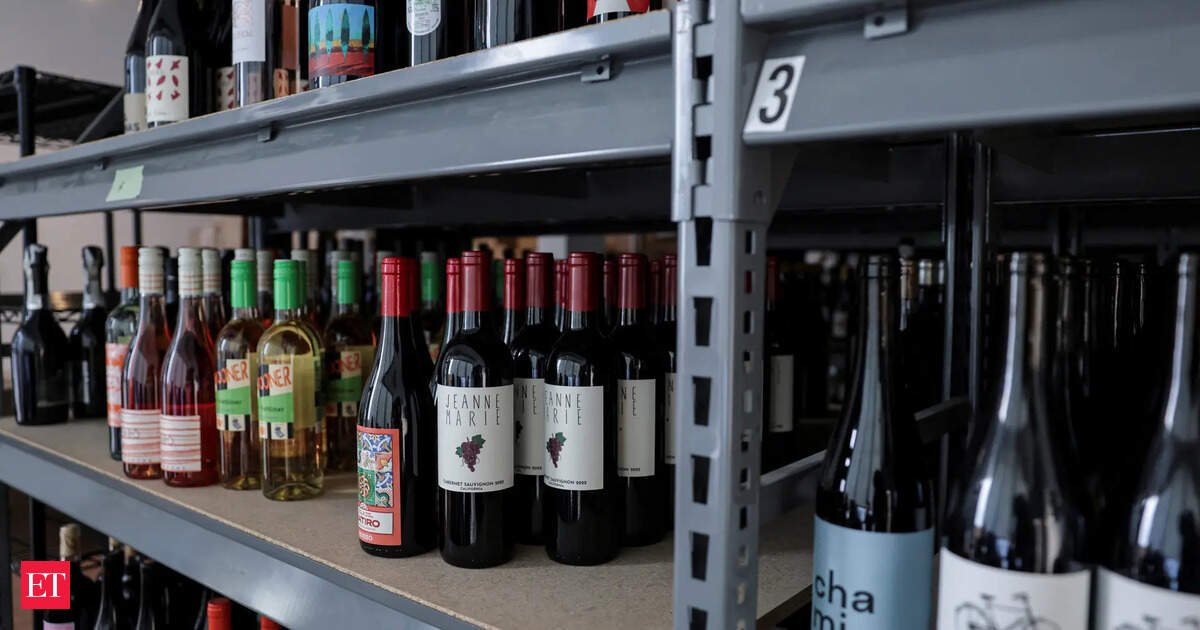
How the 750 ml standard emerged
There is no definitive record explaining why 750 ml became the standard bottle size. One widely cited theory suggests that early glassblowers could blow about 750 ml of air in a single breath, making that the natural size for hand-crafted bottles. Another theory is that a 750 ml bottle contains roughly six glasses of wine—an amount considered suitable for sharing over a meal.
The role of international wine trade
Another explanation traces the standard back to the historic wine trade between France and Britain. Bordeaux producers exported large volumes of wine to England, where the British used imperial measurements while the French measured in litres. A 750 ml bottle closely aligned with British units, making it easier to calculate quantities for shipping and trade.
Why the bottle size matters for aging
The 750 ml bottle is also believed to be ideal for storing and aging wine. Traditionally sealed with cork, wine matures based in part on the small amount of oxygen trapped inside the bottle. Experts believe a 750 ml bottle offers a balanced ratio between the volume of wine and the air space beneath the cork, helping the wine age more consistently.
Why wineries prefer 750 ml bottle
According to experts, packing and transportation have played a significant role in keeping the 750 ml bottle popular. It is reported that the 750 ml bottle size was large enough to be economically efficient while remaining easy for individuals and businesses to handle. As wine producers and merchants around the world adopted it, the 750 ml bottle became increasingly established as the industry standard.

What about other bottle sizes
According to experts, there are many more bottle sizes apart from 750 ml. A half bottle contains 375 ml and is often used for dessert wines or smaller servings. A magnum holds 1.5 liters, equal to two standard bottles.
Why are most wine bottles dark or green?
This also has a history attached to it. Back in the 18th century, when glass bottles became more common for wine storage, the bottles frequently came out green. While some people might think it was a marketing decision, the fact is, glassmakers couldn’t fully remove iron from the raw materials, and the glass ended up with a green tint whether they liked it or not. The bottles are still packed in dark glass because wine doesn’t get along with light. According to experts, light speeds up oxidation and makes wine age faster. Dark glass reduces how much light passes through, helping preserve the quality. Experiments have found that dark bottles let through only 8%–37% of light, while clear bottles allow more than 90%.(With inputs from TOI)