



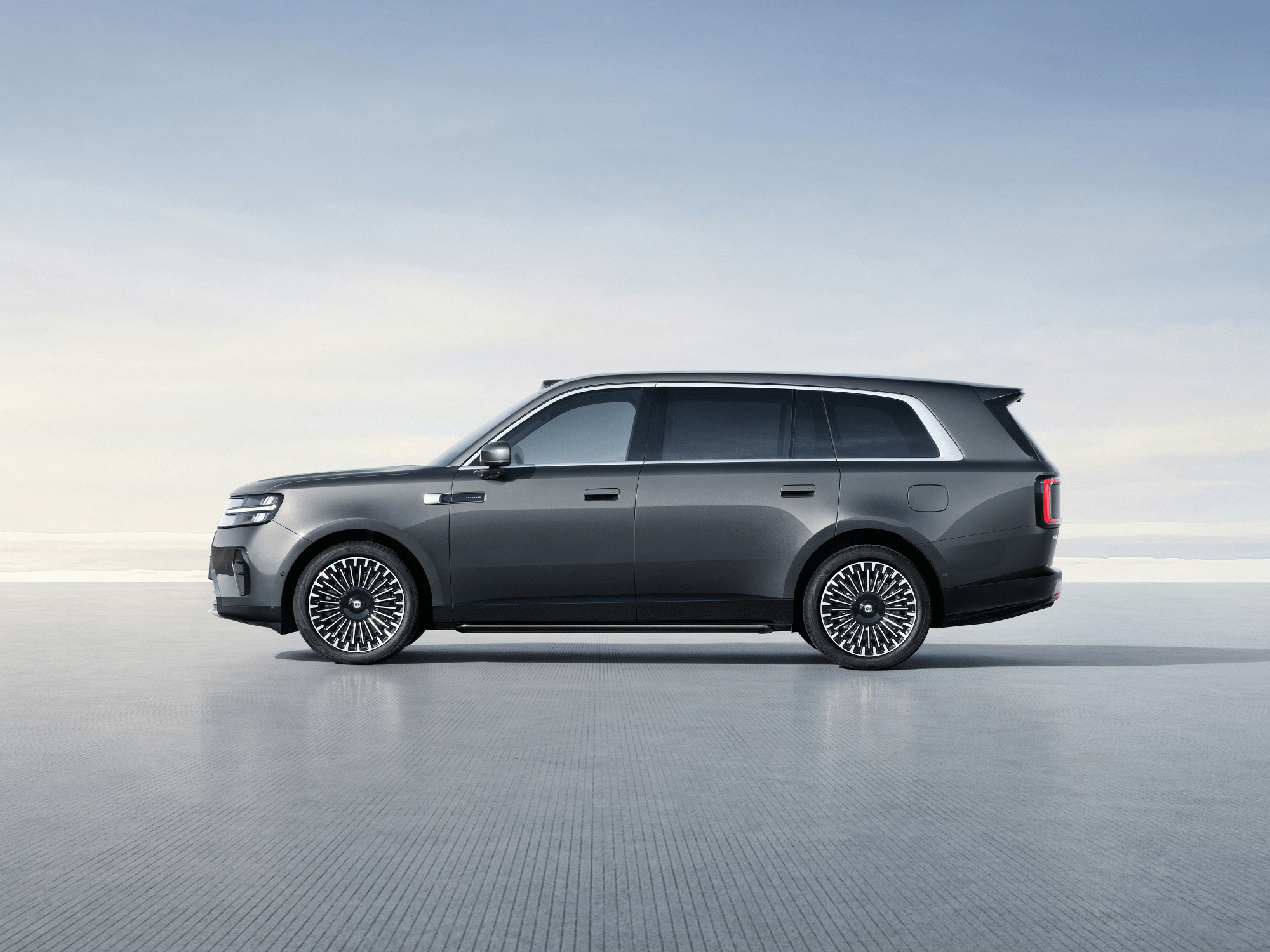
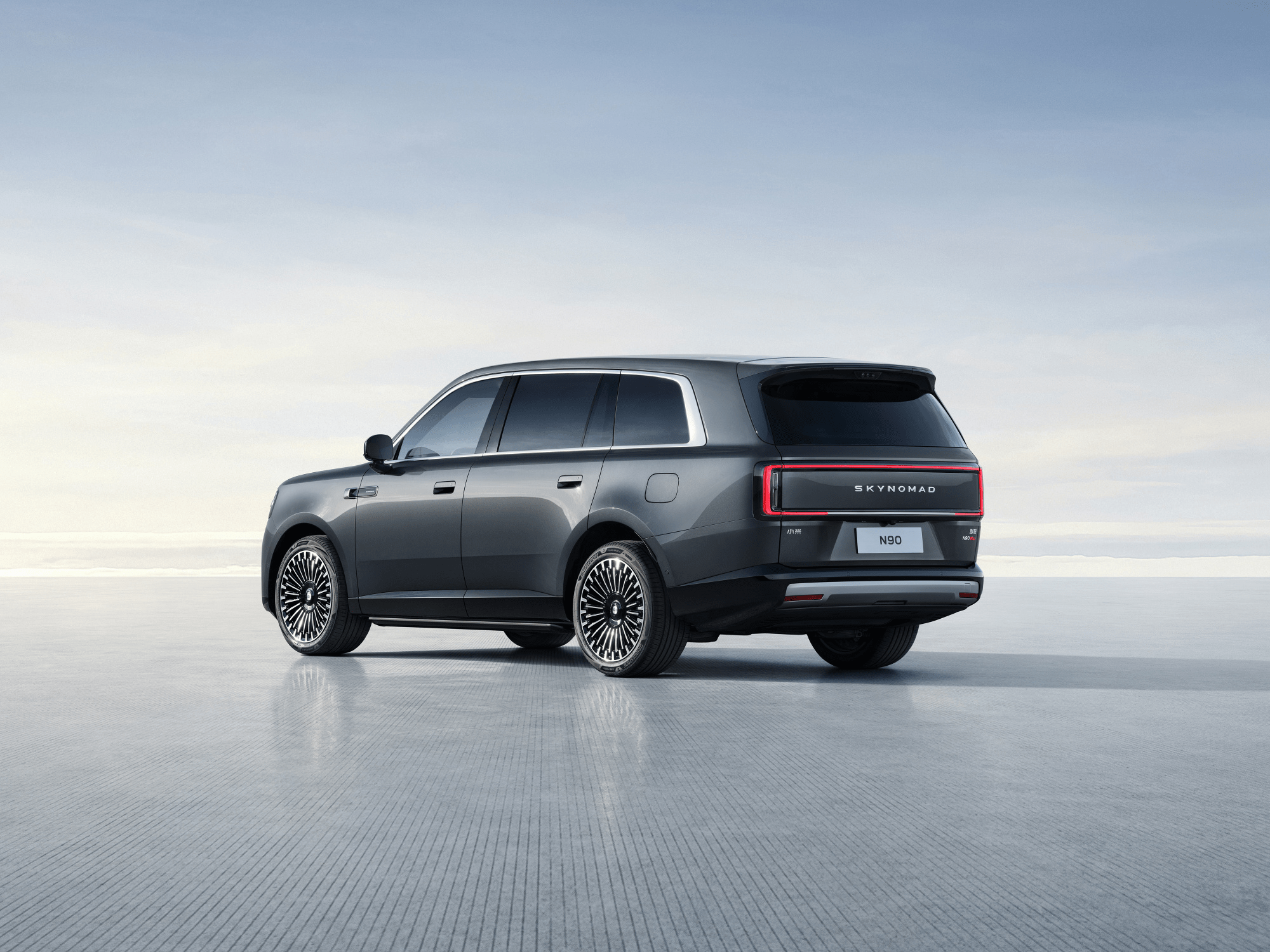
Xiaomi has revealed the SkyNomad N90, the first model in its new SkyNomad series and the company’s first extended-range electric vehicle. CEO Lei Jun posted the first official exterior images today, and a new regulatory filing confirmed the full specs.
The N90 is a full-size, three-row SUV with a claimed combined range of more than 1,500 km (932 miles), aimed squarely at Li Auto and Huawei-backed Aito in China’s fast-growing EREV market.
Xiaomi’s second product line
SkyNomad is Xiaomi’s second vehicle series after the SU7 and YU7, and it marks a strategic pivot. Where the SU7/YU7 are battery-electric “driver’s cars,” Lei Jun is positioning SkyNomad as a “living space” built for families, long road trips, and camping.
Xiaomi confirmed the series is not a standalone brand, as earlier rumors suggested, but a second line under Xiaomi EV. The company says it began developing an all-new platform, the Kunlun architecture, from scratch in early 2023, with a flat floor and long seat rails that let the cabin reconfigure itself. Lei Jun said the series took three and a half years to refine.
It’s also Xiaomi’s first move into extended-range powertrains. We reported in June that China’s MIIT had cleared Xiaomi to build EREVs at its Beijing plant, where it had previously produced only battery-electric cars. Xiaomi made the SkyNomad name official on July 8, then teased the SUV’s transformable interior on July 9.
The N90 spec sheet, confirmed by regulators
The reveal came with hard numbers. A new filing in the 409th batch of MIIT’s vehicle approval catalog lists four SkyNomad models: the N90 Max, the N90 Max Camping Edition, the smaller N70, and the N70 Max. All four are extended-range electric vehicles.
The flagship N90 Max measures 5,285 mm long, 1,998 mm wide, and 1,825 mm tall, with a 3,080 mm wheelbase, offered in five- and seven-seat versions. It uses a dual-motor layout with peak outputs of 210 kW and 100 kW, a CALB ternary lithium-ion battery, and a curb weight of 2,800 kg. Top speed is 190 km/h.
The range extender is a 1.5-liter turbocharged engine from Harbin Dongan, displacing 1,499 cc and producing 112 kW of net power. Critically, it never drives the wheels — it only charges the battery. The pack is reported at 70-80 kWh, good for 400 to 500 km (249-311 miles) of pure-electric CLTC range and more than 1,500 km combined.
The smaller N70 and N70 Max share a 4,960 mm length and 2,950 mm wheelbase, seat five, and use the same 1.5-liter generator. The N70 gets a single 210 kW motor and a cheaper Sunwoda LFP battery, while the N70 Max steps up to the dual-motor setup and CALB ternary pack.
A pop-up camping roof and swiveling seats
The most eye-catching entry in the filing is the N90 Max Camping Edition, classified as a “cultural life service vehicle.” It adds a pop-up roof, a rooftop bed platform, side cabinets, and a side-tent interface, with optional in-car projection and a detachable table. The pop-up roof pushes the height to 1,925 mm and curb weight to 2,840 kg, and can only be raised while parked on non-public roads.
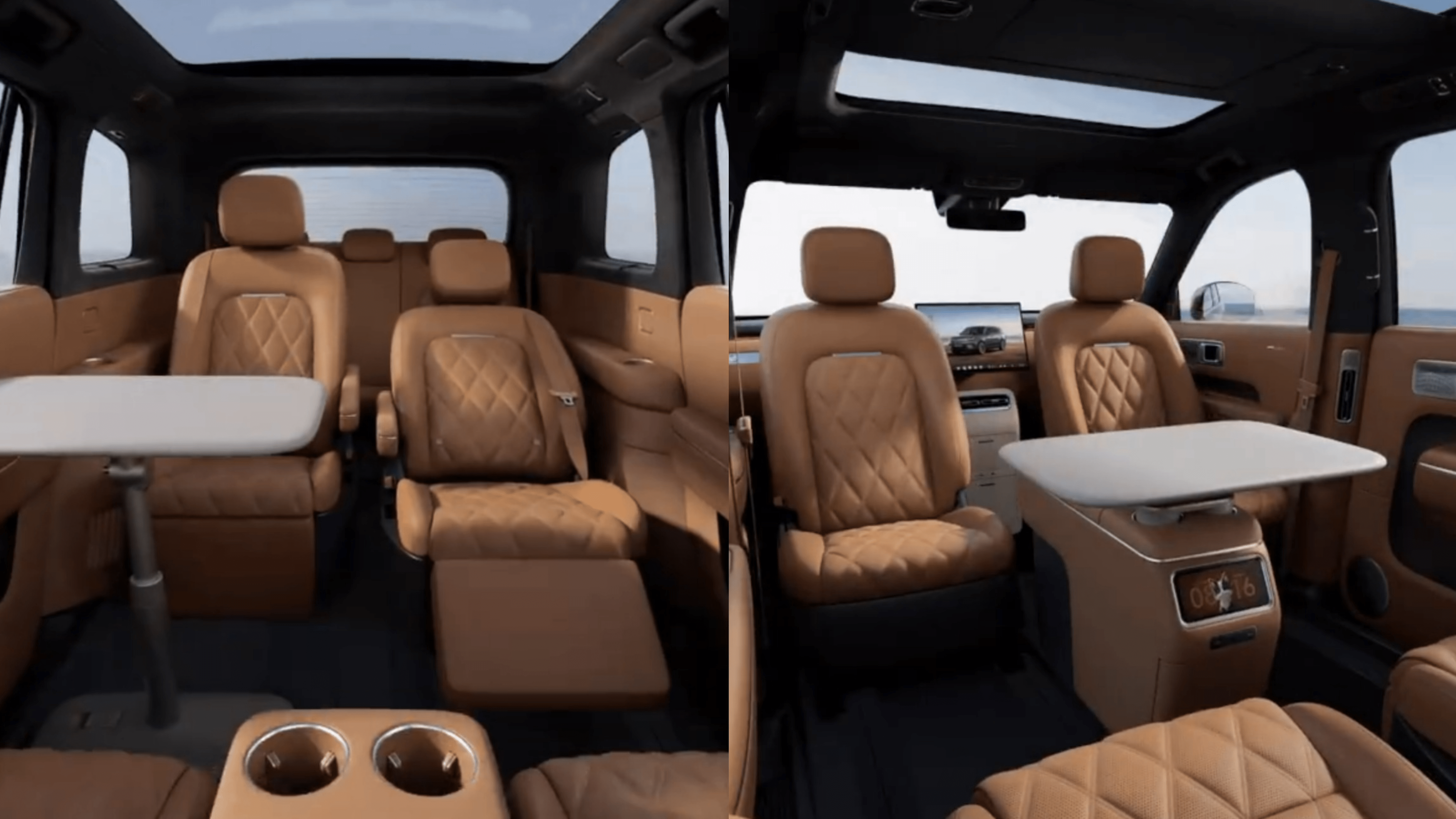
Inside, the standard N90 leans hard into the “living space” pitch. Xiaomi’s official images show a 2+2+3 seven-seat layout where the front seats rotate 180° to face the second row, creating a lounge — a feature only available in Park. The center armrest slides on rails to become an island or “bar counter,” the second row gets zero-gravity seats with leg rests, and the cabin adds a fridge, overhead speakers, and split panoramic sunroofs.
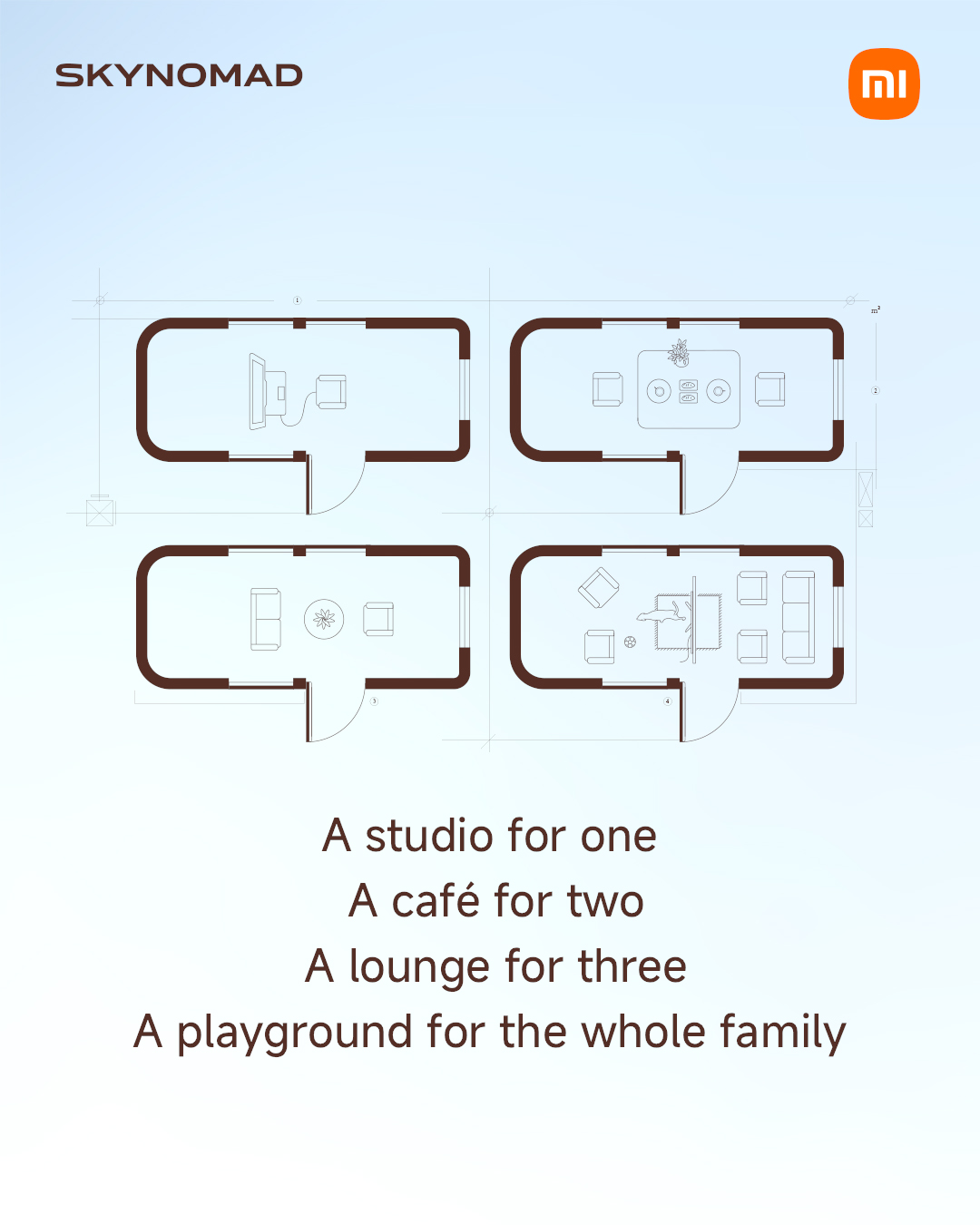
Xiaomi says the parked cabin can become “a studio for one, a café for two, a living room for three, or a playground for the whole family.” The SUV opened for reservation inquiries on July 9, with launch expected late in the third quarter.
Aimed directly at Li Auto and Aito
Chinese media report the SkyNomad range will start as low as 200,000 yuan (~$29,420), which would undercut the Li Auto L9 and Aito M9 — both above 250,000 yuan. That’s a direct shot at the two brands that dominated China’s extended-range SUV market in 2025, taking seven of the top 10 best-selling EREV SUVs.
The timing helps Xiaomi. The Li Auto L9 has been struggling, with deliveries down 74% year-over-year in the first four months of 2026. SkyNomad is also central to Xiaomi’s growth plan: the company is targeting 550,000 deliveries in 2026, up 34% from 2025, but delivered just 185,055 vehicles in the first half — about 34% of that target.
If you’re eyeing an EV like the SkyNomad, powering it with home solar is one of the smartest ways to lock in low fuel costs for the long haul. With electricity rates climbing nearly 10% last year, home solar protects you against future rate increases. And with lease and PPA options, you can go solar with zero upfront cost and start saving immediately. If you want to find the best deal, check out EnergySage. It’s a free service with hundreds of pre-vetted installers competing for your business, so you save 20 to 30% compared to going it alone. No sales calls until you pick an installer. Get your free quotes here.


FTC: We use income earning auto affiliate links. More.