

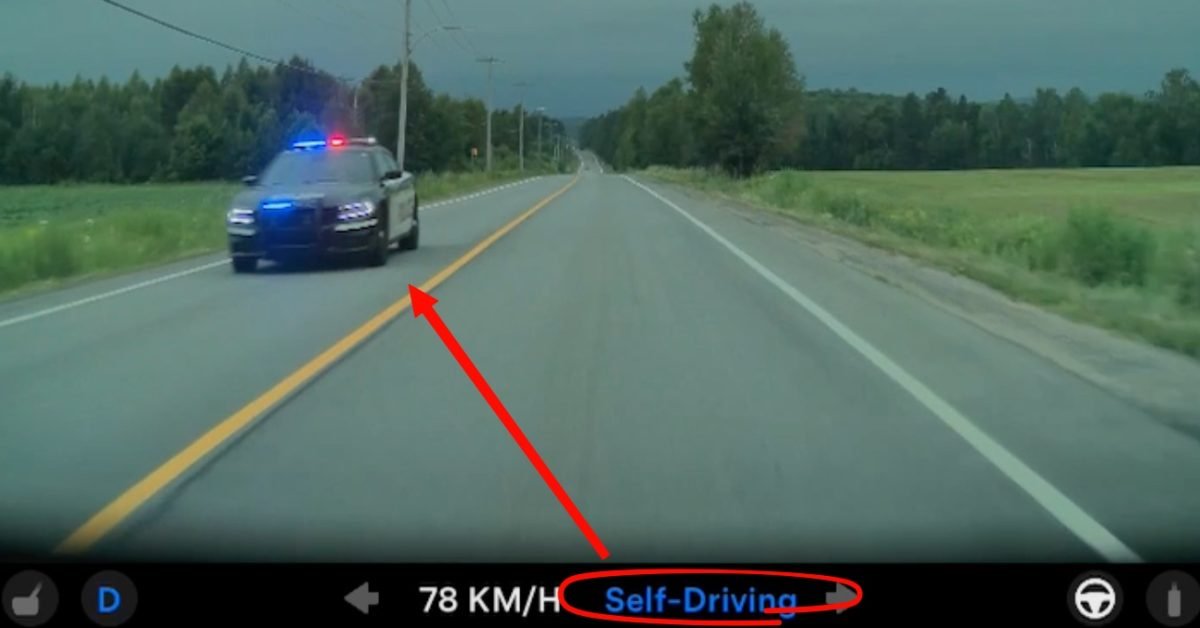
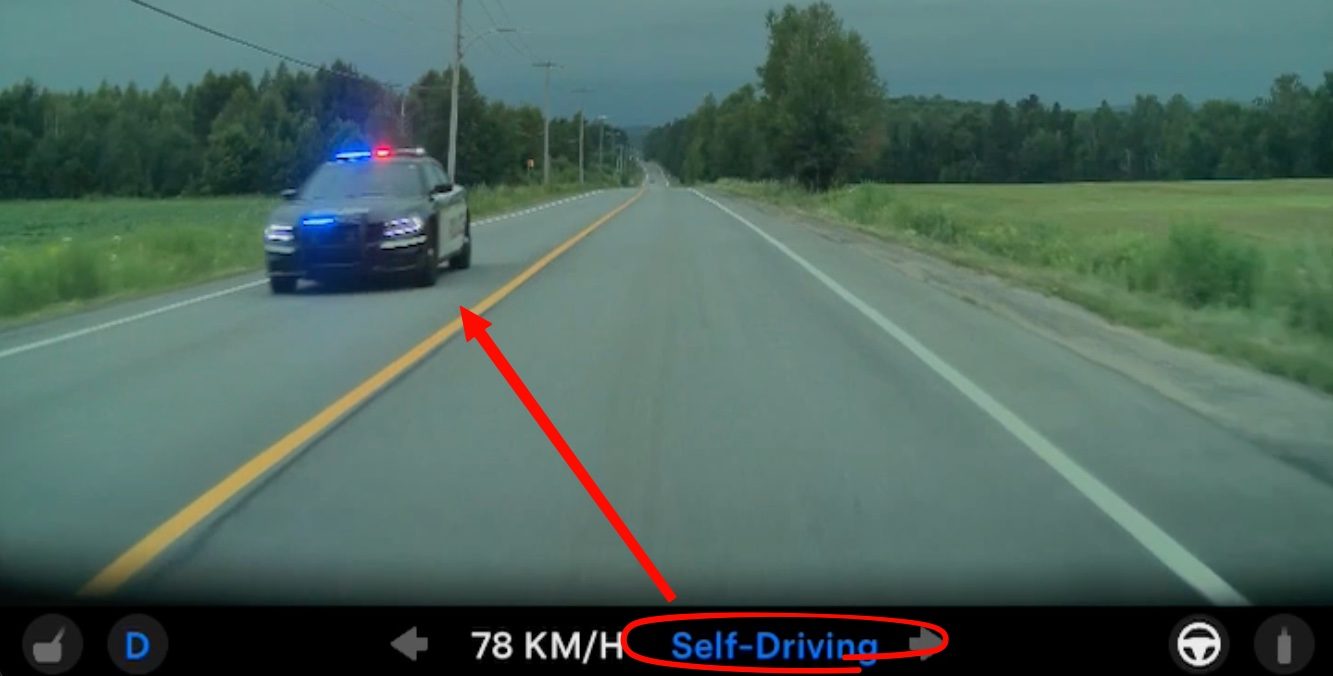
I got a speeding ticket this weekend while using Tesla’s Full Self-Driving. The car was driving itself in Standard mode on FSD when it took me up to 78 km/h in a 50 km/h zone.
A police officer coming the other way clocked me on radar and pulled me over on the spot. I’d turned FSD on less than two minutes earlier.
Here’s the part that stings. I was showing FSD off to two people who had never experienced it. First time in the car with it. I activated the system, and within a couple of minutes we were sitting on the shoulder with flashing lights behind us.
Let me get one thing out of the way. I’m always responsible for the vehicle when FSD is engaged. I know that. It’s my ticket, and I’ll pay it. This isn’t me trying to pin the fine on Tesla.
However, Tesla used to have something to prevent this and removed it for no reason – leading me to use FSD less often.
In the video, you can see that FSD is active and I’m not pressing the accelerator. Tesla’s dashcam system doesn’t show that I’m on Standard mode. You’ll have to trust me on that, but I also know other FSD owners who drive on this road with the same issue.
The problem isn’t that FSD drives over the limit
The issue here isn’t that Full Self-Driving can go over the speed limit. People drive over the limit all the time, within reason, and an autonomous system should be able to do the same. Nobody wants a robot doing exactly 50 in a 50 zone while the rest of traffic flows at 60.
The problem is that Tesla took away my ability to tell the car how far over I’m comfortable going.
Before v14, FSD let you set your own speed offset above the limit. You picked the number. If you were comfortable doing 10 km/h over, you set it to 10 over, and that’s what the car did. It was a great feature. I don’t know why they killed it.
When Tesla released FSD v14 last October, that control was gone, replaced by a set of fixed driving profiles.
Presets are not the same as control
Instead of a number I choose, v14 gives me a ladder of preset modes: Sloth, Chill, Standard, Hurry, and Mad Max. Sloth actually drives under the limit. I keep the car in Standard, because that’s usually the closest to how fast I want to go.
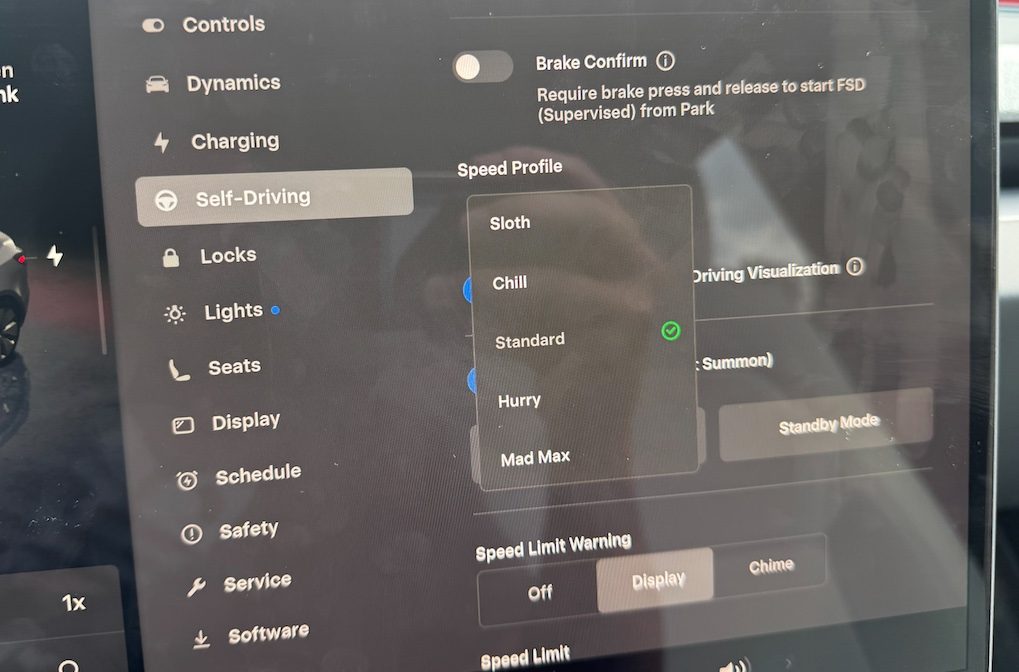
Sloth and Chill are too slow. Standard is sometimes too slow too, but most of the time it’s the best of the bunch. Hurry is too fast and gets me into exactly this kind of trouble. And Mad Max, which Tesla brought back specifically to ignore speed limits, is just stupid. Five presets, and not one of them lets me pick the number myself.
On this 50 km/h road, Standard decided 78 was fine. That’s 28 over. In Quebec, you can generally drive 10 to 20 over without an officer bothering you, as long as you’re not driving dangerously. This is not legal advice, and your mileage will vary. But 28 over is ticket territory, and I got the ticket.
If Tesla still let me set my own offset, I would have dialed it to 15 km/h, like I used to do, and never been in this spot. The car would have capped itself around 65 on that road. Instead I’m stuck picking between a mode that’s sometimes too timid and one that drives like it’s late for a flight. There’s no setting for “the speed I’m actually comfortable with,” and I’ve felt that gap in months of testing v14.
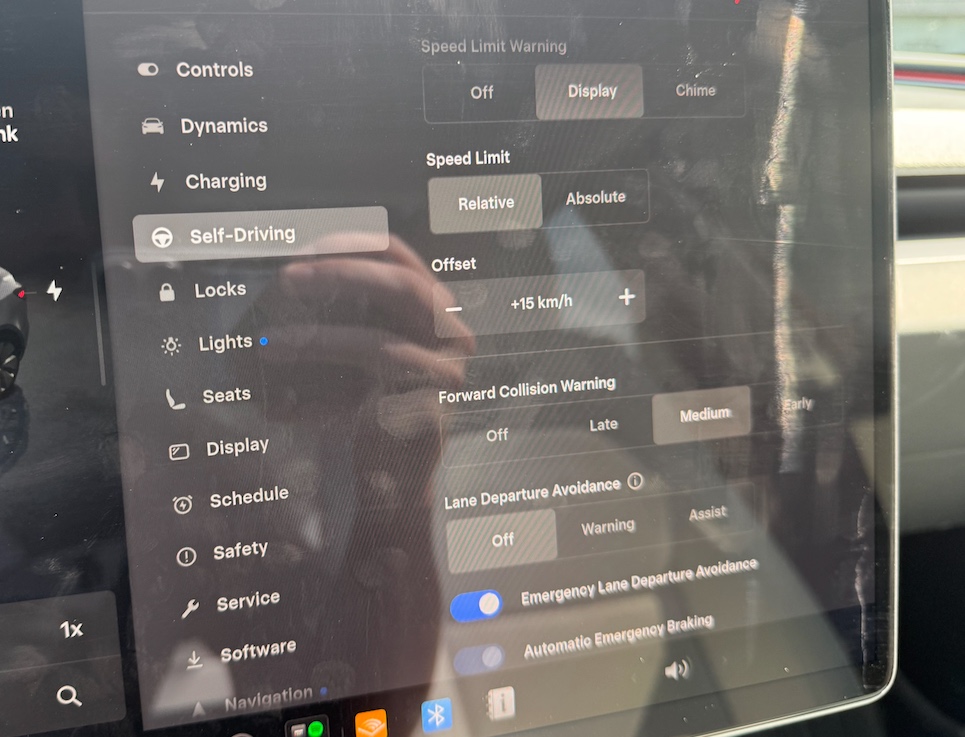
The craziest part is that Tesla has this feature already built in, but it doesn’t limit the speed anymore it just a warning. Tesla could simply add a toggle to set it as a warning or a hard limit on FSD, like it used to be.
Why I’m using FSD less off the highway
This is why I’ve been reaching for FSD less and less on regular roads. In this case, I just turned it on to show friends. On the highway, it’s fine. In Standard, it cruises at 111 km/h, I’m comfortable at that speed, and cops aren’t pulling anyone over for it. So I’m happy to let it drive there.
But on a 50 km/h road where Standard wants to do 78, the math doesn’t work. You’ll get stopped. You’ll get a ticket. I just did.
Electrek’s Take
This is another example of Tesla assuming the car can figure everything out on its own, when it clearly can’t. Speed is a judgment call. How fast you’re comfortable going over the limit depends on the road, the conditions, local enforcement, and your own tolerance for risk. A preset mode can’t know any of that. I can.
Tesla had this solved. The old speed-offset control let the driver dial in exactly that judgment, and it worked. You could even adjust it on the fly with the scroll on the steering wheel. Ripping it out and handing us Sloth-to-Mad-Max presets is a step backward dressed up as simplification. It’s the same pattern we keep seeing: Tesla strips out a useful control because it believes the system should handle everything, and drivers end up worse off in the cases where the system guesses wrong.
I’m still responsible for the car. But responsibility runs both ways. If Tesla wants me accountable for the speed, give me back the tool to set it. Bring back the custom speed offset. Until then, I’ll keep FSD on the highway and drive the side streets myself.
If you drive an EV like I do, charging it at home on your own solar is about the cheapest way to power it. With electricity rates up almost 10% last year and expected to keep climbing, going solar is one of the best ways to protect yourself against rising costs. And with lease and PPA options, you can do it with zero upfront cost and start saving immediately. If you want to find the best deal, check out EnergySage. It’s a free service with hundreds of pre-vetted installers competing for your business, so you save 20 to 30% compared to going it alone. No sales calls until you pick an installer. Get your free quotes here.


FTC: We use income earning auto affiliate links. More.