

Scientists have uncovered how bacteria naturally manufacture multiple versions of powerful cancer drugs, solving a mystery that has puzzled researchers for decades. The discovery could help speed the development of new treatments for cancers that are still difficult to treat.
For years, scientists have hoped to harness bacterial enzymes to create new drug variants through a process known as combinatorial biosynthesis. However, progress has been limited because researchers did not fully understand how the enzymes coordinate their work.
Published in Nature Communications, the new study reveals how bacterial enzymes communicate with one another to assemble a family of closely related anti-cancer compounds. That family includes Romidepsin (Istodax), an FDA-approved treatment for certain blood cancers. By uncovering this natural “mix and match” system and reproducing its underlying principles in the laboratory, the researchers have established a new strategy for designing future cancer therapies.
“For decades, we’ve known that bacteria can naturally produce multiple versions of powerful anti-cancer drugs, yet we had no idea how they achieved this,” said first author Dr. Munro Passmore, Research Fellow, Department of Chemistry, University of Warwick. “This work finally cracks that code. We’ve identified how the different enzymes communicate and cooperate to produce these drug variants, something that has eluded researchers because the system is so elegantly economical. It’s the breakthrough we needed to actually engineer these drugs ourselves.”
Tiny Molecular Connectors Reveal Nature’s Drug-Making Strategy
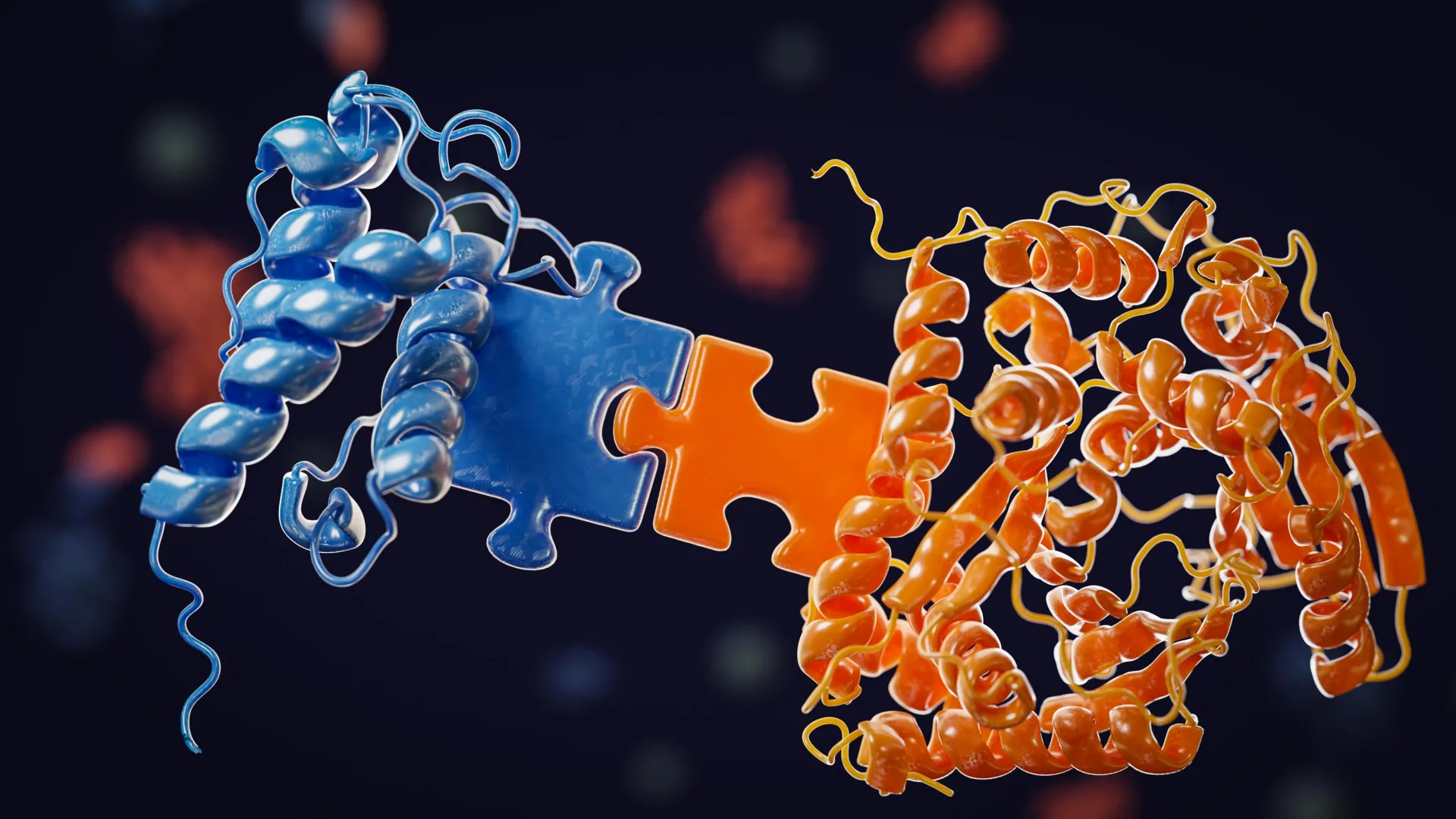
The researchers discovered that small molecular regions known as ‘docking domains’ serve as connectors between the core drug-building machinery and the enzymes responsible for adding different components. These docking domains share a conserved connection point that allows them to interact with multiple enzyme partners.
This flexible design explains how bacteria can create a variety of related drug molecules while still maintaining the precision needed for the compounds to remain effective.
The study also sheds light on how these natural drug-producing systems evolved. According to the researchers, the newly identified compound most likely developed from a related drug-producing pathway through gene duplication and recombination over time.
Prof. Greg Challis, Monash Warwick Alliance Professor of Sustainable Chemistry, University of Warwick and Monash University concludes: “This research gives us a blueprint to do what nature does, but better and faster. By reverse-engineering nature’s evolutionary logic, we can now design synthetic pathways that generate new anti-cancer drug candidates with properties optimized for clinical use, such as superior potency, improved selectivity, fewer side effects. Our immediate goal is to build an expanded library of candidates for various cancers where new treatments are urgently needed. This discovery is moving us from understanding how the systems work to building new ones.”
How the Discovery Could Improve Cancer Drug Development
The work focuses on a class of anti-cancer medicines known as HDAC inhibitors. These drugs block histone deacetylases, enzymes that help regulate which genes are switched on or off inside cells. Romidepsin (Istodax) is an FDA-approved HDAC inhibitor used to treat T-cell lymphomas.
A chemically related compound called FR-901375 has been known for decades, but scientists had never identified the biological pathway bacteria use to produce it. This study finally fills in that missing piece.
Like other HDAC inhibitors in its family, FR-901375 belongs to a group of complex cyclic molecules called depsipeptides. These compounds are assembled from amino acid building blocks along with a conserved hydroxy acid pharmacophore, all connected through a combination of peptide and ester bonds.
Inside bacteria, these molecules are built by massive protein complexes called PKS-NRPS hybrids, which combine the activities of polyketide synthase (PKS) and nonribosomal peptide synthetase (NRPS). The new research shows that the key to this assembly process is the docking domains, which act like molecular connectors that allow one part of the production line to recognize and pass its product to the next. This mechanism is what enables combinatorial biosynthesis and allows bacteria to naturally generate multiple drug variants.
How the Researchers Solved the Mystery
To uncover how this system works, the team combined structural biology, biochemistry, genetics, and computational modeling.
Their work included:
- Bioinformatic searches of public databases that identified the FR-901375 biosynthetic gene cluster in Pseudomonas chlororaphis subsp. piscium, with the findings confirmed by mass spectrometry analysis of extracted metabolites.
- In vitro reconstitution experiments using purified protein domains that demonstrated productive enzyme-enzyme interactions, verified with intact protein mass spectrometry.
- AlphaFold computational modeling to predict protein complex structures, followed by carbene footprinting mass spectrometry to experimentally map the interaction sites.
- Site-directed mutagenesis experiments that confirmed the importance of the predicted binding residues.
- Gene deletion studies in bacterial strains showing that the docking domains are essential for the system to function in vivo.
- Comparative analysis of biosynthetic gene clusters from multiple HDAC inhibitor-producing bacteria, revealing evolutionarily conserved features shared across these natural drug-making systems.