

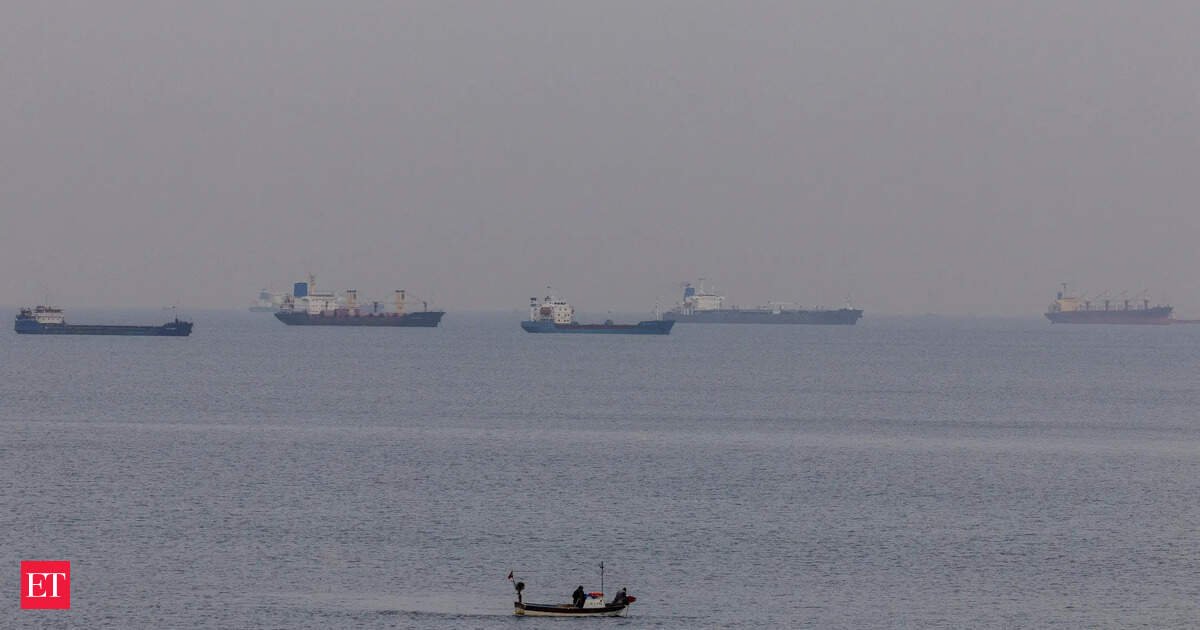
There are around 63 million barrels of Iranian oil currently on the water, either in transit or idling, according to Bloomberg calculations based on Vortexa data. The crude is on vessels in the Persian Gulf and spread across Asian waters. Most of these ships are not indicating a clear destination or are signaling that they’re available for orders, meaning they haven’t found a buyer.
ALSO READ | US resumes strikes on Iran with over 80 targets hit; revokes oil waiver
 Bloomberg
The US waiver, part of the interim peace deal between Washington and Tehran, was issued in late June and gave Iran 60 days to sell its oil without being subject to American sanctions. It was revoked in retaliation for Iranian attacks on tankers in the Strait of Hormuz.
The waiver, together with the US lifting its blockade of Iranian ports, had prompted a surge in loading of Iranian crude. That oil will now be very difficult to sell, depriving the Islamic Republic of a much-needed source of revenue and also removing a key incentive intended to get Tehran to abide by a deal that calls for reopening the strait.

ALSO READ | Iran vows ‘crushing response’ after US strikes around Strait of Hormuz
United Against Nuclear Iran, a nonprofit organization, said it has tracked at least 19 Iranian oil and petrochemical loadings since the interim deal was signed. UANI has also identified at least 46 tankers laden with Iranian oil or fuel along the the country’s coastline.Even before the waiver was revoked, Tehran was struggling to sell its oil. That was partly due to a deluge of non-Iranian crude coming out of the Persian Gulf, meaning the barrels were no longer trading at a discount to alternatives, and also because buyers were wary of various risks still involved in the trade.
Both state-owned National Iranian Oil Co. and middlemen hawking the country’s crude had been pushing to sell the supply in recent days, said traders with direct knowledge of the matter. Refiners in Japan, Taiwan and South Korea had all received offers, they said. Indian processors, meanwhile, were preparing to buy the oil, but only if the US extended the waiver beyond August.
There weren’t any recorded purchases of Iranian crude by Asian refiners outside of China since the waiver was issued, the traders said, although some sales may be kept under wraps due to their sensitivity.
The trade faced a number of obstacles. European Union and UK restrictions remained in place, complicating insurance, and some ports may not have been willing to allow Iran’s dark-fleet ships to dock. Buyers were also wary of sudden changes in US policy.
One of the few remaining markets for the oil is China’s independent refiners, known as teapots, who were Iran’s main customers prior to the Middle East war. However, it’s likely Tehran would need to offer steep discounts to pique their interest, given they were scooping up Saudi Arabian and Iraqi crude earlier this month.