

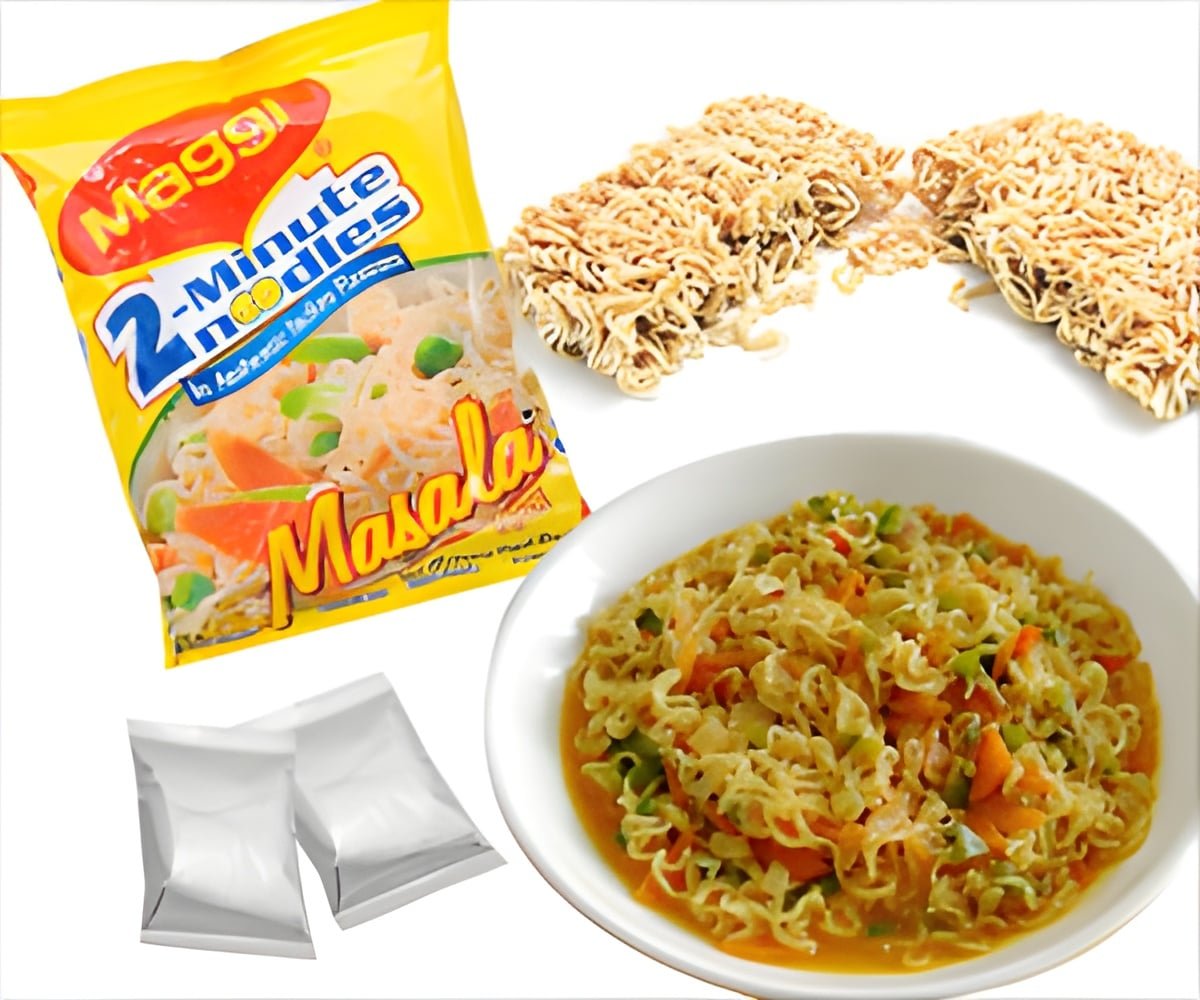
Maggi 2-Minute Instant Masala Noodles under fire in California over lead contamination claims, sparking debate on Indian vs. US food standards.
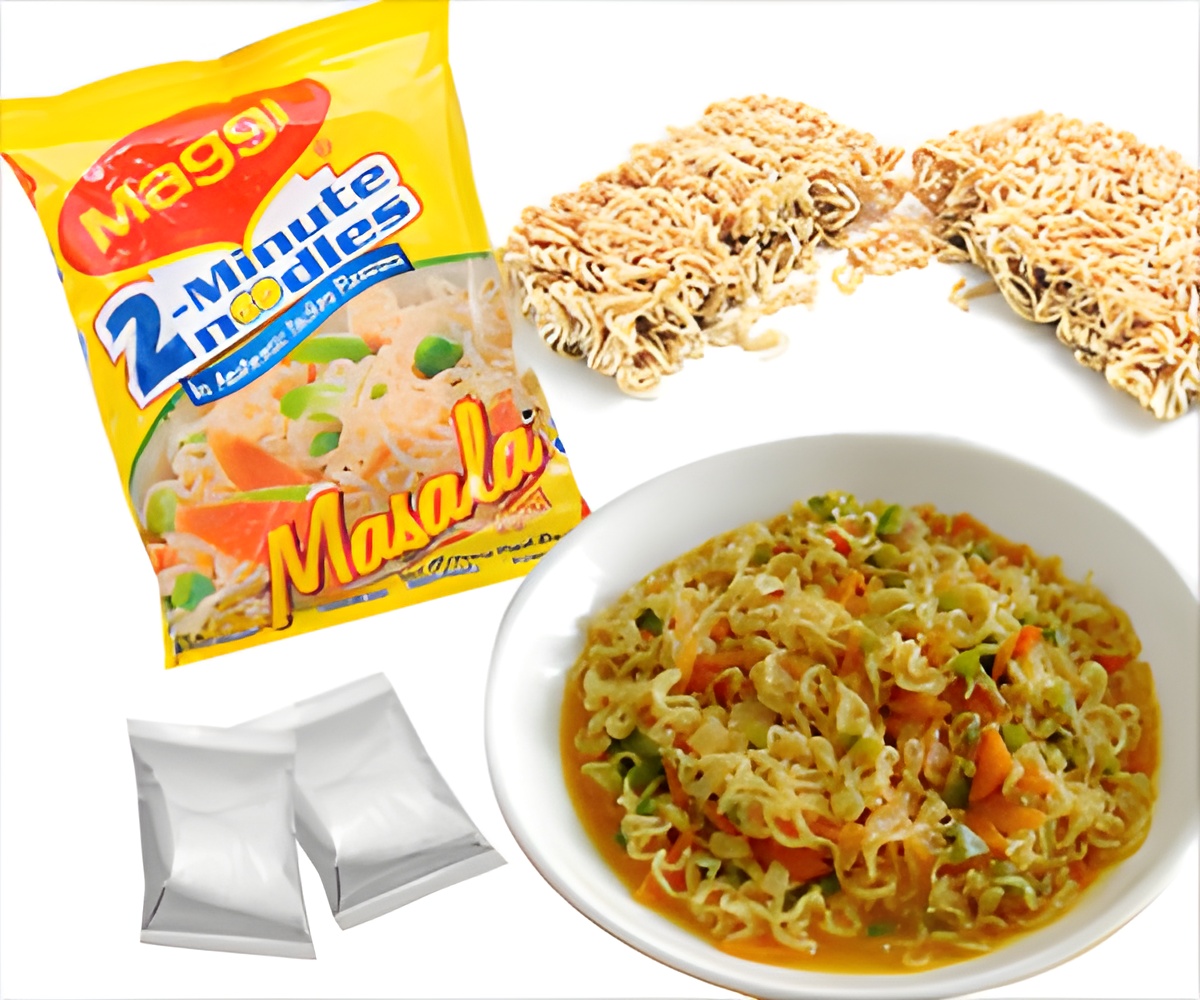
- California’s Prop 65 notice alleges that Nestle sold maggi noodles containing lead without a required warning label
- The legal action was filed on May 15, 2026, by PHEA, citing a three-year period of violations since 2023
- Lead exposure is linked to developmental toxicity, birth defects, and severe reproductive harm
Your two-minute comfort food might actually be a two-minute cancer threat in your body. While your nation feeds you these quick snacks, California calls its right to know about chemical hazards. A recent legal notice alleges that these instant meals contain dangerous levels of heavy metals (1✔ ✔Trusted Source
Health risk assessment of instant noodles commonly consumed in Port Harcourt, Nigeria
)(2✔ ✔Trusted Source
Prevalence of elevated blood lead levels and risk factors among children living in Patna, Bihar, India
).
Advertisement
California’s Proposition 65 Notice Against Maggi Noodles
On May 15, 2026, a 60-day Notice of Violation was filed against Nestle under California’s “Right to Know” law, known as Proposition 65. The notice, initiated by Public Health Enforcement Advocates, LLC (PHEA), claims that maggi noodles imported from India have been sold without required warnings. This legal challenge has sparked wider discussions about the chemical safety of imported ramen (3✔ ✔Trusted Source
Toxic Metals (Al, Cd, and Pb) in Instant Soups: An Assessment of Dietary Intake
).
Advertisement
The Science of Food Preservatives: What is in Your Maggi Masala?
While the low maggie price makes it accessible, any product like maggie masala, a maggie cup, or korean maggie that lasts for months is not real food. Rather, these products are packed with artificial preservatives like tertiary butylhydroquinone (TBHQ) and flavor enhancers. Overconsumption of these chemical agents can lead to cellular damage and metabolic disruptions in the human body (1✔ ✔Trusted Source
Health risk assessment of instant noodles commonly consumed in Port Harcourt, Nigeria
).
Advertisement
Lead Toxicity and Its Developmental Impact on the Human Body
The California legal notice specifically warns of contamination by lead, which has been listed as a toxicant since 1987. Exposure to lead is linked to severe developmental toxicity, birth defects, and long-term reproductive harm. Under the state law, businesses found in violation can face civil penalties of up to $2,500 per day for failing to provide a “clear and reasonable warning” (2✔ ✔Trusted Source
Prevalence of elevated blood lead levels and risk factors among children living in Patna, Bihar, India
)(3✔ ✔Trusted Source
Toxic Metals (Al, Cd, and Pb) in Instant Soups: An Assessment of Dietary Intake
).
Chemical Additives in Instant Foods and Their Health Impacts
Processed snacks often contain non-nutritive chemical compounds designed to enhance flavor and extend shelf-life. When consumed regularly, these substances can accumulate in the body and interfere with normal biological processes. The following list details the primary chemicals identified in these products and the specific health issues they can cause: (1✔ ✔Trusted Source
Health risk assessment of instant noodles commonly consumed in Port Harcourt, Nigeria
)(3✔ ✔Trusted Source
Toxic Metals (Al, Cd, and Pb) in Instant Soups: An Assessment of Dietary Intake
).
- Lead: Microscopic heavy metal that causes severe developmental toxicity, birth defects, and permanent cognitive impairment in young children.
- Tertiary butylhydroquinone (TBHQ): Synthetic chemical preservative that prevents discoloration and can cause digestive issues or cellular damage.
- Monosodium glutamate (MSG): Flavor enhancer that may trigger headaches, nausea, heart palpitations, and metabolic disorders in sensitive individuals.
Comparing Food Standards: How India and Other Countries Oversee Safety
Many wonder why Indian food regulations seem to overlook these hazards compared to strict standards in the US and the European Union. With the global rise of ramen noodles, the Food Safety and Standards Authority of India (FSSAI) recalled the product in 2015. Critics argue that enforcement of safety standards on instant noodles remains inconsistent across developing nations (1✔ ✔Trusted Source
Health risk assessment of instant noodles commonly consumed in Port Harcourt, Nigeria
)(2✔ ✔Trusted Source
Prevalence of elevated blood lead levels and risk factors among children living in Patna, Bihar, India
).
FSSAI Recall: Why and When the Nationwide Ban Occurred
The historical precedent for safety concerns occurred in 2015, when the Food Safety and Standards Authority of India (FSSAI) ordered a nationwide ban. Regulator tests revealed lead levels up to seven times the legal limit, leading to a massive recall. While the product eventually returned to shelves, this new California legal challenge has renewed public fear (1✔ ✔Trusted Source
Health risk assessment of instant noodles commonly consumed in Port Harcourt, Nigeria
)(2✔ ✔Trusted Source
Prevalence of elevated blood lead levels and risk factors among children living in Patna, Bihar, India
).
Countries and Regions Enforcing Instant Noodle Recalls or Bans:
- India: Imposed a nationwide recall and product ban in 2015 due to excessive heavy metal levels.
- Nepal: Banned the import and sale of these products during the 2015 public safety crisis.
- Kenya: Recalled contaminated instant food shipments following regional safety investigations.
- California (United States): Enforces strict warning labels under the Safe Drinking Water and Toxic Enforcement Act.
A Call for Global Food Safety and Accountability
As the legal battle unfolds in California, consumers must rethink their reliance on heavily processed convenience foods. Balancing convenience against the long-term toxicity risks of lead and chemical preservatives is essential for family wellness. Only by demanding transparency from global manufacturers can we safeguard our diets and protect the next generation (1✔ ✔Trusted Source
Health risk assessment of instant noodles commonly consumed in Port Harcourt, Nigeria
)(2✔ ✔Trusted Source
Prevalence of elevated blood lead levels and risk factors among children living in Patna, Bihar, India
).
Frequently Asked Questions
Q: Does this Prop 65 notice mean Maggi noodles are banned in California?
A: No, the notice is a pre-lawsuit warning demanding that the product either be reformulated or carry a clear warning label about lead content.
Q: What was the 2015 Maggi noodle controversy in India?
A: In 2015, the FSSAI banned the noodles after tests showed lead levels exceeding permissible limits, though the product was later cleared and returned to shelves.
Q: What are the health risks of eating preservatives like TBHQ and MSG?
A: High intake of TBHQ and MSG can cause headaches, nausea, and cellular damage, especially in children and sensitive individuals.
Q: Which other instant noodle brands have faced scrutiny?
A: Other popular varieties like aata maggie, wai wai noodles, and indomie noodles are monitored globally for high sodium and preservative levels.
Q: What options does Nestle have under the 60-day notice?
A: The manufacturer has 60 days to reformulate the product, add the required Prop 65 warning label, or face a civil lawsuit in court.
References:
- Health risk assessment of instant noodles commonly consumed in Port Harcourt, Nigeria – (https://pubmed.ncbi.nlm.nih.gov/29128944/)
- Prevalence of elevated blood lead levels and risk factors among children living in Patna, Bihar, India – (https://pubmed.ncbi.nlm.nih.gov/36962532/)
- Toxic Metals (Al, Cd, and Pb) in Instant Soups: An Assessment of Dietary Intake – (https://pubmed.ncbi.nlm.nih.gov/36496618/)
Source-Medindia