

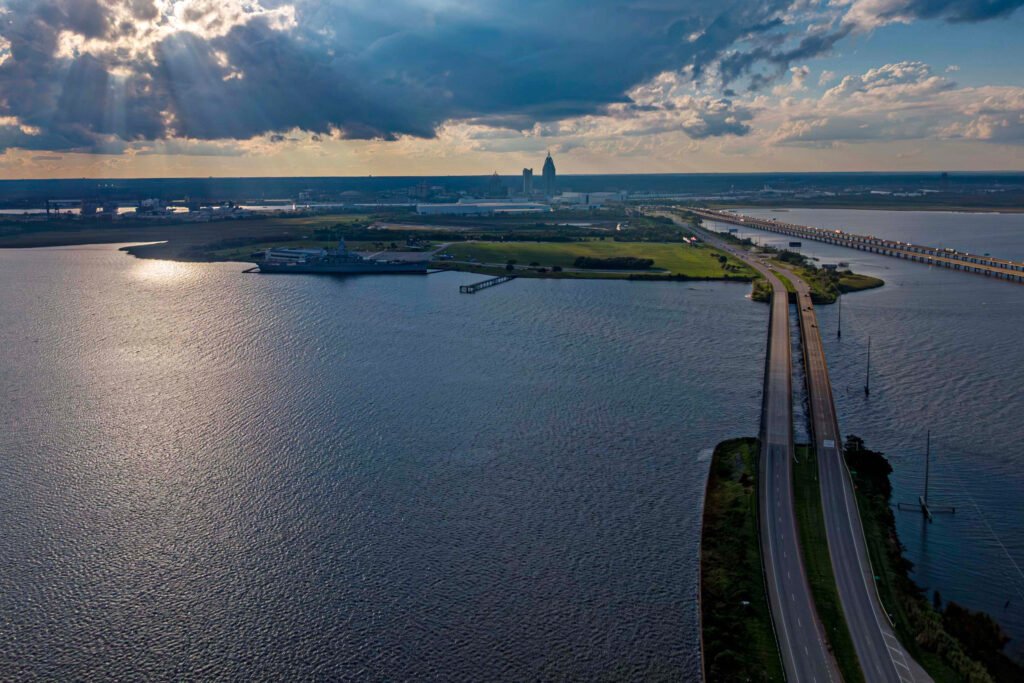
For decades, fishers, swimmers and environmental groups have complained that mud and silt from dredging operations in the Mobile Bay shipping channel have been smothering seagrasses, choking out oysters and clouding water that was once pristine.
Now those groups are one step closer to getting the practice of “thin-layer placement” in the sensitive estuary banned by federal law.
U.S. Rep. Shomari Figures, D-Ala., says he has included an amendment in the Water Resources Development Act of 2026, or WRDA, that would ban the U.S. Army Corps of Engineers from using thin-layer placement in most circumstances.
“It essentially removes that option away from the Corps to dispose of dredged material,” Figures told Inside Climate News. “They can no longer just spray it across the bay.”
The WRDA is passed every two years to establish projects for the Army Corps to “improve the nation’s ports and harbors, the inland waterway navigation network, flood and storm protection, and other water resources infrastructure,” according to the House Transportation and Infrastructure Committee website.
The Corps has nearly completed a massive dredging effort to deepen and widen the Mobile shipping channel to allow larger ships to enter the Port of Mobile, a major artery for coal imports and exports.
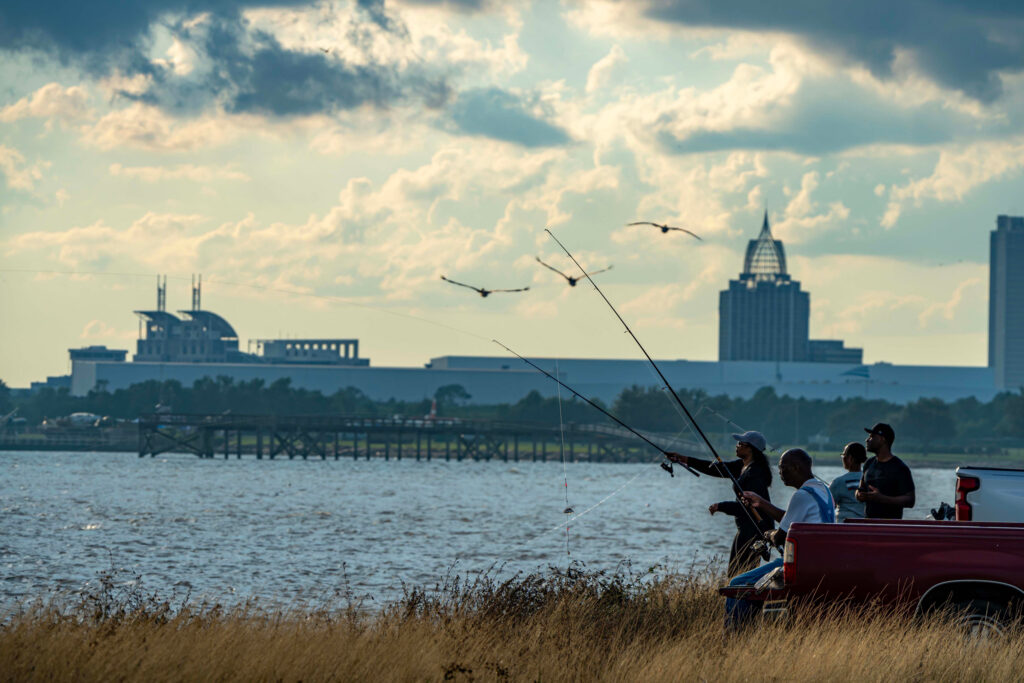
Since the project began, however, complaints have come in steadily from fishers, residents and seafood organizations, including social media videos of Army Corps dredges spraying the spoil material across the bay.
William Strickland, executive director of the environmental group Mobile Baykeeper, said that level of sediment dispersal harms the local ecosystems that many people depend on for their livelihood.
“It clouds the water, doesn’t allow sunlight to reach the subaquatic vegetation or seagrass that it needs to grow,” Strickland said. “That sediment can land on our oysters and smother those. And generally, where they place it, we see a lot less life.”
The Corps says it aims to deposit 6 to 12 inches of sediment across the bay from dredging operations and considers that a beneficial use to the ecosystem.
“The material dredged from the federal navigation channel is natural sediment and a resource that should be managed intentionally,” Valerie Morrow, the Army Corps Mobile District dredge material program manager, said in a news release. “Thin-layer placement is an intentional placement practice that is a beneficial use of dredged material.”
Alabama passed a state law in February curtailing the practice, requiring that 70 percent of dredged material be used for beneficial use projects, and excluding thin-layer placement as beneficial use.
The bill now in Congress would further restrict the practice, with exceptions only for emergencies or where there is no timely alternative, Figures said.
This year’s version of the legislation advanced unanimously through the House Transportation and Infrastructure Committee and is awaiting a vote from the full House. Figures said “only [Speaker] Mike Johnson knows” when the bill might go before the House, but he expects the bipartisan bill would move quickly.
“This bill came out of committee with unanimous support, with no one voting against it, and so we anticipate something like this being able to work its way through and get on the House floor soon, but we don’t know exactly when that will be,” he said.
This story is funded by readers like you.
Our nonprofit newsroom provides award-winning climate coverage free of charge and advertising. We rely on donations from readers like you to keep going. Please donate now to support our work.
Figures said he “absolutely” expects the bill to pass in its current form, with bipartisan support in the Senate as well.
“We would not expect the language to change at all,” he said. “It’s something obviously that we discussed with other members of the delegation before we came up with the final language.”
Sen. Katie Britt, R-Ala., has also been a vocal opponent of the Corps’ practice of disposing of sediment by spraying it into the bay, and was credited with getting provisions promoting beneficial use of dredged sediment in the 2024 WRDA.
“We can do two things,” Britt said in a 2025 Senate Appropriations Energy and Water Development Subcommittee hearing on the Corps’ budget. “We can make sure that we have the economic engine that is the Port of Mobile, and we responsibly preserve our natural resources. It is imperative this dredged material could be used for habitat restoration, for beach nourishment, for wetland creation.”
Strickland, of Mobile Baykeeper, said the group is happy to see the bill advance with bipartisan support.
“There’s a ways to go, but we’re thrilled that we’ve got the language that we need in the bill, and that the community has come together to make it clear to our elected officials where they can work across the aisle,” he said.
In addition to the ban on “mud dumping,” Figures said the WRDA bill includes $50 million for several projects around his south Alabama district, which includes the port city of Mobile and multiple Black Belt counties dealing with challenging wastewater infrastructure issues.
The Black Belt is a crescent swath across rural south and central Alabama that once made up the heart of the state’s cotton industry. The area now struggles with severe economic stagnation, high poverty rates and significant infrastructure challenges.
“When you look across that region as a whole, as you know, many … suffer with a very unique issue of being in rural communities that don’t have public sewer hookups and that have soil concentrations at many of these homes that is not conducive to traditional septic systems,” Figures said. “That’s led to the issue of straight-piping, which is essentially running a sewer line out into the woods, which creates a number of health and environmental concerns.
“So this is something that will allow the potential for these resources secured through the Water Resources Development Act to be used locally to help address some of those issues.”
About This Story
Perhaps you noticed: This story, like all the news we publish, is free to read. That’s because Inside Climate News is a 501c3 nonprofit organization. We do not charge a subscription fee, lock our news behind a paywall, or clutter our website with ads. We make our news on climate and the environment freely available to you and anyone who wants it.
That’s not all. We also share our news for free with scores of other media organizations around the country. Many of them can’t afford to do environmental journalism of their own. We’ve built bureaus from coast to coast to report local stories, collaborate with local newsrooms and co-publish articles so that this vital work is shared as widely as possible.
Two of us launched ICN in 2007. Six years later we earned a Pulitzer Prize for National Reporting, and now we run the oldest and largest dedicated climate newsroom in the nation. We tell the story in all its complexity. We hold polluters accountable. We expose environmental injustice. We debunk misinformation. We scrutinize solutions and inspire action.
Donations from readers like you fund every aspect of what we do. If you don’t already, will you support our ongoing work, our reporting on the biggest crisis facing our planet, and help us reach even more readers in more places?
Please take a moment to make a tax-deductible donation. Every one of them makes a difference.
Thank you,

Reporter, Alabama
Dennis Pillion is a reporter for Inside Climate News based in Alabama. He joined ICN in 2024 after 17 years working for Alabama Media Group, including nine as the statewide natural resources reporter. His work for AL.com and The Birmingham News, won numerous Green Eyeshade and Alabama Press Association awards for his coverage of environmental issues in Alabama. He was born and lives in Birmingham, Ala.