

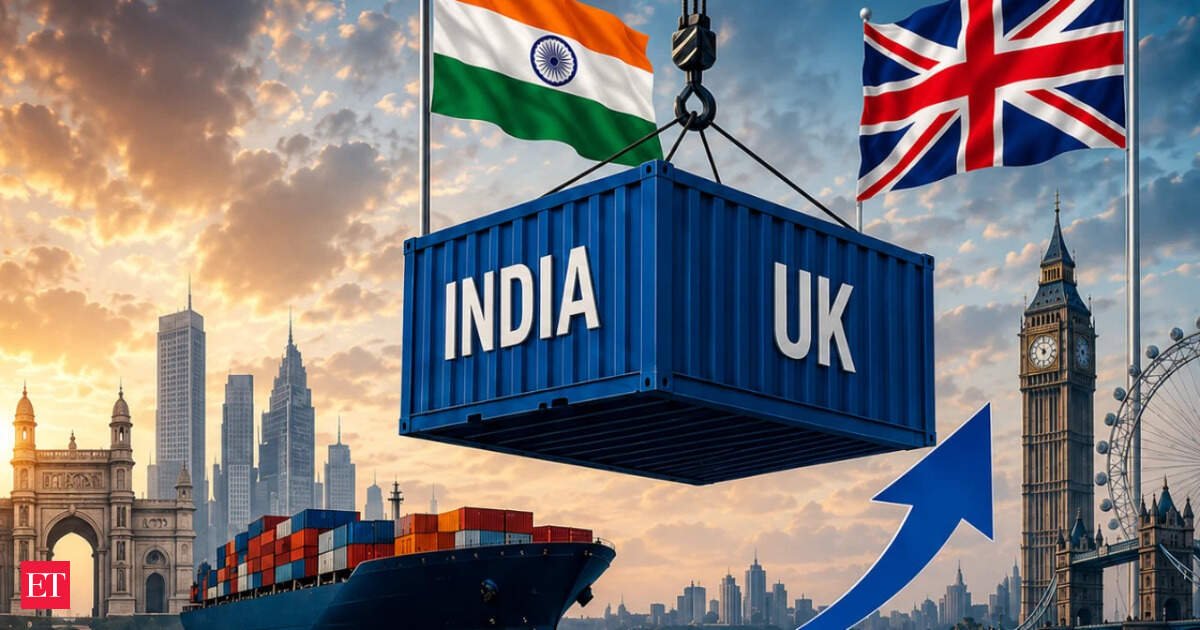
Speaking hours after the pact became operational, UK Trade Commissioner for South Asia and British Deputy High Commissioner to Western India Harjinder Kang said businesses in both countries can now trade under the new framework, while British High Commissioner Lindy Cameron said the agreement demonstrates that a rules-based global trading order continues to work.
Also read: How to crack a ‘great deal’ with India? UK reveals details of dealing with ‘phenomenal negotiators’
“‘… as of midnight, we are now able to send goods and services between the two countries on the new trading terms that we’ve agreed,” Kang told PTI Videos.
Cameron, addressing the media in New Delhi, said the agreement had “unlocked the combined economic might of two global economic powerhouses”.

“It sends a message to the rest of the world that the rules-based order works,” she said, describing the pact as the “new gold standard” of trade deals.
She added that the agreement is “a force multiplier and template for future trade agreements.”
Under the agreement, nearly 99 per cent of India’s exports to the UK will receive zero-duty market access, while around 90 per cent of UK exports to India will attract lower or zero tariffs. A bilateral social security agreement also came into effect alongside the trade pact.
Trade gains, investment boost in focus
Kang said the agreement would generate “very, very good tangible outcomes” for both economies by lowering costs for businesses and consumers.
“‘… in effect, there are some very, very good tangible outcomes for both economies and for the customers and the buyers at the end-users of these things in both markets,” he said.
He said an analysis suggests the agreement could expand trading capacity by GBP 25 billion and expressed confidence that bilateral trade would eventually reach USD 100 billion from the current USD 60 billion.
Kang also said stronger commercial ties under CETA should encourage greater investment flows between the two countries.
When asked about investments, he said increased business confidence and expanding trade should help accelerate investment activity as well.
He added that the UK’s immediate priority is to ensure businesses understand and utilise the opportunities under the agreement, noting that British authorities have already reached out to 10,000 local entities to spread awareness about the pact.
Also read: India-UK FTA to create new opportunities for Indian businesses, labour-intensive sectors
Certainty amid global turbulence
Kang said the agreement offers businesses predictability despite rising geopolitical uncertainties and that changing global dynamics would not affect the bilateral trade pact.
“There is, as you can see, a lot of geopolitical turbulence right now, and it’s good that two trusting partners such as India and the UK have agreed on this CETA. At least there’s some degree of certainty now for businesses along this corridor, and certainly I think that will build,” he said.
Cameron highlighted the sector-specific gains under the agreement, saying Indian exporters across textiles, leather, gems and jewellery, engineering goods, marine products, chemicals and processed foods stand to benefit from expanded market access.
She also pointed to lower duties on British products entering India.
“The UK-India trade deal brings sweeping benefits for a wide range of sectors. From today, import duty on Scotch whisky has been cut from 150 per cent to 75 per cent which should make a really significant difference to the price the consumer pays,” Cameron said.
She added that import duties on premium UK-built cars will also begin falling from over 110 per cent to 10 per cent, making iconic British automobiles more affordable for Indian consumers.
The India-UK CETA, signed earlier this year after years of negotiations, formally came into effect from Wednesday, marking one of India’s most comprehensive bilateral trade agreements with a major developed economy.