

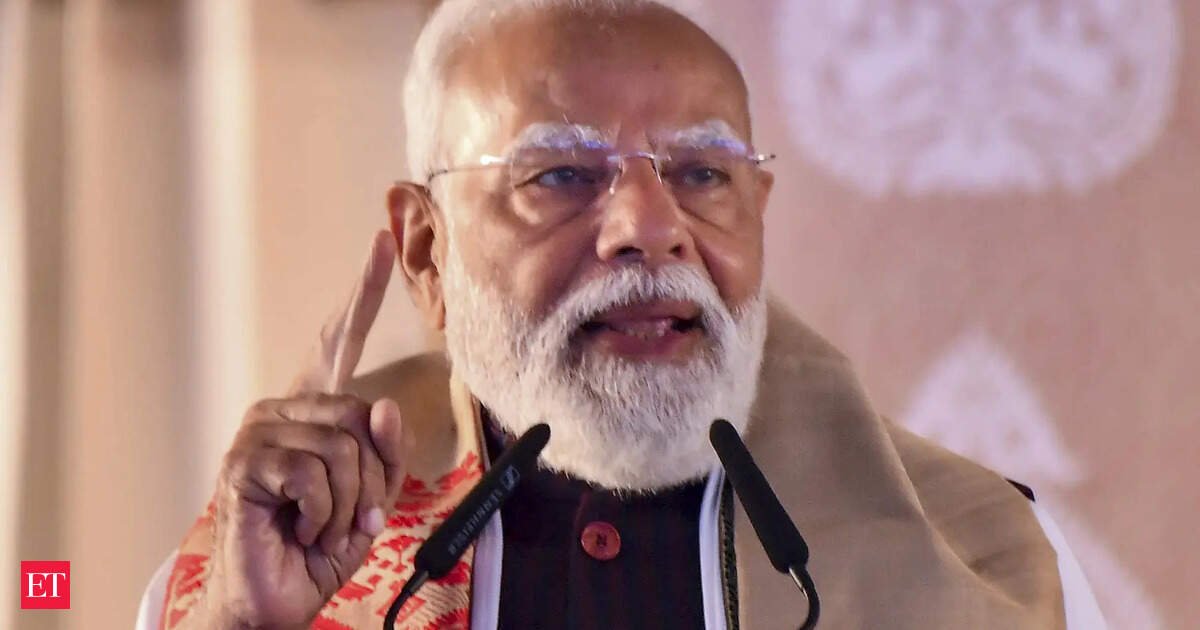
This is a significant moment in the India-United Kingdom partnership, said the Prime Minister in a post on social media platform X.
“With the coming into force of the Comprehensive Economic and Trade Agreement and the Agreement on Social Security, our economic linkages are going to get even deeper. Together, these agreements translate our shared ambition into tangible opportunities for our people.”
ALSO READ | India-UK FTA comes into effect today, unlocking duty-free access for Indian exports
“The CETA will give fresh momentum to our farmers, entrepreneurs and MSMEs. Several vibrant sectors will gain stronger access to the UK market. It will also deepen cooperation in technology, professional services and innovation, while supporting greater mobility for skilled Indian talent.”

He said the social security agreement will provide invaluable support to Indian professionals working temporarily in the UK and strengthen the competitiveness of Indian enterprises.
“This moment reflects the trust between our democracies and our resolve to build a forward-looking partnership driven by trade, technology, investment and innovation. India and the UK will continue working together for shared prosperity.”The agreement that came into effect today promises duty-free access on 99% of India’s tariff lines into the UK, benefiting sectors ranging from textiles, leather and footwear to marine products, engineering goods, chemicals and processed food. It also marks one of Britain’s most significant trade agreements since Brexit, giving UK businesses greater access to one of the world’s fastest-growing consumer markets.
Benefits: 99% duty-free access and key sectors to gain
Yet, trade experts caution that lower tariffs alone will not guarantee higher exports. Indian companies will now have to navigate stringent quality standards, certification requirements and non-tariff barriers if they are to convert preferential market access into sustained export growth.
“The agreement opens the door; India must now convert access into exports,” Global Trade Research Initiative (GTRI) founder Ajay Srivastava said, as quoted by Times of India.
The 30-chapter agreement extends beyond tariff liberalisation to cover digital trade, government procurement, innovation, small businesses, sustainability and supply-chain resilience, reflecting the growing ambition of India’s trade negotiations.
For Indian exporters, one of the biggest gains lies in the elimination of UK tariffs on labour-intensive sectors where India already enjoys a manufacturing advantage. Garments, textiles, leather goods, footwear, seafood, processed food and selected agricultural products are expected to emerge among the biggest beneficiaries.
What changes for UK imports, autos and Indian professionals
For British exporters, one of the most closely watched changes will be India’s phased reduction in import duties on UK-made automobiles. Tariffs, currently as high as 110%, will gradually fall to as low as 10% over five years under a quota-based system, although electric, hybrid and hydrogen-powered vehicles have been kept outside the concessional regime during the initial five-year period.
Alternative-fuel vehicles priced above GBP 40,000 will become eligible for phased tariff reductions only from the sixth year onwards, subject to quota limits.
What gets cheaper under the FTA?
The CETA is set to lower import duties on a range of UK products over the coming years. While many tariff reductions will be phased in, the agreement is expected to make several imported goods more affordable for Indian consumers.
Key items that could become cheaper:
Premium UK cars – Import duties on UK-made automobiles will gradually fall from as high as 110% to 10% under a quota-based system over five years.
Scotch whisky and gin – Import tariffs will be reduced in phases, making premium spirits more competitively priced.
Luxury goods – Select British luxury products, including fashion and lifestyle items, could become more affordable as tariffs decline.
Cosmetics and personal care products – Some UK-made beauty and personal care products are expected to see lower import duties.
Medical devices – Reduced tariffs could help lower the cost of certain imported healthcare equipment.
Food and beverages – Selected UK food products may become more competitively priced as trade barriers ease.