

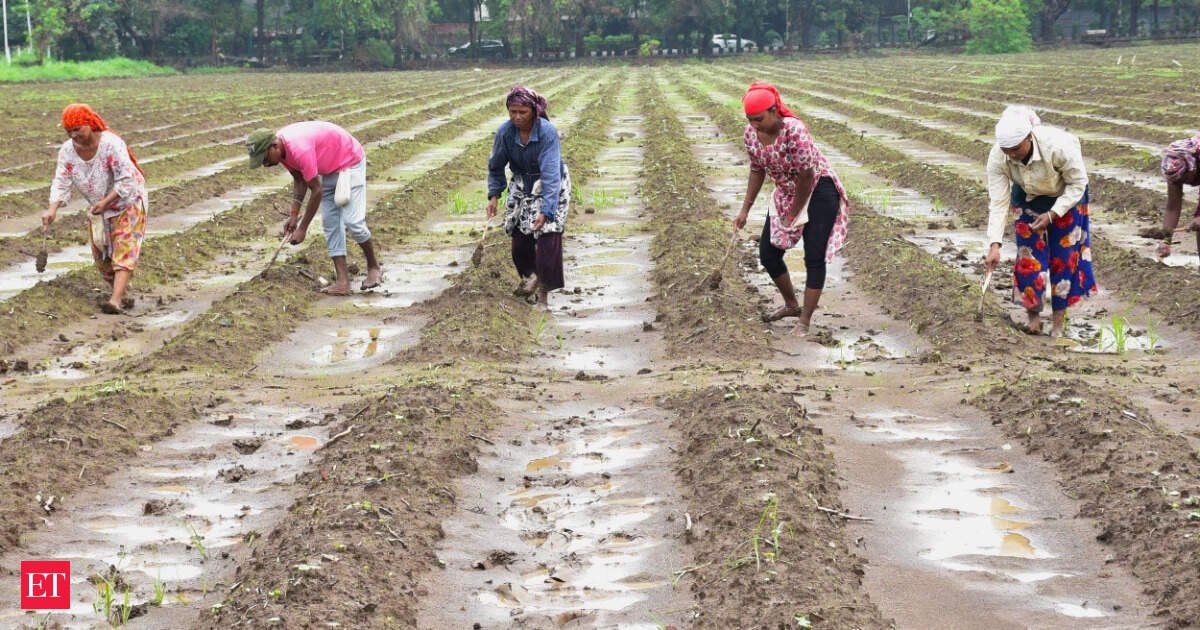
Inflation in rice (paddy) – the main kharif crop – rose to 1.72% in June compared to 0.23% in May as its acreage declined 8.63% till July 10 compared with corresponding period last year, according to data
Read More: DP World to pilot atmospheric water generation technology across global operations after strategic investment in Maithri Aquatech
The main kharif pulses such as tur, urad and moong also witnessed increased inflation in June compared to the previous month.
For tur inflation turned positive at 0.85% in June compared to -1.77% in May, while urad inflation increased to 2.16% from 0.89% and moong inflation to 1.71% from 1.15% as their planting declined 30.29%, 29.71% and 10.62%, respectively, till July 10 this year compared to the corresponding period last year, raising concerns over supplies in the coming months.

Inflation in oilseed is up 5.42% in June compared to 4.9% in May as their acreage is down 21.1% till July 10 compared to last year.
Pulses are single-season crops, supplies from one harvest must last until the next crop arrives. Consequently, any delay in sowing or reduction in the area under cultivation naturally raises concerns about future availability, leading to upward pressure on prices, said Madan Sabnavis, chief economist at Bank of Baroda. “Looking ahead, pulse prices are expected to remain elevated until there is greater clarity on crop prospects and the actual harvest outcomes,” said Sabnavis.Inflation in millets, which are being promoted as alternate crop in vulnerable districts, such as jowar and ragi is also up Traders and wholesalers hold on to the produce they have in anticipation of getting better prices later in the year on account of below normal rainfall or delayed sowing. This limits the supply of agricultural commodity pushing up prices.
India is expected to have a below normal rainfall this year with precipitation just around 90% of the Long Period Average (LPA), according to the India Meteorological Department. Rainfall deficiency stood at around 40% in June delaying sowing of all major crops starting from paddy, pulses, oilseeds to coarse grains and millets. While the first week of July witnessed heavy rainfall across several parts of the country reducing the rainfall deficiency, it has not been able to fill the gap completely.
Read More: Two of Gujarat’s leading Agricultural products, Unjha Cumin and Fennel, receive GI tag
Over 44% of districts are still deficient and 10% are facing large deficiency of rainfall out of the 738 districts from where data is collected, according to IMD.
The most vulnerable crops in case of monsoon deficiency are pulses, coarse cereal, oilseeds and cotton, according to a report by QuantEco Research. From a geographical perspective, states of Maharashtra, Rajasthan, Karnataka, Jharkhand and Chhattisgarh with the lowest percentage of area under irrigation (as of 2023-24), are the most vulnerable states, the report added.