

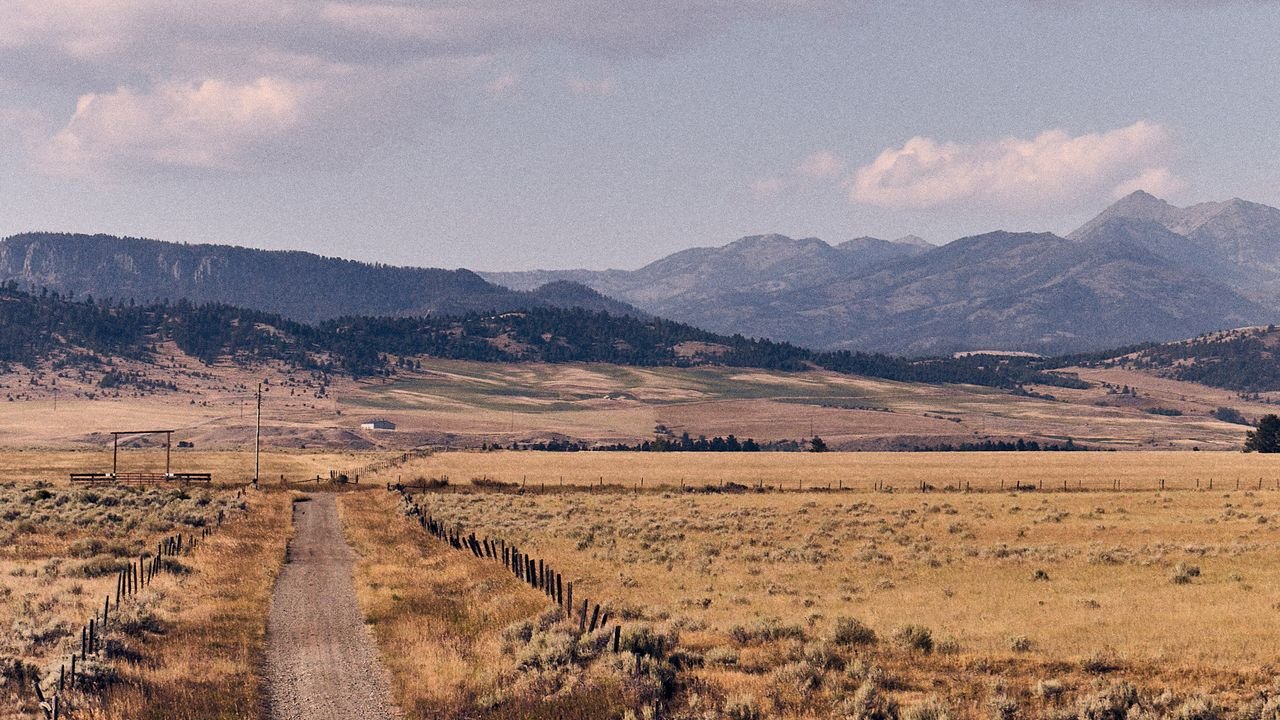
The pleasures of southwestern Montana in the summertime are not exactly a secret. But in the warmer months fly-fishing guides like Teddy Janney of Gallatin River Guides are inundated with visitors seeking to reenact A River Runs Through It. Yellowstone National Park gets nearly a million visitors a month from June through August, leading to annual complaints about traffic jams and overcrowded viewing platforms at beloved sites such as Grand Prismatic Spring and Old Faithful. Yet many travelers still think of Lone Mountain and the Gallatin Range as a winter destination. Unlike many of its counterparts in the Mountain West—including Aspen and Telluride, in Colorado, and Jackson, across the Yellowstone caldera in Wyoming—the community of Big Sky didn’t exist before skiing arrived. It took shape only after 1973, when Big Sky Resort opened at the foot of Lone Mountain. In the past half decade, two extravagant new-build hotels on either side of the peak, Montage Big Sky and One&Only Moonlight Basin, have begun enticing guests with luxury amenities and access to nearly 6,000 acres of skiable terrain, making this ski area the fourth-largest in North America. Boyne Resorts, the owner of Big Sky Resort, has added 20 new lifts in the past 10 years.
But as Serge Ditesheim, the mustachioed Swiss-born general manager of One&Only Moonlight Basin, puts it, “We came for the winter and stayed for the summer.” When there isn’t snow on the ground, he goes mountain biking in the nearby Lee Metcalf Wilderness area, where he has spotted bald eagles, mountain goats, elk, and sometimes even wolves or grizzlies from the saddle.
Guides and hospitality workers like Menka, Teddy, and Serge aren’t the only recent transplants to Big Sky. The pandemic saw a spike in the purchases of second homes in the area by millionaires, motivated—like so many of us—by the promise of privacy and unspoiled natural beauty. What first put Big Sky on the map for the very wealthy was the 1997 opening of the Yellowstone Club, an ultra-exclusive real estate development with an 18-hole golf course and its own private ski area. Members are said to include Mark Zuckerberg, Melinda French Gates, Tom Brady, and numerous other titans of culture and commerce. When I get lost one afternoon and show up at its gates, a friendly but firm security guard points me back down the mountain. My stay also coincides with one by J.D. Vance, a regular visitor to these parts, who’d come to town to host a lavish RNC fundraiser.
Big Sky’s newfound identity as a locus of wealth and power has caused consternation among some longtime residents, but many welcome the new energy. “Yellowstone Club, I’ve worked with them on a lot of trips and I’ve never met nicer people,” says Randy Hall, a Montana native who has lived at Lone Mountain Ranch for more than 20 years and served as a naturalist guide and jack-of-all-trades. He recalls a time not long ago when Milkie’s, a beloved local pizza parlor, was the only place to eat in the offseason. In recent years, the influx of new money, he points out, has helped finance the construction of a community center, post office, and school. “I have a business community that would love to see more visitors, and residents that would love to stay where we’re at,” says Brad Niva, the CEO of the Big Sky Chamber of Commerce, who preaches the gospel of livability—increasing social services, improving the transportation network—as a way to manage growth sustainably. “Unlike more mature communities, Big Sky has the opportunity to pivot.”