

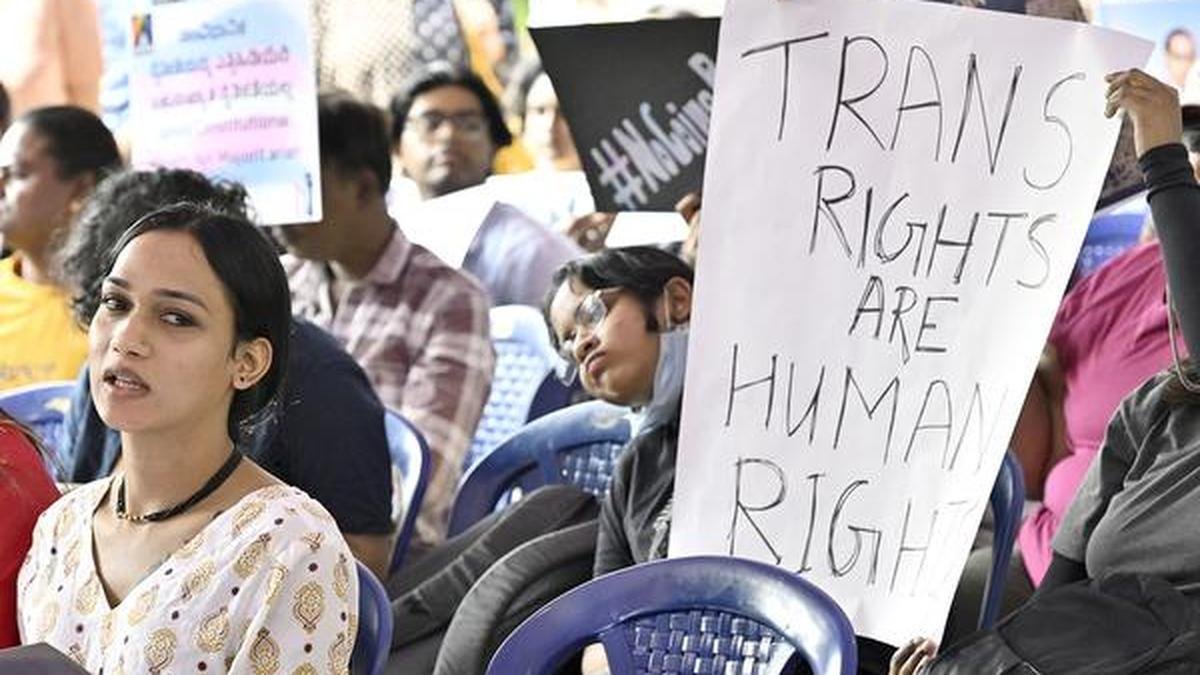
Over the past few months, Sumi Das, a transgender rights activist, says there has been a surge in distress calls to her organisation, Moitrisanjog Society, which supports the mental health and well-being of trans persons in the villages and small towns of Cooch Behar in West Bengal. Many of the calls involved attempted self-harm or suicidal ideation, she says, adding: “They were all worried about how the Act [Transgender Amendment Act, 2026] was going to affect them. ‘Will the medical board parade us naked? Will we lose our jobs? Will we lose our transgender ID card?’ These were some of the questions on their minds.
The Transgender Amendment Act, passed by Parliament earlier this year amid intense opposition from community members and subsequently assented to by the President, no longer recognises an individual’s right to self-perceived gender identity – something that transgender and genderqueer persons consider central to their autonomy and dignity. Prior to this, the landmark NALSA Supreme Court judgment gave transgender persons the right to self-identification.
Besides restricting the definition of a “transgender person” to specific traditional socio-cultural communities, such as hijras, kinnars, and aravanis, the law also fails to recognise trans men and transmasculine identities, and groups intersex variations and trans identities within the same legal category. Individuals must also obtain a recommendation from a medical board before receiving a transgender certificate from the District Magistrate, and this would, according to experts, inevitably hinder their access to care and other benefits.

Why self-identification is paramount
While acceptance is slowly growing especially in the country’s urban centres, stigma, prejudice, and discrimination still form a major part of the everyday lives of trans persons. “Villages are not the same as cities. There are many hidden transgender populations who cannot express themselves. Some trans women here cannot grow their hair or wear a saree. Some cannot access surgery. So, for them, the right to self-identification is paramount,” Ms. Sumi says.
Even where there is acceptance, taking away the right to self identify can leave trans persons at a loss to be able to affirm or express who they are. For Hafiz, a trans man based in Tamil Nadu, it felt like he “meant nothing” to lawmakers. “What will people like me do if you do not recognise us? Am I not a citizen of this country? I pay taxes. I contribute to society. How am I to exist when you question my very existence?” he asks.
Trans rights activists and mental health experts say the amended law could exacerbate existing mental health concerns within the community. Studies have found that trans persons experience higher rates of mental health conditions than cisgender people, a disparity often attributed to the stigma, discrimination, and social exclusion they face. They are also more likely to experience substance-use disorders, suicidal ideation, and suicide attempts.

Tanuja Babre, counselling psychologist and founder of Thought Partners, says that, from an emotional point of view, an individual’s right to self-perceived identity is a protective factor, especially for someone who is already subject to marginalisation, violence, and vulnerability. She explains that when this protective layer is taken away, it complicates matters. The Act adds a new layer of stress to individuals who are already overburdened. What makes it worse is that it will make the risks and challenges they face less visible.
“What we are telling trans persons, with this law, is that their identity is not something they inherently know or understand, but something that needs to be verified by the State, something that must be certified or controlled. This creates a great deal of anticipatory anxiety. There is also the question, ‘Who am I? Am I real if I cannot prove my identity?’ There is the added burden of wondering how much longer they should have to keep fighting, leading to existential fatigue, which is often accompanied by grief,” she explains.
Impact of discriminatory laws
Raj (they/them), director of Mumbai-based Mariwala Health Initiative, who identifies as non-binary and transmasculine, says that the more insidious aspect of the Act is that it subjects trans people to intrusive scrutiny, creating additional barriers to legal recognition, and, in turn, adversely affecting their mental well-being. “The State must now recognise my identity before I can be granted reasonable accommodations or the protections of anti-discrimination measures,” they say.
This runs counter to other initiatives the country has brought in, they say. One of the key components of the National Suicide Prevention Strategy for instance, is to reduce stigma, strengthen social support systems, and protect vulnerable populations. But what the Act has now done is increase the hurdles trans persons have to navigate to prove their identities, and therefore increase their exposure to harassment and violence in schools, workplaces, hospitals, police stations, housing systems, and welfare programmes.
There is overwhelming international evidence linking discriminatory laws to increased suicidality and self-harm among trans people, Raj says. “The research is very clear internationally: there is a 7% to 72% increase in suicide attempts when discriminatory laws are passed. And that is what drives an elevated risk of suicide – not the trans identity itself, but the impact of these laws.”

Discrimination drifts in
Community members point out that the knock-on effects of the law include family rejection, violence, educational discrimination, and broader barriers to healthcare, especially gender-affirming care.
Ms. Sumi adds that stigma has, in fact, already seeped into everyday life in Cooch Behar. “Some trans women who work at a shopping mall were recently asked to use the men’s washroom after months of using the women’s washroom,” she says. “Many community members do not wish to take up traditional occupations like begging or sex work, and they are stressed because they worry the Act will prevent them from getting jobs.”
She says there is also rampant fear around the transgender ID card process and that the existing cards may become invalid. “We will have to go through a screening committee and be judged by a doctor. This is all mentally very taxing for the community.”

Role of peer support
When it comes to queer and trans communities, mental health support has not only been historically out of reach but also disguised as a discipline seeking to normalise or enforce heteronormativity, including through practices such as conversion therapy, though this has begun to change in recent years.
Peer support, therefore, has always been a pillar of strength for the community, not just for mental health concerns but also for housing, employment, and care. “Peer support has always existed for marginalised communities, simply because they face exclusion at the point of healthcare itself, and that makes them not want to access healthcare at all,” says Raj.
Mr. Hafiz points out that even in government-run gender clinics, where free surgeries are offered, trans people are more often than not “judged” and “pathologised” by psychologists/psychiatrists. “The irony is that someone who is supposed to help our mental health, often puts pressure on us to perform in a particular way,” he says.
A study by Sandhya Kanaka Yatirajula et al on the mental health of trans persons, which looks at transgender persons in the national capital region, found that peer support interventions significantly reduced anxiety and depression among participants, with improvement in overall mental well-being as well attitudes towards seeking mental healthcare. Dr. Sandhya says there is a lot of hesitation within the community to seek help from psychologists and psychiatrists because they may not be trans-affirmative.
“What our study intended to do was make peer support more structured, using the principles of science that are proven to work, so that the participants are equipped with resources they can use when they are stressed. It was also about building a support system and identifying people they could depend on – reinforcing the fact that there is a community, a safety net,” Dr. Sandhya explains.
Community outreach, therefore, has played – and will continue to play – a vital role in mental health. For instance, Ms. Sumi says when the Bill was first proposed, Moitrisanjog’s lawyers had held consultations with community members to dispel misconceptions and explain the provisions of the Amendment Act and its implications. The Mariwala Health Initiative released a database of queer- and trans-affirmative mental health practitioners offering reduced fees for three months in response to the Act. Both organisations and others have stepped up mental health support through follow-up calls, WhatsApp groups, and outreach programmes.
In India’s bid to better its mental health and reduce suicides, the Act is a step in the wrong direction, according to experts. What is needed now, says Ms. Babre, are supportive spaces and solidarity. It is also important to note that individual therapy, group therapy, or collective support cannot undo the structural harm caused by legislation like this, she added. What is also needed – and is under way –is a legal challenge to such legislation, conversations with healthcare professionals, and affirmative training for them. It would also help if legal and professional bodies came out in solidarity with and in support of trans persons, she says.
For the community, this is another battle in the long war for the right to live with dignity. “Even two decades ago, we had no rights. We were considered illegal. Yet we were here, and we will continue to persist,” says Ms. Sumi.