

When a young finance professional developed difficulties with calculations and routine tasks, the symptoms did not initially appear to be those of a stroke. Brain imaging, however, showed an infarct (an area of dead tissue) involving the speech area. While he initially improved with treatment and was discharged, he subsequently returned with worsening symptoms after another clot caused further damage.
The second stroke left him with significant difficulties in speech, reading, writing and calculation. A senior finance executive, he had to relearn language from the beginning, starting with simple three-letter words before gradually progressing to sentences.
“This case highlights how stroke can leave patients with lasting communication difficulties even after physical recovery”, says Shubha Subramanian, senior consultant, neurology, Kauvery Hospital, Vadsapalani. This complication is called post-stroke aphasia, a communication disorder that affects speaking, understanding, reading and writing and one that continues to remain under-recognised despite affecting a substantial proportion of stroke survivors.
While stroke is the most common cause, aphasia can result from any damage to the language-dominant side of the brain.

A silent consequence of stroke
According to the World Health Organization (WHO), stroke was the third-leading cause of death and disability globally in 2021, with nearly 11.9 million new cases reported that year. Speech and language difficulties are among the recognised complications of stroke, and rehabilitation involving speech and language therapy is considered a key component of recovery. WHO recommends that rehabilitation begin as soon as the patient is medically stable.
India carries a growing burden of stroke. Studies show that stroke incidence ranges from about 108 to 172 cases per 100,000 population annually, making it the country’s fourth-leading cause of death and fifth-leading cause of disability. Data suggest that nearly one-third of stroke survivors develop communication disorders, including aphasia.
“A stroke can lead to any combination of weakness with speech and language disorders,” says Shrivarthan R., consultant neurologist, MGM Healthcare, Chennai. He explains that while weakness and mobility are often prioritised during rehabilitation, deficits involving speech and language receive less attention. Language, unlike speech articulation, is a higher cognitive function involving understanding, naming, reading, writing and repetition, and is predominantly controlled by the dominant hemisphere of the brain.
“This lack of adequate awareness about speech and language pathology after stroke is a major factor. These deficits significantly impair quality of life and activities of daily living,” he says. Sreenivas U.M., neurologist, Apollo Speciality Hospitals, Vanagaram, says the impact can be devastating, particularly for individuals whose livelihood depends on communication. “Aphasia can affect writing as well, which further worsens quality of life,” he says.
Communication difficulties also have a psychological dimension. Patients often understand what they wish to communicate, she says, but struggle to express themselves,” says Shubha Subramanian, senior consultant, neurology, Kauvery Hospital, Vadapalani. “This can be deeply distressing for patients, particularly when recovery is incomplete,” she says. Depression and social withdrawal are also common. “One of the biggest challenges is the inability to communicate effectively with family members and loved ones. In many patients, this frustration persists even after physical recovery and can contribute to depression,” she adds.

New therapies
Conventional speech and language therapy remains the cornerstone of aphasia rehabilitation, but advances in neuroscience are expanding treatment possibilities. Current approaches include intensive speech therapy, tele-rehabilitation, digital therapeutics, artificial intelligence-assisted programmes and virtual reality-based training.
Tele-rehabilitation has emerged as an important tool, particularly in India where trained speech therapists are unevenly distributed. “A major concern remains the availability of qualified therapists. Tele-rehabilitation helps address this by providing therapy irrespective of location,” says Dr. Sreenivas.
Dr. Shubha says AI-driven digital platforms can adapt exercises in real time based on a patient’s performance. “These systems provide intensive repetition, which is critical for neuroplasticity. Therapists can also remotely monitor progress,” she says.
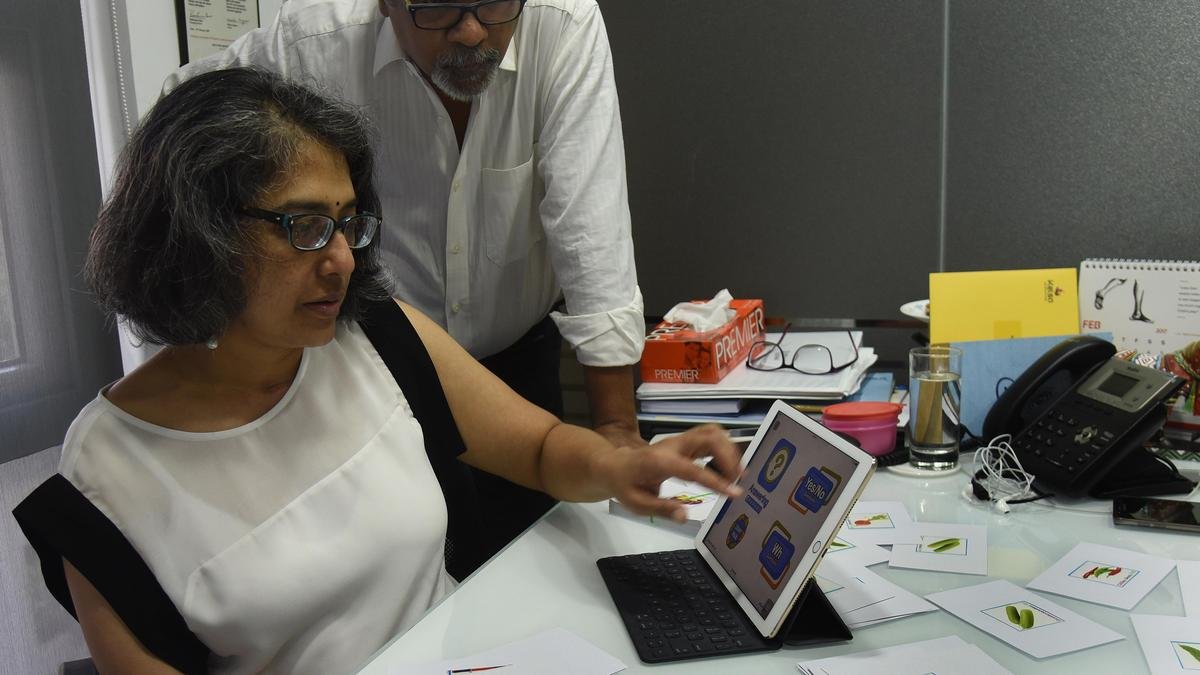
Among the emerging therapies are tablet-based applications such as Constant Therapy and Tactus Therapy, along with speech-to-text interfaces, non-immersive virtual reality programmes and non-invasive brain stimulation.
Techniques such as repetitive transcranial magnetic stimulation (rTMS) and transcranial direct current stimulation (tDCS) are increasingly being studied for their ability to enhance recovery. “rTMS has been shown to significantly address post-stroke speech and language disorders,” says Dr. Shrivarthan.
Dr. Shubha says these techniques can improve naming, reading, comprehension and word-finding difficulties when combined with conventional therapy. Experts note that such approaches are gradually entering clinical practice, although cost and accessibility remain barriers.

Recovery continues for years
Experts say that the most important change in stroke rehabilitation is the growing appreciation of neuroplasticity, the brain’s ability to reorganise and form new connections. Traditionally, speech recovery was believed to plateau after six months. However, recovery can continue much longer. “In our experience, we have seen improvement in aphasia even years after the primary incident using successful rTMS therapy,” says Dr. Shrivarthan.
Dr. Sreenivas says reports of delayed recovery are becoming increasingly common. “Recovery is highly individual, and the recommendation now is to persevere with therapy till meaningful gains are achieved.” Timing remains crucial. “Earlier the better,” he says, adding that rehabilitation should overlap with medical management and begin as soon as possible.
Experts say therapy should start once the patient is conscious and able to participate as higher intensity and longer duration of training help in earlier improvement.

India’s rehabilitation gap
Despite advances, experts say access to speech rehabilitation remains a major challenge in India .A shortage of speech and language pathologists, concentration of services in metropolitan areas and the financial burden of prolonged therapy create barriers for many patients. “Limited availability of trained speech and audio-language pathologists is a major concern, and these facilities are almost non-existent in rural India,” says Dr. Shrivarthan . Cost and geography are the two principal barriers.
Since therapy needs to be ongoing, costs can pile up. Increasing training opportunities and expanding government-supported services are essential. Another challenge is continuity. Although patients and caregivers are educated about speech rehabilitation during hospitalisation, maintaining long-term adherence can be difficult, says Dr. Shubha. “There is lack of awareness about the importance of speech rehabilitation. Patients need constant encouragement during follow-up visits. And, continuing speech rehabilitation can help them recover language and communication to the greatest extent possible.