

Mrs. Janki (name changed), a 45-year-old woman, came to a health camp organised in rural Assam with a complaint of a painless breast lump. She had noticed the lump three months earlier and reported that it had gradually increased in size. On examination, the doctor suspected breast cancer and advised her to visit a cancer hospital located two hours away for further evaluation.
“But I have no pain. The hospital is so far away. There is nobody to come with me to the hospital,” Mrs. Janki said. Despite repeated counselling, she refused to seek further care.
Three months later, Janki finally presented to the hospital. By then, she had developed a large, bleeding mass in her breast. She was diagnosed with advanced stage breast cancer and died six months later.
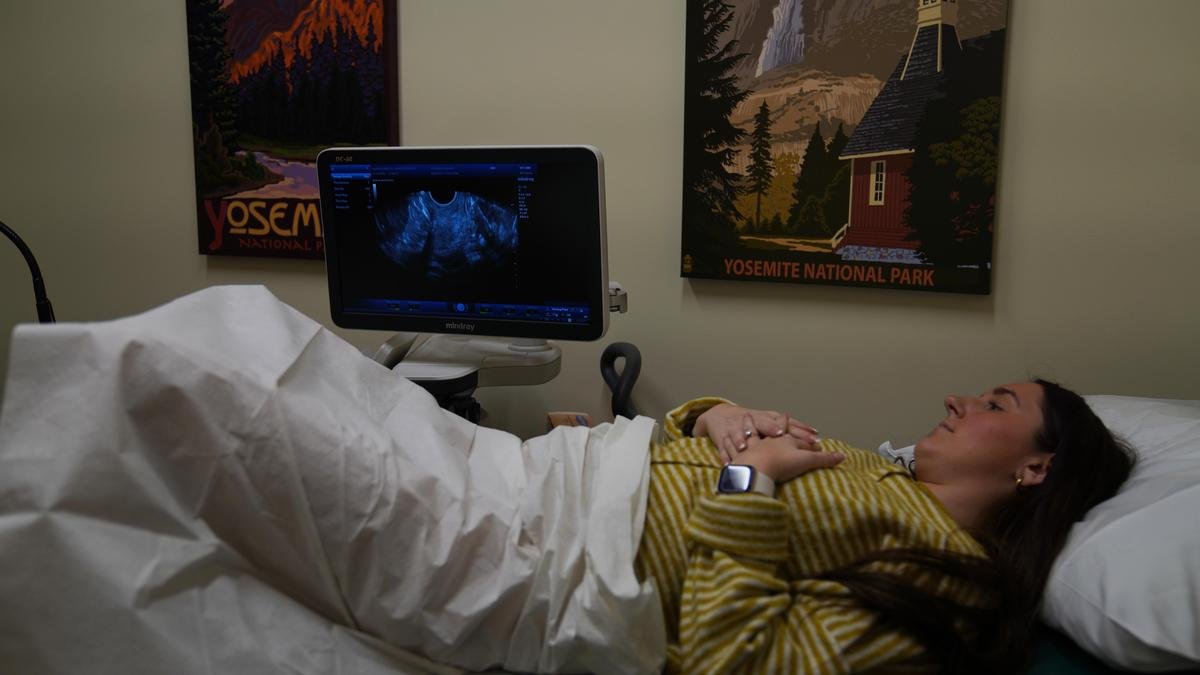
Technological advances, like portable ultrasound machines, have made it possible to bring cancer diagnostics, such as ultrasound imaging and ultrasound-guided biopsies, closer to people’s homes. This machine could, perhaps, have given Mrs. Janaki a diagnosis at her doorstep. However, India’s Pre-Conception and Pre-Natal Diagnostic Techniques (PCPNDT) Act treats the movement of an ultrasound machine outside a registered facility as a serious offence, with penalties that can include a minimum of three months’ non-bailable imprisonment.
What is the PCPNDT Act?
The PCPNDT Act was introduced in 1994 in response to a sharp decline in the child sex ratio in India, driven by a strong societal preference for male children and the growing misuse of technologies such as ultrasonography for prenatal sex determination, followed by selective abortion of female foetuses. Abortion of female foetuses became more evident from the 1980s, with the increasing availability of imaging technologies, raising serious ethical, demographic, and public health concerns. The legislation, therefore, aimed not only to prevent the misuse of medical technology but also to address the deeper issue of gender discrimination and to protect the rights and survival of the girl child.
The law mandates registration of all genetic clinics, ultrasound centres, and laboratories and strictly prohibits the communication or disclosure of the sex of the foetus. It prescribes detailed record-keeping, monitoring mechanisms, and penalties to ensure compliance.
Under this Act, the purchase of an ultrasound machine is not a routine commercial transaction but a tightly-regulated process. A clinic or hospital must first be registered with the district government as a genetic clinic or imaging centre before acquiring a machine. Purchasing one without prior registration is illegal. Manufacturers or dealers are required to verify the buyer’s credentials and obtain a written undertaking that the machine will not be used for sex determination. The sale must be documented with invoice details that match the registered centre, and the transaction is reported to the authorities for monitoring.
Once installed, the machine must remain at the approved location, its details must be recorded in official registers, and strict documentation, including patient records for every scan, must be maintained. Any transfer, resale, or relocation requires prior permission.

Impact of PCPNDT Act
Following the introduction of the PCPNDT Act, the sex ratio at birth in India has shown a gradual improvement at the national level. While this improvement cannot be conclusively attributed to the introduction of the Act, several unintended consequences can be directly attributed to it.
Evidence suggests that families whose first child is a girl tend to have more children in an effort to have a son, compared to families with a firstborn boy. Following restrictions on prenatal sex selection, families experienced a 25% higher child mortality rate among firstborn girls relative to firstborn boys. This could be explained by the decline in parental investment in health, particularly among girls. Fertility also increased in these families, indicating a shift toward having more children when sex selection was not an option. Having a larger number of children also led to dilution of resources, likely reducing overall investment per child. Similar patterns were observed in education as gender disparities widened. These effects were more pronounced among poorer, rural households that were more affected by the restrictions, as they could not afford illegal services to abort the child.
Recent reports indicate that sex-selective practices continue despite decades of legal prohibition. In October 2025, authorities uncovered an illegal racket in Karnataka where organised networks were carrying out prenatal sex determination and facilitating abortions, often targeting vulnerable women from rural areas. Similar crackdowns across different States show that such activities are frequently conducted outside formal health systems, using portable ultrasound devices, informal providers, and covert arrangements to evade regulation. Between 2017 and 2030, the total number of female abortions is projected to be 68 lakhs in India.
The issue is not confined to India. Reports from the United Kingdom indicates that son preference may persist among some diaspora communities as well. Reports have also raised concerns that families of Indian origin may be engaging in sex-selective practices even in settings with stricter oversight, highlighting the deep-rooted nature of gender bias that transcends national boundaries.
Taken together, these patterns underscore a critical limitation of legislative approaches. While laws such as the PCPNDT Act establish an essential regulatory framework, they are insufficient on their own to drive social change. Weak enforcement, coupled with entrenched cultural preferences for male children, allows such practices to persist in hidden forms.

Why PCPNDT needs to evolve
Available evidence suggests that the PCPNDT Act has not fully achieved its intended objectives and may, in some contexts, have had unintended adverse effects. Additionally, fear of legal repercussions and stringent regulatory requirements has had a chilling effect on service provision.
Moreover, The PCPNDT Act has not kept pace with advances in ultrasound technology. Portable, handheld ultrasound devices, often connected to smartphones or tablets, make it technically feasible to bring diagnostic services closer to patients’ homes, which is particularly relevant for early cancer detection in underserved areas. However, the use of such devices at the community level is currently illegal in India.
Modern high-frequency probes used for applications such as cancer detection and the assessment of other superficial conditions cannot be used for foetal sex determination, yet remain subject to the same regulatory restrictions, limiting access to essential diagnostic care.
Recent developments in Artificial Intelligence further strengthen the case for a more nuanced regulatory approach. AI-enabled ultrasound systems can assist with image acquisition and interpretation, and in some configurations generate automated reports based on pattern recognition without requiring full image storage or display. Such technologies could enable safe, purpose-specific use of ultrasound for diagnostic applications while substantially reducing the risk of misuse for foetal sex determination.
Recent research has also demonstrated the potential of AI in improving access to reliable ultrasonography. In a pilot study, portable ultrasound scans performed by individuals with minimal training were combined with AI to identify suspicious breast lesions with high accuracy, correctly flagging all confirmed cancer cases. This suggests that AI-assisted ultrasound could enable frontline health workers to assess patients with breast lumps, refer those with suspicious findings for further evaluation, and reassure those with benign conditions.
For countries such as India, where access to specialist radiologists and diagnostic imaging remains uneven, especially in rural areas where nearly 70% of the population resides, such innovations could substantially improve the timely assessment and treatment of symptomatic patients. Earlier diagnosis and referral have the potential to reduce breast cancer mortality while expanding access to care in rural and underserved areas. This contrasts with many Western countries, where breast cancer control strategies rely more heavily on mammographic screening programmes that detect tumours before symptoms appear but require considerably greater resources and infrastructure.
Serving a greater need
These technological shifts and the rising need for community-based cancer screening in view of the high cancer burden in India suggest that regulatory frameworks need to adapt to distinguish between different use cases of ultrasound, rather than treating all devices and applications uniformly. An amendment to the Act could make community-based ultrasound using a high-frequency linear probe legal, as it will not impact sex determination. Additionally, the Act should incorporate provisions addressing emerging technologies, including AI-enabled and safeguarded USG imaging systems designed to prevent the determination or disclosure of foetal sex, irrespective of intent.
In its current form, the PCPNDT Act is falling short of its goal of preventing female foeticide while also constraining access to essential diagnostic services. If the broader aim is to advance gender equality, it will require sustained efforts to shift social norms and address underlying biases, as legislation alone is unlikely to achieve this change.
(Dr Parth Sharma is a community physician working in the department of preventive oncology and public health at Cachar Cancer Hospital and Research Centre; Dr Senthil Kumar A.R. is a consultant radiologist and former director of the department of radiology, Aberdeen Royal Infirmary, U.K. senthil7779@gmail.com)