

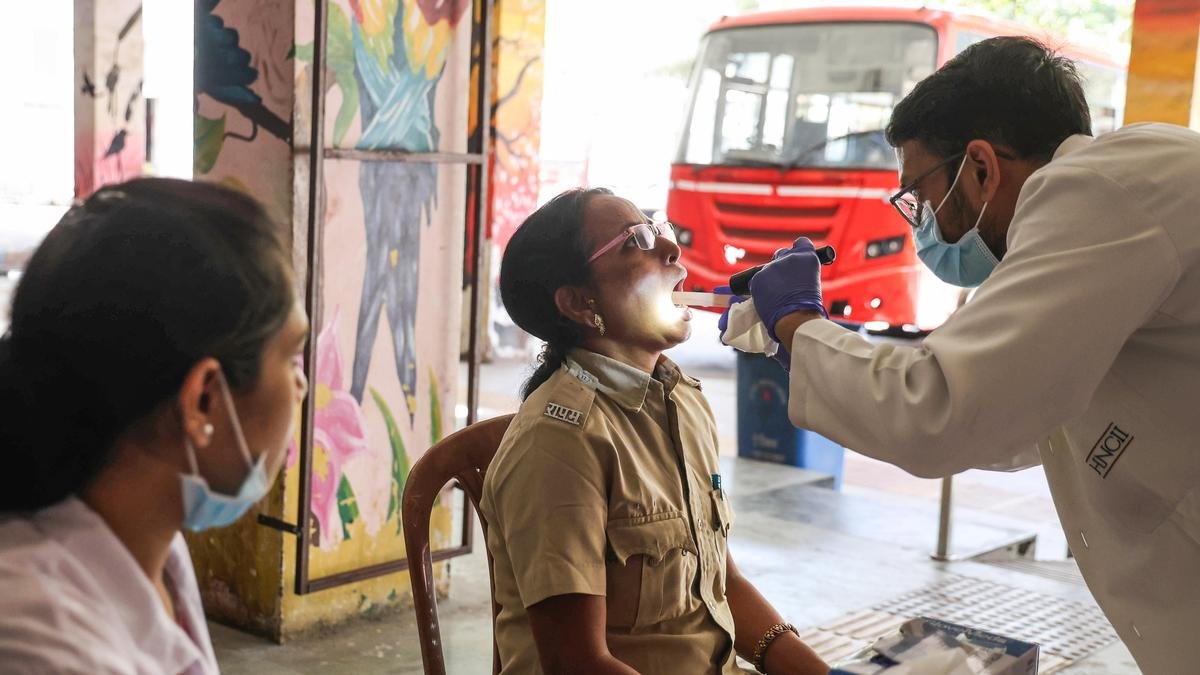
Head and neck squamous cancers have been prevalent in India, with tobacco consumption being the major cause of the disease. However, recent clinical trends indicate that the country needs to take a new approach to fight head and neck cancers. Though the role of tobacco in causing the disease continues to be considerable, there is an increased tendency among medical practitioners to come across young patients suffering from HPV-related cancers.
An analysis at our hospital through a review of 5,135 cases of cancer surgery from August 2023 to December 2025 provides information about this changing scenario.
First, there are the disastrous consequences of tobacco consumption. Despite the numerous campaigns and years of awareness on the health risks associated with the use of tobacco products, they have continued to form part of social and cultural interactions in many regions of our country. Long-term exposure is depicted by the high number of cases of preventable cancers that still appear in health care institutions.
The problem is heavily concentrated in States with high population density. Over 60% of the surgical cases studied were from the states of Maharashtra and Uttar Pradesh, indicating the complex interaction between demographics, exposure to tobacco, and availability of healthcare facilities, which determines disease patterns. This geographical concentration further underlines the significance of State-specific interventions and effective measures for preventing the abuse of tobacco, and raising awareness.

Beyond tobacco
Tobacco, however, is only part of the story. Medical professionals are increasingly seeing squamous cancers of the head and neck, primarily the oropharynx, due to the involvement of the human papillomavirus (HPV), mainly type 16. An HPV infection as a cause of head and neck cancer is now presenting different issues since it targets young individuals who do not have common risk factors. Health authorities dealing with disease prevention must give serious consideration to HPV vaccination for boys, just as is being undertaken for teenage girls for prevention of cervical cancer.
For years, discussions around how to prevent head and neck cancer have been centered on quitting tobacco. While this topic remains significant, the emergence of HPV-related cancers calls for a different approach. Public awareness regarding HPV remains limited, especially with regard to its role as a causative factor of head and neck cancer. As the risk profile evolves, so too must public understanding.

Late diagnosis
Perhaps the most concerning finding from the analysis is not simply who is developing these cancers, but when they are being diagnosed.
Only 19% of patients were diagnosed in the early stages, meaning a considerable percentage was diagnosed during advanced stages. Delayed diagnosis can result in more complicated treatment methods, increased patient burden, higher healthcare expenses, and more uncertain results. Moreover, simple and effective treatments may no longer be possible.
There are several reasons why late diagnoses happen. Symptoms such as ulcerations, difficulties in swallowing, changes in the patient’s voice, or palpable lumps in the neck are frequently disregarded or considered not very serious. Low awareness, stigma, poverty, and inaccessible healthcare are among the additional challenges.
Very often patients present late for treatment even after suspecting that they may be having cancer. This is due to denial arising out of fear of the morbidities of cancer treatment and fears of agonising, prolonged, painful death. Fears arising out of myths that a biopsy or surgery will cause cancer to spread are also common. Many patients also try traditional systems of medicine first. Women often give low priority to their own health. A son or daughter’s board exam or husband’s ill health is given priority, while a sore on the tongue or the lump in the breast waits to months progress. Cancer will not wait. Delay is real killer.
It is also important to note the increased risk of recurrence in the first two years following treatment. This is a critical window for the management of cancer. Even more important is the fact that there is a very high incidence of developing a secondcancer (not a recurrence) years later, particularly if the person resumes tobacco consumption. Ensuring that patients continue to connect with healthcare professionals even after treatment is crucial to improve their long-term results.

Preventing cancer
There is a bigger picture emerging before all of us: that cancers of the head and neck are largely preventable illnesses. To combat the disease burden of India, a comprehensive strategy that involves effective measures to address problems related to tobacco use, raising awareness about head and neck cancers, early detection of cases, widespread screening of people at risk of contracting cancer, and proper education regarding HPV is essential.
The country has achieved great milestones in the domain of facilities for the treatment of cancer patients. However, preventing disease and treating it in time before it progresses to advanced stages must become an equally important priority. Early detection of any cancer signifies a victory not only for medicine but also for the community at large.
(Dr. Sultan Pradhan is chairman and senior surgical oncologist, Head and Neck Cancer Institute of India (HNCII) sultan.pradhan@hncii.com)
Published – June 20, 2026 12:45 pm IST