

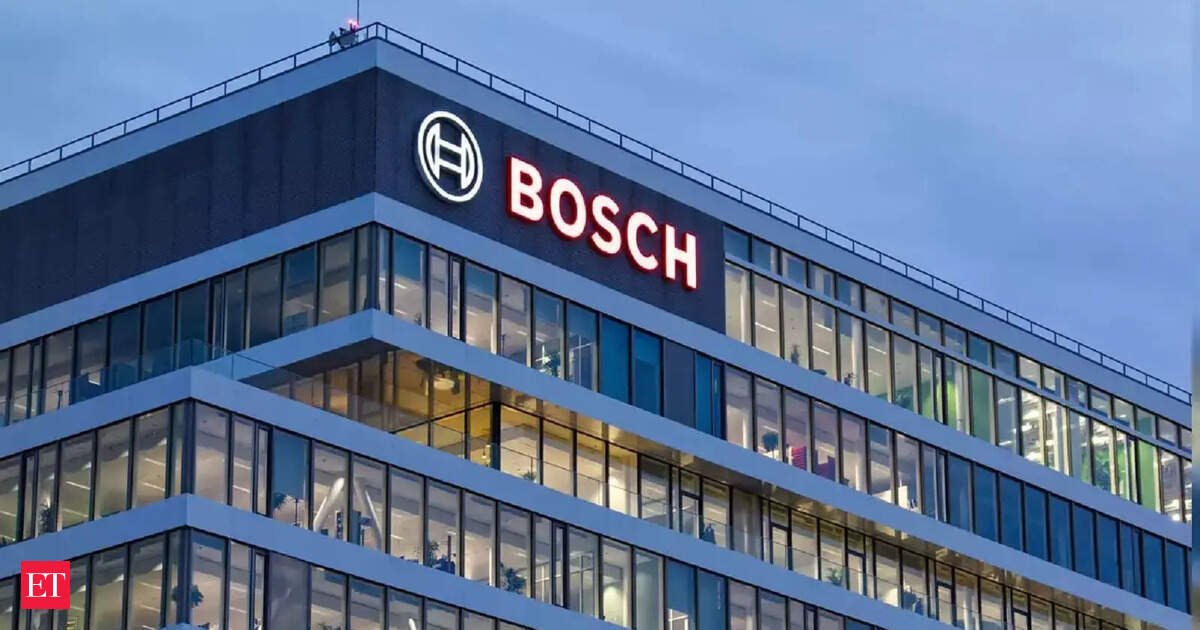
Europe’s largest home appliance manufacturer, which sells products under the Bosch and Siemens brands, is also narrowing Bosch’s price premium to 2-4% over market leaders LG and Samsung from about 15% earlier, Saif Khan, managing director of BSH India, told ET.
Also read: Stuck in acres of mediocre: External shocks expose India’s slide into middle-income stagnation
The company has reduced prices in its entry range by nearly 20%. For instance, the starting price of an entry Bosch top-load washing machine has been lowered to about ₹17,500 from around ₹22,000 earlier.
“The value-segment portfolio was the missing piece in our India strategy. We are launching these products in partnership with local manufacturers who will produce for us. This is a crucial year for BSH India, with more than 350 new models being introduced-which is also the highest ever,” Khan said.

The company is entering categories such as semi-automatic washing machines and direct-cool refrigerators while expanding its entry-level small appliances portfolio. “Our products were previously over-engineered for India, resulting in higher price points that many consumers did not need,” Khan said.
 ET Bureau
Soft Premium Co cuts prices of some products by 20% and plans to raise localisation to 90%
BSH may eventually export its mass-market product range from India to other emerging markets as it increases localisation to 90% through local sourcing from 65% currently.
The renewed focus follows India being carved out as a separate region within BSH this year. The company now operates across five regions-North America, China, Europe, Emerging Markets (headed from Turkiye ) and India.
The mass segment accounts for 65-70% of the total appliance market in India and is a volume driver for companies due to low penetration levels. While penetration of refrigerators is at 65%, washing machines are at 20%, microwave ovens at 4-5% and dishwashers at less than 1%, as per industry estimates.
BSH aims to quadruple its India business over the next four years, aided by its new mass-market range and a relatively low base. It also plans to double its market share to 8-9% during the period from about 4% currently.