

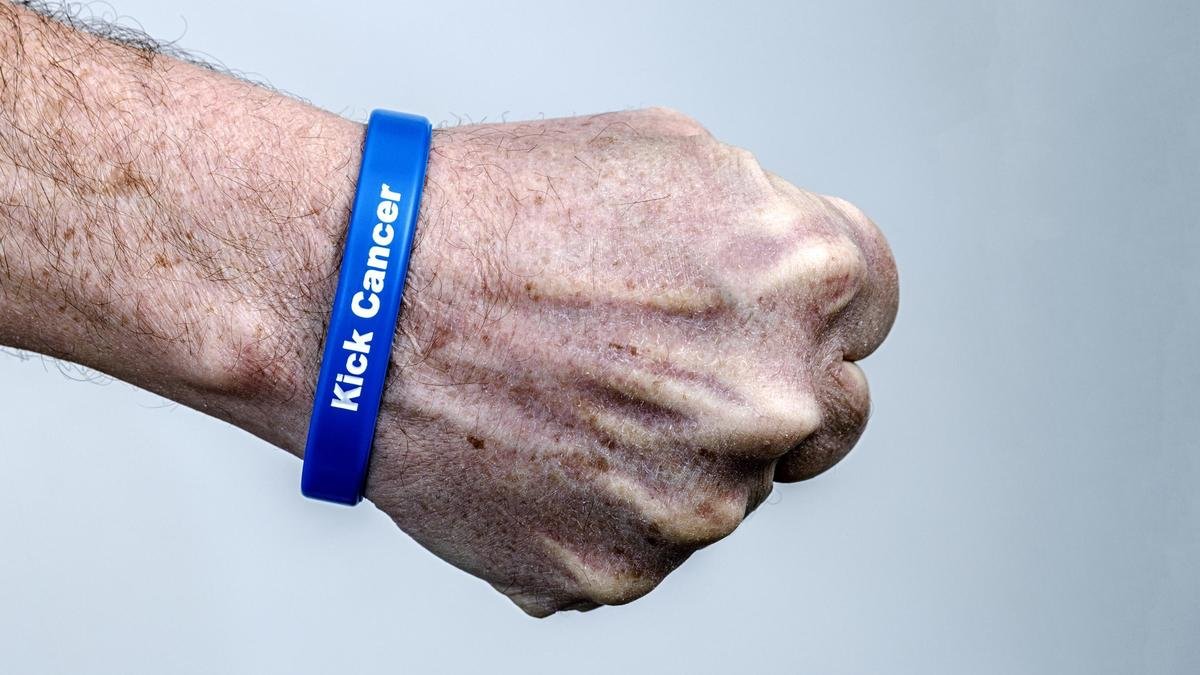
How it all began
March 2,7.30 a.m. I had initiated the act of micturition (urination), possibly for the 100,000th time in the past 75 years. Ten seconds had passed. I saw 2 ml of diluted ‘coke’ in the urine stream. In that split second I realised that this was a breakdown of blood products, a condition known as haematuria. I recollected surgery classes taken 55 years ago, where the lecturer said – “When an elderly person passes blood there are only 3 diagnoses – a) malignancy b) malignancy c) malignancy.”
In 1970, there was no ultrasound; cystoscopy was not routinely available. We were taught that if malignancy was not picked up, it meant investigations were insufficient and were told to keep investigating. Trained in that era, the thrill of making an early clinical diagnosis took over. I did not dwell on dire implications, should I be right, nor did I make any prayers that I should be wrong. Cool, calm, composed and totally asymptomatic, I did a literature search. Every article, and every chapter concluded that “malignancy had to be excluded”. Two days later I saw diluted ‘coke’ in my urine again. Within 48 hours, I got myself investigated.
Diagnosis confirmed
An outpatient cystoscopy was scheduled. Within 15 seconds I saw on the screen an obviously malignant tumour. Three minutes later, on my way to the consultant’s room, I told my wife with pride: “See I was absolutely right. Hi-grade malignancy confirmed”. Fifty-eight years of managing thousands of serious and critical head injuries, bleeding in the brain and brain tumours had probably resulted in my nonchalance. Or maybe reality had not dawned yet, and I was fooling myself .
The uro-oncologist outlined different management options. I was to be on the dais at a major international conference the following week. My brain interjected: “Time you learn to let go– look, the cancer cells are multiplying every second, get operated on immediately; management depends entirely on the detailed biopsy.”
Immediate response
A normal reaction on being told that one has a hi-grade cancer could vary from shock, disbelief, fear, denial, anxiety, distress, anger, sadness, rage, guilt, frustration and withdrawal. “A bolt from the blue”, “the ground fell away” or “my world collapsed” is what is expected – particularly in an individual with outstanding physical and mental health. In my case I was reconfirming a self-diagnosis. My occupation, education, socioeconomic background, access to current knowledge and access to state-of-the-art resources resulted in a different response – within 10 minutes, I started the paper work, fixed a date and time of surgery, and informed my family.
But then, I am also human. Every now and then I broke down with my lacrimal glands going into overdrive unashamedly. I gave vent to my anger and frustration. My spouse of 51 years stood firm as the rock of Gibraltar. When I threw away the high protein nutritious food painstakingly prepared with love and affection she only smiled – knowing that it was the malignant cells responding, not her husband. I recollected a quote widely attributed to Dr. Henry Maudsley that appears in Boyd’s textbook of Pathology — “The sorrow which has no vent in tears, may make other organs weep.”
Initial management and follow-up
A transurethral tumour resection was done with Mitomycin (an antitumour antibiotic) instilled in the bladder. The profuse vomiting, headache and giddiness was followed by total exhaustion and lack of appetite, a curtain-raiser to the scheduled weekly and monthly intra-bladder chemotherapy for the next year. The first three doses were terrible. Unable to watch television or use my laptop for more than 10 minutes; too exhausted even to go from one room to another.
My classmate, a medical oncologist who was advising a senior uro-oncologist about the bladder chemotherapy, reassured me every day – this too will pass. Like magic from the fourth week, there were no side-effects. I regained the 6 kg I lost, and resumed my normal busy activities.
Lessons learnt
When I was born, life expectancy in India was 37 years. Understanding that I was not immortal, I had always been ready for the countdown. For me, there is only solidarity in having joined tens of thousands of cancer patients. I was fully aware that delaying time to recurrence, and postponing a relapse is the primary goal,with quality of life as a bonus, not a total cure. One cannot learn swimming through a correspondence course; one has to get into the water. For the first time, I now had the mind and body of a cancer patient; I was not just removing a growth in the brain.
Being a perfectionist who wants to get things done yesterday, I initially had problems, because I continued to live in the past. It took time to accept that I was now retired, not an active medical professional and I am now, one of the hundreds of revenue-generating cancer patients going through well-laid systems and processes at private hospitals.
I had to tell myself to let go, reduce my expectations completely, accept the present, and put my trust in my medical team.
Support group
My family and classmates were not just anti-depressants. They were tranquillisers and mood elevators. In the first few weeks when I was very sick, video calls made a tremendous difference. Knowing that you are really cared for, works magic.
Arthur Ashe, a Wimbledon winner, when he was dying of HIV contracted through a blood transfusion, and asked why he thought he was chosen to die of a devastating disease, pointed out that he never asked why him, when he was one of millions playing tennis who actually made it, and won a Grand Slam. When I qualified as a neurosurgeon in 1980, I was one in a 7 million population and I never asked ‘why me’, then, why should I now?
Today, unlike many of my fellow cancer patients I am privileged enough to have access to the best management. I have now accepted the malignancy. I alone, will decide if I am going to be happy or not. No chemotherapy or malignant cell is going to have the privilege of making me unhappy.
My thoughts
It has been said, “More things are wrought by prayer than this world ever dreams of”. I know the present remissions will be followed by exacerbations. I now wish I had spent quality “me” time with my cancer patients. The response to cancer management depends on scores of variables. The individual patient response has an ‘X’ factor which cannot be identified or quantified. For the first time, I now live in the moment, with an inner peace I have never had before.
I will put in reasonable efforts and try not predict what will be. Undue expectations have been replaced with accepting reality. I will put up a fight with several million malignant cells and may the best man win! From a cancer patient to a cancer survivor is my goal: Que sera sera.
(The author is a surgeon survivor, past president of three national medical societies, and an honorary distinguished professor at a Tier II IIM. doccapatient@gmail.com)
Published – June 18, 2026 08:45 pm IST