

Close Menu

    Subscribe to Updates

    Get the latest news information from worldwide businesses.

    What's Hot

    How snakebites push rural families deeper into poverty

    June 20, 2026

    GLP-1s tied to elevated risk of fainting, dizziness, reveals research

    June 20, 2026

    Reliance targets 40 billion units of green power annually; battery gigafactory to commission first phase this year

    June 20, 2026
    Facebook Instagram YouTube LinkedIn X (Twitter)
    Trending
    • How snakebites push rural families deeper into poverty
    • GLP-1s tied to elevated risk of fainting, dizziness, reveals research
    • Reliance targets 40 billion units of green power annually; battery gigafactory to commission first phase this year
    • Even in this age of global rupture, do not despair: there is still hope for international law | Nathalie Tocci
    • ‘Major win for India’: Vivek Aggarwal elected as FATF vice president | India News
    • NYPD detective shot during armed standoff with gunman in Brooklyn: police
    • Ricky Saints Scores Massive Upset as Former NXT Champion’s Title Dreams Take a Major Hit on WWE SmackDown
    • What happens to your body when you eat jowar roti and scrambled eggs twice a day? | Health News
    Newspublicly
    • About Us
    • Advertise & Partner with us
    • Pitch Your Story
    • Contact Us
    Facebook Instagram LinkedIn X (Twitter)
    Subscribe
    • Home
    • World News
      • Asia
      • India
      • USA
      • UK & Europe
      • Middle East
    • Economy & Business
      • Global Economy
      • Corporate & Industry
      • Finance & Markets
      • Policy & Trade
    • Technology
      • Gadgets & Devices
      • Software & Apps
      • AI & Machine Learning
      • Robotics & Automation
    • Health & Medicine
      • Fitness & Nutrition
      • Research & Innovation
      • Disease & Treatment
      • Doctors, Clinics & Patient Care
    • Travel & Tourism
    • Automobile
      • Electric & Hybrid Vehicles
      • Auto Industry Insights
    • Sports
    • More
      • Education
      • Real Estate
      • Environment & Climate
      • Space & Astronomy
      • War & Conflicts
    Newspublicly
    Home»Health & Medicine»Research & Innovation»Scientists just found a hidden weakness in forever chemicals
    Research & Innovation

    Scientists just found a hidden weakness in forever chemicals

    AdminBy AdminJune 16, 2026No Comments3 Mins Read0 Views
    Share
    Facebook Twitter LinkedIn Copy Link WhatsApp


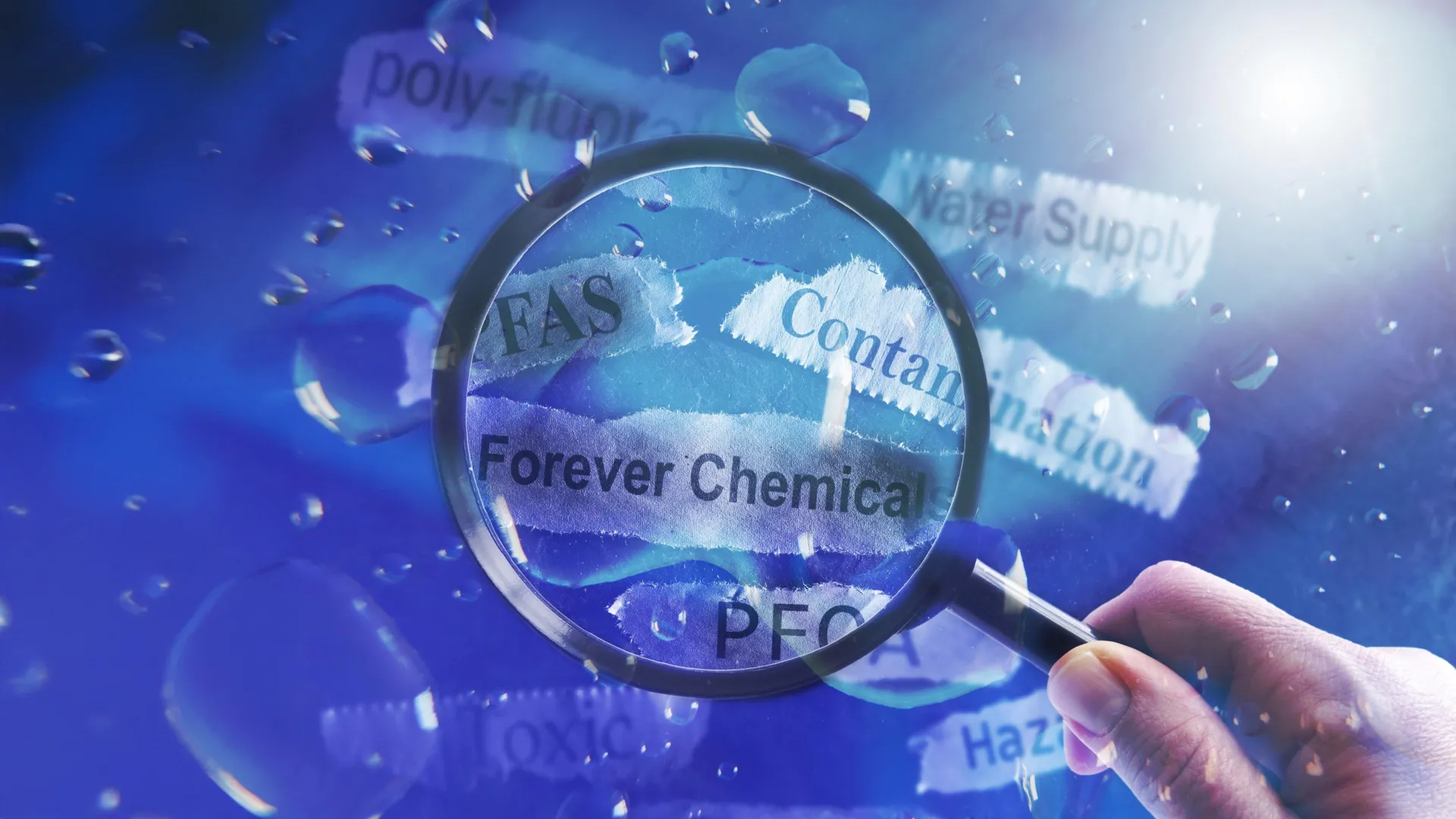
    PFAS, widely known as “forever chemicals,” are among the most stubborn pollutants scientists face today. Because these compounds are extraordinarily stable, they can remain in water supplies, ecosystems, and even the human body for decades. Their persistence has made PFAS contamination a growing environmental and public health concern around the world.

    Now, researchers have uncovered an important clue that could help improve efforts to eliminate these chemicals.

    New Clue in the Fight Against PFAS Pollution

    A new study shows that PFAS can be broken down using intense light without the need for added chemicals. More importantly, the researchers identified the key process responsible for the breakdown.

    The team found that hydrogen radicals, highly reactive particles generated from water when exposed to ultraviolet (UV) light, play a central role in destroying PFAS molecules.

    The finding challenges earlier ideas about how PFAS degradation occurs. Previous studies largely focused on other reactive species as the primary drivers of the process. By pinpointing hydrogen radicals as a dominant force, scientists now have a clearer picture of the chemistry involved.

    That understanding is important because knowing exactly what drives PFAS destruction can help researchers develop more effective treatment technologies.

    How Hydrogen Radicals Break Down Forever Chemicals

    Hydrogen radicals are highly reactive and capable of attacking PFAS molecules. During the process, they gradually remove fluorine atoms, breaking the compounds into smaller substances that are less persistent in the environment.

    The researchers also found that the reaction works best under high-energy UV light, especially at wavelengths below 300 nanometers.

    According to Associate Professor Zongsu Wei of Aarhus University, who led the study, the discovery offers valuable guidance for future technology development:

    “We know that PFAS are extremely stable because of the strong carbon-fluorine bonds, and breaking those bonds is the main challenge. By identifying hydrogen radicals as a dominant driver, we now have a clearer direction for how to design more efficient and sustainable technologies to actually destroy these chemicals, rather than just removing them,” he says.

    Moving Beyond PFAS Removal to PFAS Destruction

    Wei notes that many current approaches do not truly solve the PFAS problem. Instead, they often transfer the chemicals from one location to another.

    “Today, many technologies can filter PFAS out of water, but they don’t eliminate them. The real goal is degradation: to break the molecules down completely. Understanding the mechanism is essential if we want to achieve that in a green and scalable way.”

    The researchers caution that the new findings are not an immediate solution. The degradation process remains relatively slow, and intermediate compounds can form as the chemicals break apart.

    Still, identifying the primary driver behind the reaction represents an important advance. The discovery provides scientists with a critical piece of information that could help accelerate the development of more effective PFAS treatment technologies.

    Ultimately, the study suggests that even some of the world’s most persistent pollutants may be vulnerable when researchers understand the chemistry well enough to target them directly.

    What Are PFAS?

    • PFAS (per- and polyfluoroalkyl substances) are a large family of synthetic chemicals that have been used since the 1940s
    • They are found in products such as waterproof clothing, food packaging, firefighting foam, and non-stick cookware
    • They are often called “forever chemicals” because they break down very slowly in the environment
    • PFAS can accumulate in water, soil, wildlife, and people
    • Exposure has been linked to health concerns including cancer, liver damage, and hormone disruption
    • Most existing water treatment technologies can remove PFAS but do not destroy them


    Source link

    Author

    • Admin

      NewsPublicly.com is News & Articles Platform that creating SEO-focused articles on travel, lifestyle, and digital trends.

    Admin
    • Website

    NewsPublicly.com is News & Articles Platform that creating SEO-focused articles on travel, lifestyle, and digital trends.

    Related Posts

    DNA time stamps reveal the strawberry’s surprising origins

    June 19, 2026

    This giant tropical fruit could help reverse gum disease damage

    June 19, 2026

    Einstein’s “biggest blunder” may finally have an explanation

    June 19, 2026
    Leave A Reply Cancel Reply

    Demo
    Top Posts

    The Blue Moon rises on May 30— Where and when to see the second full moon of the month

    May 30, 202640 Views

    New SOCOM rifle allows barrel swapping and cartridge changes

    June 1, 202633 Views

    “Inside Gemini Robotics 1.5: How Robots Learn to Reason & Act

    November 22, 202525 Views

    525 pounds of cocaine seized after Nebraska K9 alerts troopers on I-80

    May 28, 202624 Views
    Don't Miss

    How snakebites push rural families deeper into poverty

    June 20, 20264 Mins Read0 Views

    A snake-catcher extracts venom from a cobra. | Photo Credit: Representational Photo Snakebite envenoming or…

    GLP-1s tied to elevated risk of fainting, dizziness, reveals research

    June 20, 2026

    Reliance targets 40 billion units of green power annually; battery gigafactory to commission first phase this year

    June 20, 2026

    Even in this age of global rupture, do not despair: there is still hope for international law | Nathalie Tocci

    June 20, 2026
    Stay In Touch
    • Facebook
    • Twitter
    • Instagram
    • YouTube
    • LinkedIn
    • WhatsApp

    Subscribe to Updates

    Get the latest creative news from SmartMag about art & design.

    Demo
    NEWSPUBLICLY
    Facebook X (Twitter) Instagram LinkedIn

    Home

    • About Us
    • Leadership
    • Advertise & Partner With Us
    • Pitch Your Story
    • Media Kit & Pricing
    • Career
    • FAQs

    Guidelines

    • Editorial & Submission
    • Partnership
    • Advertising & Sponsor
    • Intellectual Property Policy
    • Community & Comment
    • Security & Data Protection
    • Send Your Opinion

    Quick Links

    • Cookie Policy
    • Payment & Billing Terms
    • Refund & Cancellation
    • Copyright Policy
    • Complaint & Support
    • Sitemap
    • Contact Us

    Subscribe Us

    Get the latest news and updates!

    Copyright © 2026 Newspublicly (DIGITALIX COMMUNICATION). All Rights Reserved.
    • Privacy Policy
    • Terms of Use
    • Disclaimer