

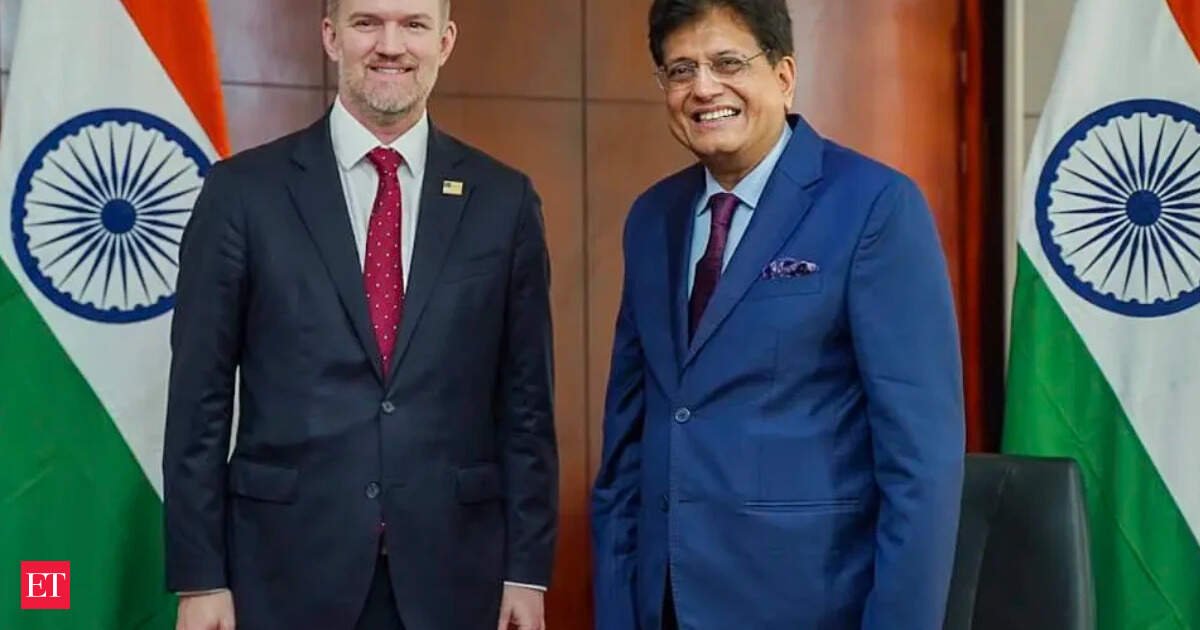
He said the expectation is that discussions will be centred around giving final touches to the interim framework deal and the larger bilateral trade agreement (BTA). “Our expectation is that discussions will be centred around giving final touches to the framework deal, which has been discussed during the visit of their (US) delegation… and also on the larger BTA that has also been under discussions between the two sides,” he said.
Greer is expected to land in Delhi on June 22.
On June 2-4, an American team headed by its chief negotiator Brendan Lynch held discussions with Indian officials on finalisation of the deal.
Also read | Exports rise 18% to 6-month high in May; trade deficit widens

On June 5, Goyal said that the two sides were moving towards closing all open ends of the interim trade agreement and that they were likely to execute the “very, very vibrant” first phase of the BTA by the middle of next month.
At the chief negotiators’ level, India and the US held discussions on a wide range of issues, covering trade in goods, non-tariff measures, customs and trade facilitation, economic security alignment and other areas of mutual interest.Officials have said that it is important that India gets an advantage over its competitor nations on tariffs in the trade pact.
The talks will take place in the wake of the US trade representative proposing an additional 12.5% duty on 54 countries, including India, over alleged failure to restrict imports of goods produced with forced labour in third countries. It has proposed new tariffs on most Indian goods under Section 301 of the US Trade Act of 1974, concerning forced labour, and is conducting another probe into excess industrial capacity.
India had been preparing for the possibility that the US would use Section 301 as a basis for imposing additional tariffs, officials have said.
Also read | From bombs to billions: The strange economics of US-Iran peace deal
Agrawal said that the two sides are engaged on the Section 301 probes and the trade deal would cover the entire gamut of issues.
“These are legal probes… We have made our submissions last month and are engaged for further proceedings. We will have clear answers on 301,” he said.
The key focus of the negotiations will be getting relief on Section 301 probes and India having to pay lower tariffs than competitors. The deal could be firmed up if “we get the terms fair, equitable, and balanced”, one of the officials said earlier.
As the US Supreme Court has ruled against President Donald Trump’s sweeping tariffs, the US administration now has the option of using the Section 301 investigation mechanism to impose new tariffs.
People familiar with the matter earlier said that the US could use this mechanism as a pressure tactic to bring its trading partners on the table to negotiate trade deals.
India and the US had issued a joint statement on February 7, agreeing on a framework for an interim agreement on reciprocal and mutually beneficial trade. The framework reaffirmed their commitment to broader India-US BTA negotiations.
Under the framework, the US removed a 25% penal tariff imposed on India for buying Russian oil and agreed to cut reciprocal tariffs to 18% from 25%.