

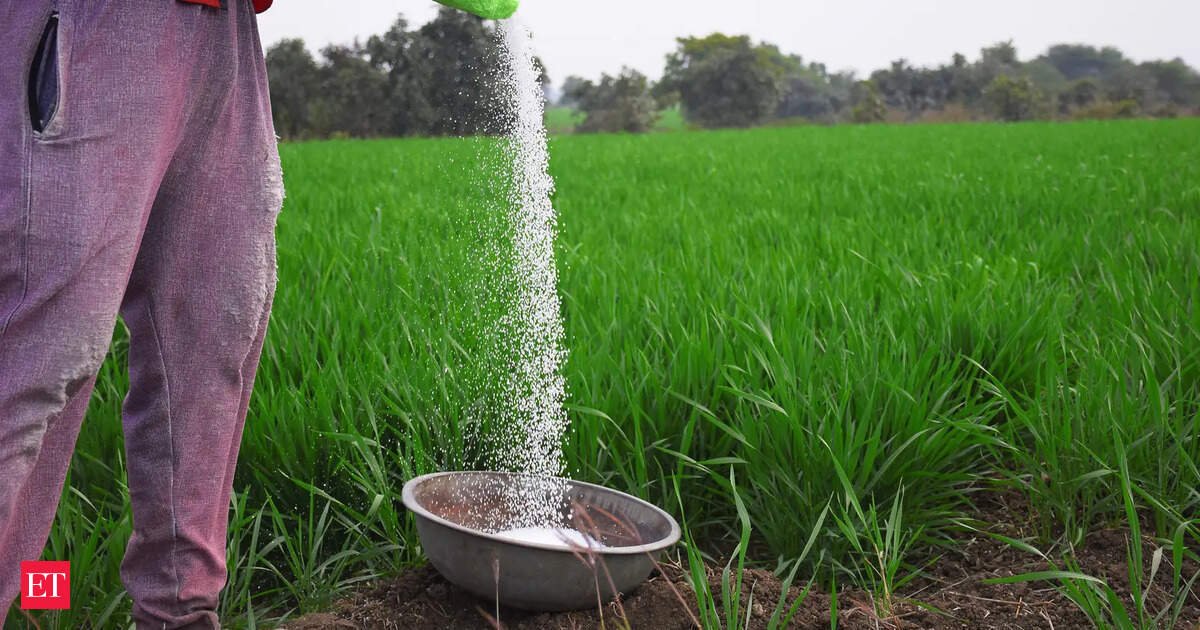
India budgeted around Rs 1.71 lakh crore for fertiliser subsidies, but escalating global fertiliser and energy prices could push the bill far higher. Gulati tells The Economic Times Digital in a wide-ranging interview that the subsidy burden could potentially approach over Rs 3 lakh crore if international prices remain elevated.
India imports significant quantities of urea. It also depends heavily on imported natural gas for domestic production. While imported urea has recently been quoted at prices exceeding $900 per tonne, farmers still receive it at highly subsidised rates that have remained virtually unchanged for over 15 years.
Watch full podcast with Ashok Gulati here
The fiscal risks of India’s fertiliser subsidy regime were thrown into sharp focus this year. On May 27, state-run National Fertilizers Limited (NFL) floated a global tender to import 1.7 million tonnes of urea, following an earlier tender by Indian Potash Limited (IPL) in April for 2.5 million tonnes.
The April tender was settled at $935-959 per tonne, reflecting tight global supplies and geopolitical uncertainty. At the time, a senior Finance Ministry official warned that the fertiliser subsidy bill, budgeted at Rs 1.7 lakh crore for FY27, could exceed Rs 3.4 lakh crore if the West Asia conflict pushed prices higher. For comparison, the subsidy bill had peaked at Rs 2.5 lakh crore in FY23 following the Russia-Ukraine war.

However, market conditions shifted to some extent of late. In the NFL’s latest tender, bids came in at just $445-449 per tonne, more than 50% below April levels. Industry sources attributed the sharp decline largely to China’s decision to resume urea exports after months of restrictions, easing global supply concerns and pulling prices lower.
‘Current system is unsustainable’
Gulati says that India’s subsidy model distorts both farm economics and fertiliser usage. The retail price of urea remains far lower than other nutrients, such as phosphatic and potassic fertilisers. As a result, farmers tend to overuse nitrogen while underapplying other nutrients, which leads to imbalanced fertilisation.The consequences extend beyond agriculture. Plants absorb only 35-40% of applied nitrogen, with the remainder escaping into the environment. Excessive nitrogen use contributes to soil degradation, groundwater contamination and emissions of nitrous oxide, a greenhouse gas that is significantly more potent than carbon dioxide.
Cheap fertiliser also creates incentives for diversion into non-agricultural sectors and illegal cross-border trade.
For context, the actual cost of a 45-kg bag of urea is currently around Rs 4,000, while Indian farmers purchase it for about Rs 270, with the government covering the vast majority of the cost through subsidies.
Case for direct income support
Rather than subsidising fertiliser prices, Gulati advocates shifting to direct income support or direct benefit transfer (DBT) for farmers. Under this model, fertiliser prices would be deregulated and farmers would receive direct cash transfers linked to their landholdings and cropping patterns. Such a system would preserve farmer welfare while allowing market prices to guide more efficient nutrient use.
According to Gulati, this approach could generate substantial savings by reducing leakages, discouraging misuse and encouraging balanced application of nitrogen, phosphorus and potassium.
He says that India should move from “price subsidisation”to “income subsidisation”—-a transition similar to reforms undertaken in several other sectors over the past three decades.
Political challenges
The economics of reform may be straightforward, but the politics are considerably more difficult, says Gulati.
Successive governments have avoided major fertiliser pricing reforms due to potential farmer backlash. Even though phosphatic and potassic fertilisers underwent significant decontrol in the early 1990s, the government maintained strict control over urea prices.
Gulati believes that India’s democratic politics often prioritises short-term electoral considerations over long-term structural reforms. As a result, difficult decisions are postponed until crises become unavoidable.
He draws parallels with the economic reforms of 1991, which were undertaken only after India faced a severe balance-of-payments crisis.
How tech can help
While the government has promoted initiatives, such as AgriStack, soil health cards, and digital monitoring systems, Gulati says that technology alone cannot solve the problem. He suggests linking fertiliser purchases to landholdings, crop type, and scientifically recommended nutrient requirements. Such a system would place limits on excessive purchases and reduce misuse.
Without pricing reform or quantity restrictions, he says, digital platforms risk becoming mechanisms that facilitate overconsumption rather than preventing it.
The fertiliser debate is closely linked to India’s cropping patterns. Gulati says that existing subsidy structures strongly encourage cultivation of paddy and wheat, particularly in states such as Punjab and Haryana. Cheap fertiliser and free electricity make water-intensive crops more profitable than alternatives such as pulses and oilseeds.
Pulses and oilseeds naturally fix nitrogen in the soil and require significantly less irrigation. Redirecting incentives toward these crops could simultaneously reduce fertiliser demand, lower water consumption, and improve India’s import dependence.
Gulati proposes compensating farmers who shift from paddy cultivation to pulses and oilseeds through targeted incentive payments funded jointly by the Centre and states.
‘Natural farming is not a complete alternative’
While supporting greater experimentation with natural and organic farming, Gulati cautions against viewing them as substitutes for conventional fertilisers.
Research indicates that natural farming can lead to significant yield reductions in staple crops such as wheat and rice, he says. Therefore, while alternative farming systems may be suitable for specific crops and niche markets, they are unlikely to replace chemical fertilisers on a large scale.
Instead, he calls for improving fertiliser efficiency through specialty and water-soluble fertilisers, which can deliver nutrients more effectively while reducing environmental damage.
For Gulati, the choice is clear: either impose limits on fertiliser use or undertake comprehensive decontrol backed by direct income support for farmers. He says that maintaining the current regime will only deepen fiscal pressures, promote inefficient input use, and accelerate environmental damage.